
Costa Brava
Weather
Local Information
Plug Socket Type
Type C/F (European two-pin). Irish visitors need a travel adapter.
Currency
Euro
Time Zones
GMT+1 (1 hour ahead of Ireland in winter, same in summer).
Local Emergency Contact
112 (general emergency). Irish Embassy Madrid: +34 914 364 093.
Travel Information
Flight Time
Approximately 2.5 hours from Dublin to Girona (GRO) or Barcelona (BCN). Seasonal flights.
Distance from Beach
All resorts are beachfront or within short walking distance.
Do I need a Visa?
No. Spain is an EU member state. Irish citizens need only a valid passport or identity card.
3 Things to do in Costa Brava
Dali Theatre-Museum, Figueres
–The surrealist masterpiece designed by Dali himself — the most visited museum in Spain outside Madrid and Barcelona.
Barcelona Day Trip
–Just over an hour from the southern Costa Brava — Sagrada Familia, Las Ramblas, Gothic Quarter and more.
Water World, Lloret de Mar
–One of Europe's largest water parks with slides, pools and wave machines.
Description
Discover the rugged beauty of the Costa Brava, Catalonia's 'Wild Coast,' offering dramatic cliffs, hidden coves, charming medieval villages, and artistic heritage, easily accessible for Irish travellers.
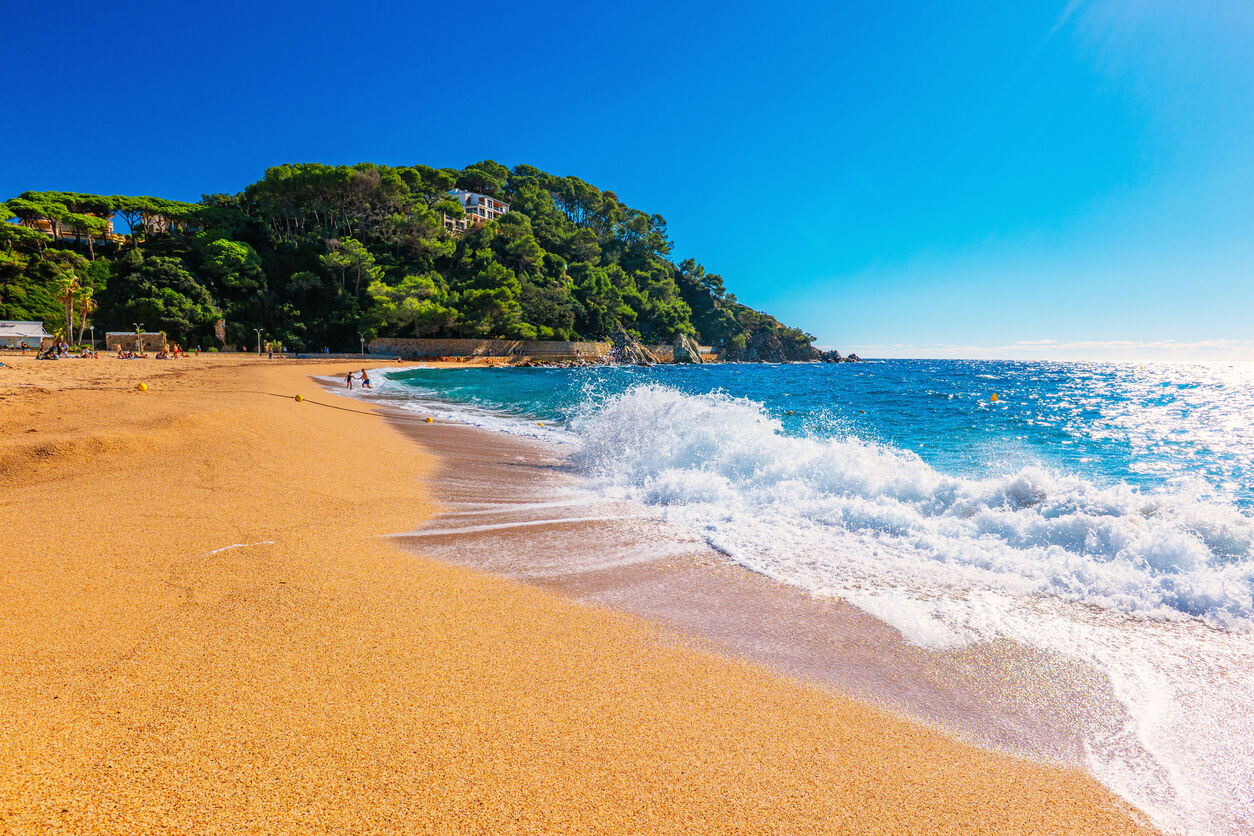
The Costa Brava is Catalonia's stunning "Wild Coast", running from Blanes north to the French border along some of the most dramatic coastal scenery in the Mediterranean. Unlike the purpose-built resort strips further south, the Costa Brava is characterised by rocky headlands, hidden coves, pine-fringed bays and medieval hilltop villages that give it a distinctly authentic feel. The main resort towns of Lloret de Mar, Tossa de Mar and Platja d'Aro cater well to Irish holidaymakers, with Lloret offering lively nightlife and entertainment while Tossa de Mar — with its beautifully preserved medieval walled town overlooking the bay — provides a more atmospheric setting. The Costa Brava is also Salvador Dalí country — his surrealist legacy is celebrated at the remarkable Dalí Theatre-Museum in Figueres and his former homes in Cadaqués and Púbol. The region's Catalan identity adds cultural richness, from the cuisine to the language and local festivals. Barcelona is within easy reach for day trips, adding world-class architecture, shopping and dining to any Costa Brava holiday. The combination of natural beauty, cultural depth and well-priced holiday options makes the Costa Brava an excellent choice for Irish travellers wanting something beyond the typical Spanish beach resort.
Culture and Experiences
What's Nearby?
Barcelona
– Spain's second city with world-class architecture, culture, shopping and nightlife. 1-1.5 hours south.
Girona
– Beautiful medieval city with a Jewish quarter, cathedral, colourful riverside houses and excellent restaurants.
Cadaques
– Picturesque whitewashed fishing village where Dali had his home. Stunning coastal scenery.
History
Greek & Roman
– The Costa Brava's name ('wild coast') reflects its dramatic coastline. Greek and Roman ruins at Empuries are well preserved.
Medieval Towns
– Tossa de Mar's medieval walled old town (Vila Vella) is the only fortified medieval town on the Catalan coast.
Dali's Coast
– Salvador Dali lived and worked on the Costa Brava. His triangle of sites (Figueres, Cadaques, Pubol) are essential cultural visits.
Local Markets
Lloret de Mar Market (Tuesday)
– Large weekly market with clothing, bags, souvenirs and local produce.
Tossa de Mar Market (Thursday)
– Weekly market in the old town area with crafts, food and artisan products.
Events and Festivals
Sant Joan (June)
– Midsummer bonfires and beach parties along the coast — one of Catalonia's biggest celebrations.
Festival de la Porta Ferrada (Summer)
– Music and arts festival in Sant Feliu de Guixols with international performers.
Carnival (February)
– Parades and festivities in towns along the coast, with Platja d'Aro hosting a particularly lively celebration.
Local Etiquette
Catalan Identity
– The Costa Brava is in Catalonia. Signs are in Catalan and Spanish. Locals appreciate visitors acknowledging Catalan culture.
Meal Times
– Similar to rest of Spain — late lunches and dinners.
Tipping
– Small change or 5-10% is customary for good service.
Dining and Night Life
Local Cuisine
Suquet de Peix
– Traditional Catalan fish stew from the Costa Brava coast — rich, saffron-scented and served in the cooking pot.
Crema Catalana
– Catalonia's answer to creme brulee — custard with a caramelised sugar top. The original, locals will tell you.
Cava
– Catalonia's sparkling wine, produced in the Penedes region nearby. Excellent quality at affordable prices.
Night Life
Lloret de Mar
– The main nightlife resort on the Costa Brava with a famous bar and club strip.
Tossa de Mar
– More relaxed evening scene with bars in the old town and along the waterfront.
Platja d'Aro
– Upmarket nightlife with clubs and cocktail bars popular with a slightly older crowd.
Read Time: 5 mins
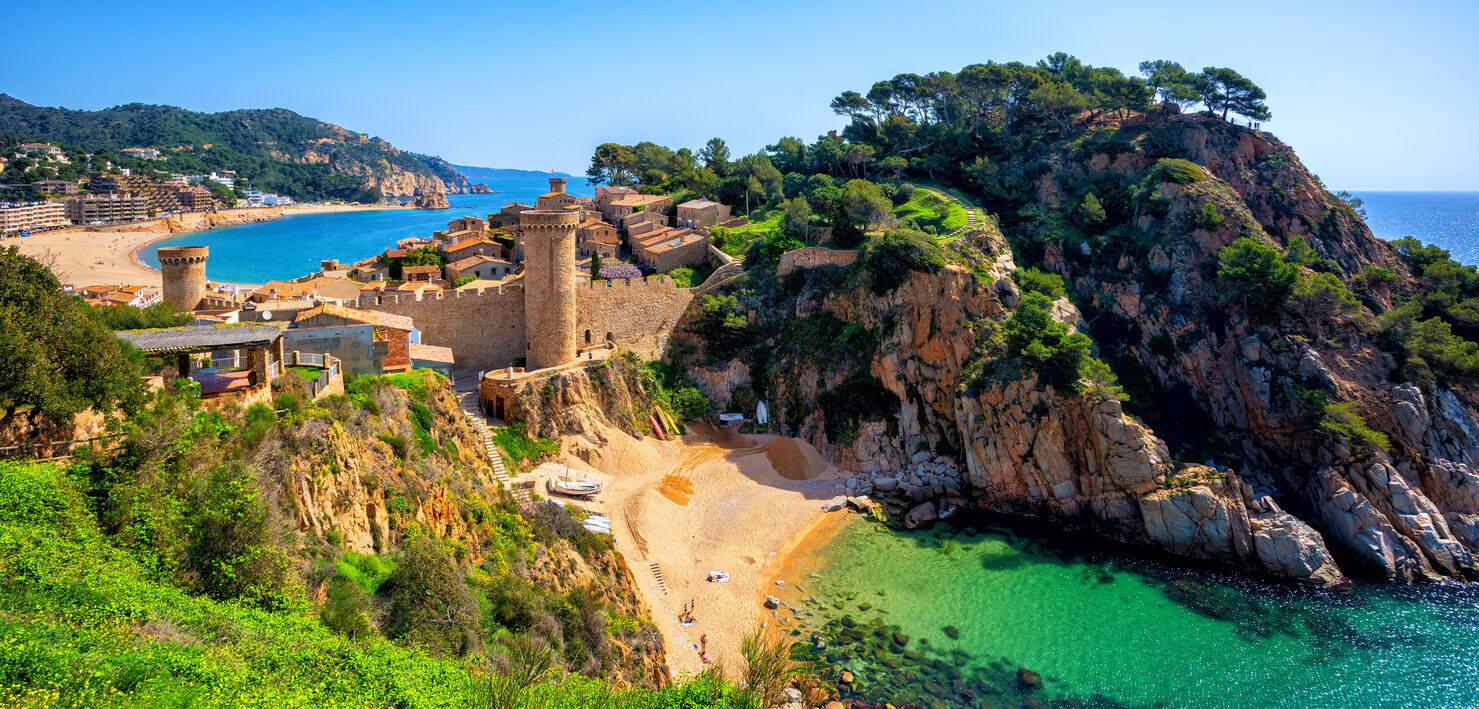
Tossa de Mar is the jewel of the Costa Brava — a breathtakingly beautiful medieval walled town perched on a rocky headland above a crescent of golden sand. The Vila Vella (old town), with its twelfth-century walls, towers and cobbled lanes, is one of the most photogenic spots on the Spanish Mediterranean coast. Marc Chagall called it the Blue Paradise, and artists and writers have been drawn to its light and landscape for over a century. For Irish visitors who want their beach holiday enhanced by genuine beauty and historical atmosphere, Tossa de Mar is an exceptional choice.
Location and Getting There
Tossa de Mar is on the Costa Brava, approximately ninety minutes from Barcelona Airport or forty minutes from Girona Airport. The flight from Dublin takes around two and a half hours. The town is twelve kilometres south of Lloret de Mar along a dramatic, winding coastal road.
Beaches
Platja Gran is the main beach — a wide crescent of coarse golden sand directly below the medieval walls. The setting is extraordinary, with the fortress towers rising above the southern end of the beach. The water is clean and the beach has Blue Flag status. Platja Mar Menuda, on the northern side of the headland, is a smaller, more sheltered beach popular with families and snorkellers. El Codolar, a small cove beneath the old town walls, offers a more intimate bathing experience. The coastal path south to Cala Pola and Cala Giverola passes through pine forest and reveals stunning hidden coves.
Spanish beaches are generally well maintained and regulated, with Blue Flag status widely held across the major resort areas. Most resort beaches have sunbed and parasol hire, lifeguard stations, shower facilities and nearby chiringuitos (beach bars) serving cold drinks and snacks. The Mediterranean sea is calm and warm from June through October, with water temperatures peaking around twenty-five degrees in August. The concept of the chiringuito — a simple beachside restaurant serving fresh fish, paella and cold beer — is central to the Spanish beach experience and represents some of the best-value eating on the coast.
Things to Do
The Vila Vella is the must-see attraction — walk the medieval walls for views that stretch along the coast, explore the narrow lanes within, and visit the municipal museum (the first in Spain to display a work by Chagall). The coastal walking paths (Cami de Ronda) in both directions from Tossa are among the most beautiful on the Costa Brava. Glass-bottom boat trips along the coast offer a different perspective on the cliffs and coves. Diving and snorkelling in the clear waters around the headland are excellent. Day trips to Barcelona, Girona and the Dali Museum add cultural depth.
One of the great advantages of a Spanish holiday is the depth of cultural experiences available within easy reach of the beach resorts. Nearly every resort has a traditional old town or nearby village where you can experience authentic Spanish life — weekly markets selling local produce, parish churches with ornate interiors, and family-run restaurants serving dishes made from recipes handed down through generations. Spain also has an excellent network of public transport, making day trips to major cities and cultural sites straightforward. Museum cards and tourist passes often offer excellent value for families planning multiple visits to attractions.
Dining and Nightlife
Tossa has excellent dining. The old town and the streets behind the main beach have tavernas, seafood restaurants and Catalan cuisine that emphasise local produce. Suquet de peix (fish stew) is the quintessential local dish. The quality of dining reflects Tossa's character — this is a town that values craftsmanship. Nightlife is refined rather than raucous — wine bars, cocktail terraces overlooking the sea, and a handful of music venues. For a bigger night out, Lloret de Mar is a short taxi ride.
The Spanish approach to eating is one of the great pleasures of a holiday. The tapas tradition encourages grazing, sharing and trying multiple small dishes — it is a social, convivial way to eat that suits groups, couples and families equally well. Each region of Spain has its own food identity and speciality dishes, so eating your way along the coast is a journey in itself. Spanish wine is extraordinary value — excellent Rioja, Ribera del Duero, Rueda and Cava can be enjoyed in restaurants at prices that would be unthinkable in Ireland. For self-caterers, Spanish supermarkets offer exceptional quality and value on local wines, olive oil, cheese and cured meats.
Best Time to Visit
June to September for beach holidays. Tossa is at its most magical in June and September when the light is golden and the crowds are thinner. The coastal walks are best in spring and autumn. July and August are busy but the town handles the crowds with grace.
Practical Information for Irish Visitors
Spain is in the EU. Euro, no visa. One hour ahead of Ireland. English spoken in tourist businesses.
Spain's excellent healthcare system is accessible to Irish visitors through the European Health Insurance Card (EHIC), though travel insurance is always recommended. Pharmacies are identified by a green cross and are well stocked — pharmacists can advise on and dispense remedies for common complaints. Spain operates on a later daily schedule than Ireland — lunch is typically from two to four in the afternoon, and dinner rarely starts before nine. Adapting to this rhythm is part of the pleasure of a Spanish holiday. Supermarkets in resort areas stock familiar brands alongside excellent-value local wines, olive oil, cheese and cured meats. Mobile phone roaming within the EU means your Irish plan works in Spain at no extra cost.
Why Book with Sunholidays.ie
Sunholidays.ie is Irish-owned and IAA licensed (Licence No. T0601). Twenty euro per person deposit, monthly payments, price match guarantee. Tossa has a more limited hotel selection than the larger resorts, so early booking through Sunholidays.ie is recommended.

Read Time: 5 mins
Lloret de Mar is the Costa Brava's liveliest resort, a town that has been welcoming holidaymakers to its beautiful Mediterranean bay since the nineteen-fifties. Today it offers a vibrant mix of excellent beaches, a famous nightlife scene, family water parks and access to the dramatic rocky coastline that gives the Costa Brava its name. The town retains a genuine Catalan identity alongside its tourism role, with a picturesque old centre, a parish church overlooking the sea and a cultural calendar that includes music festivals and traditional events.
Location and Getting There
Lloret de Mar is on the Costa Brava in Catalonia, approximately seventy minutes from Barcelona El Prat Airport or thirty minutes from Girona Airport. The flight from Dublin to Barcelona or Girona takes approximately two and a half hours. The town sits in a wide bay flanked by rocky headlands.
Beaches
Playa de Lloret is the main beach — a wide, one-and-a-half-kilometre curve of coarse golden sand with full facilities and lifeguards. The water is clean and the setting, with the old church on the headland and the wooded hillsides behind, is attractive. Playa de Fenals, a short walk south over the headland, is a smaller, more sheltered beach popular with families. Santa Cristina beach, further south, is one of the prettiest coves on the Costa Brava. The Cami de Ronda coastal path connects the beaches and offers beautiful views.
Spanish beaches are generally well maintained and regulated, with Blue Flag status widely held across the major resort areas. Most resort beaches have sunbed and parasol hire, lifeguard stations, shower facilities and nearby chiringuitos (beach bars) serving cold drinks and snacks. The Mediterranean sea is calm and warm from June through October, with water temperatures peaking around twenty-five degrees in August. The concept of the chiringuito — a simple beachside restaurant serving fresh fish, paella and cold beer — is central to the Spanish beach experience and represents some of the best-value eating on the coast.
Things to Do
Water World, a large water park just outside Lloret, is a popular family attraction with slides, pools and wave machines. The Jardins de Santa Clotilde, a clifftop botanical garden with sea views, is a peaceful escape. The Castle of Sant Joan, on the headland between the main beach and Fenals, has ruins and panoramic views. Boat trips along the Costa Brava coastline reveal hidden coves and dramatic cliffs. Day trips to Barcelona (seventy-five minutes by bus), Girona (thirty minutes), and the Dali Museum in Figueres are all feasible and rewarding.
One of the great advantages of a Spanish holiday is the depth of cultural experiences available within easy reach of the beach resorts. Nearly every resort has a traditional old town or nearby village where you can experience authentic Spanish life — weekly markets selling local produce, parish churches with ornate interiors, and family-run restaurants serving dishes made from recipes handed down through generations. Spain also has an excellent network of public transport, making day trips to major cities and cultural sites straightforward. Museum cards and tourist passes often offer excellent value for families planning multiple visits to attractions.
Dining and Nightlife
Lloret has a huge range of restaurants. The beachfront and old town centre have the widest selection, from Catalan seafood restaurants to international cuisine. Fideuà (a Catalan noodle paella) and fresh fish are local specialities. Nightlife is one of Lloret's biggest draws — the resort has a concentration of large clubs, bars and entertainment venues that make it one of the liveliest nightspots on the Mediterranean coast. The scene caters primarily to a young crowd from across Europe.
The Spanish approach to eating is one of the great pleasures of a holiday. The tapas tradition encourages grazing, sharing and trying multiple small dishes — it is a social, convivial way to eat that suits groups, couples and families equally well. Each region of Spain has its own food identity and speciality dishes, so eating your way along the coast is a journey in itself. Spanish wine is extraordinary value — excellent Rioja, Ribera del Duero, Rueda and Cava can be enjoyed in restaurants at prices that would be unthinkable in Ireland. For self-caterers, Spanish supermarkets offer exceptional quality and value on local wines, olive oil, cheese and cured meats.
Best Time to Visit
June to September for beach holidays. July and August are the hottest and busiest. May and October have pleasant weather for sightseeing and walking the coastal paths. The nightlife season peaks in July and August.
Practical Information for Irish Visitors
Spain is in the EU. Euro, no visa. One hour ahead of Ireland. English spoken in tourist areas. Catalan is the local language alongside Spanish.
Spain's excellent healthcare system is accessible to Irish visitors through the European Health Insurance Card (EHIC), though travel insurance is always recommended. Pharmacies are identified by a green cross and are well stocked — pharmacists can advise on and dispense remedies for common complaints. Spain operates on a later daily schedule than Ireland — lunch is typically from two to four in the afternoon, and dinner rarely starts before nine. Adapting to this rhythm is part of the pleasure of a Spanish holiday. Supermarkets in resort areas stock familiar brands alongside excellent-value local wines, olive oil, cheese and cured meats. Mobile phone roaming within the EU means your Irish plan works in Spain at no extra cost.
Why Book with Sunholidays.ie
Sunholidays.ie is Irish-owned and IAA licensed (Licence No. T0601). Twenty euro per person deposit, monthly payments, price match guarantee. The team can place you in the right part of Lloret — beachside for families, central for nightlife.