
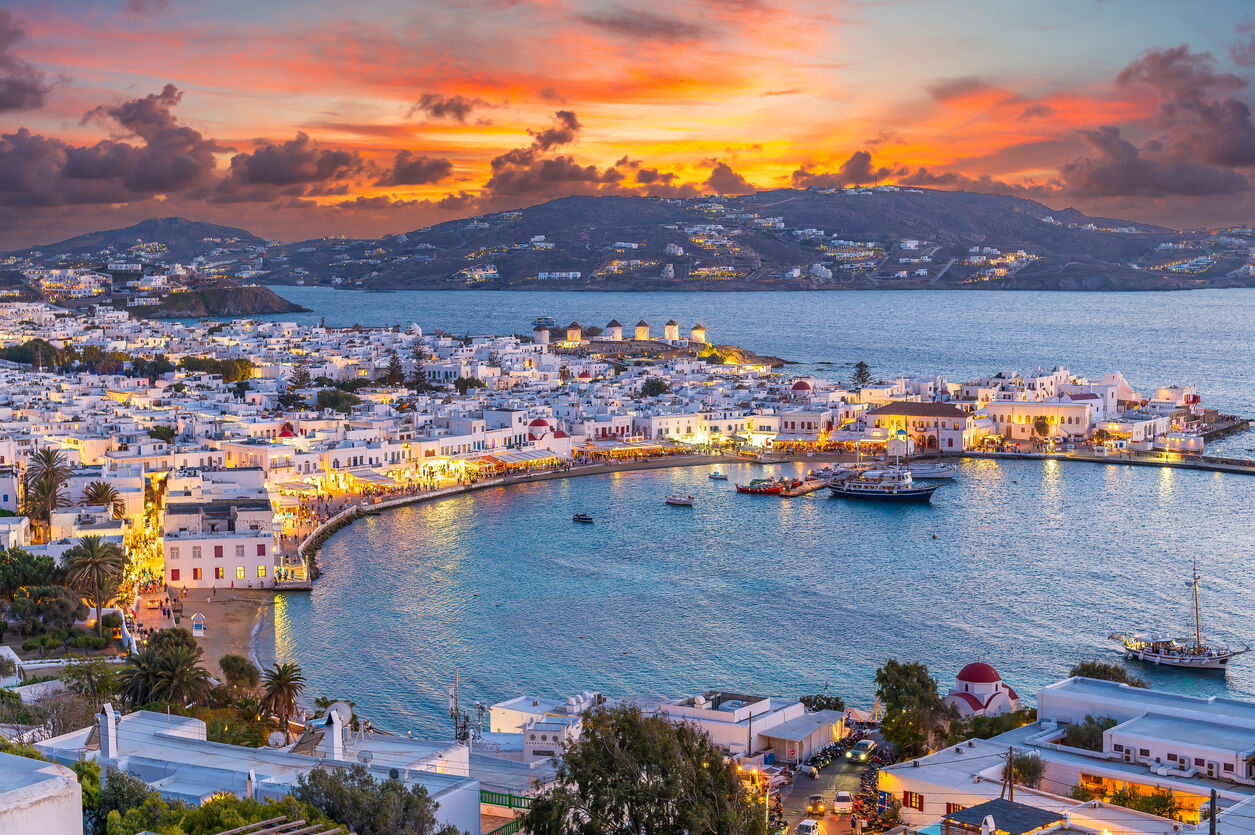
Mykonos
Weather
Local Information
Plug Socket Type
Type C/F (European two-pin). Irish visitors need a travel adapter.
Currency
Euro
Time Zones
GMT+2 (2 hours ahead of Ireland year-round).
Local Emergency Contact
112 (general emergency). 166 (tourist police). Irish Embassy Athens: +30 210 723 2771.
Travel Information
Flight Time
Approximately 4 hours from Dublin. Seasonal flights May-October.
Distance from Beach
Most accommodation is within walking distance or a short bus/taxi ride to beaches.
Do I need a Visa?
No. Greece is an EU member state. Irish citizens need only a valid passport or identity card.
3 Things to do in Mykonos
Mykonos Town (Chora)
–Iconic whitewashed labyrinth with windmills, Little Venice, designer boutiques and vibrant nightlife.
Delos Island
–UNESCO World Heritage Site — the sacred birthplace of Apollo, with remarkable ancient ruins. Short boat trip from Mykonos.
Beach Hopping
–From party beaches (Paradise, Super Paradise) to family coves (Ornos, Platis Gialos) — diverse beach scene.
Description
Discover Mykonos, the cosmopolitan Greek Island known for its chic beach clubs, vibrant nightlife, picturesque windmills, Little Venice, and beautiful sandy beaches like Paradise and Super Paradise.
Mykonos is the most cosmopolitan of the Greek islands, famous worldwide for its vibrant nightlife, designer boutiques and stunning beaches. Yet beneath the glamorous reputation lies a genuinely charming island with whitewashed Cycladic architecture, a picturesque old town, and a rich maritime history stretching back thousands of years. Mykonos Town is the heart of the island — a maze of narrow lanes lined with bougainvillea, punctuated by the iconic row of windmills and the waterfront bars of Little Venice where waves lap beneath your cocktail. The island's beaches cater to every taste, from the famous party scene at Paradise and Super Paradise to the family-friendly calm of Ornos and Platis Gialos. Mykonos also serves as the gateway to Delos, one of the most important archaeological sites in Greece and a UNESCO World Heritage site. Direct flights from Ireland take around four hours during the summer season. While Mykonos is Greece's most expensive island, the combination of world-class dining, legendary nightlife, beautiful beaches and authentic Cycladic charm makes it a bucket-list destination for many Irish travellers.
Culture and Experiences
What's Nearby?
Delos
– Sacred ancient island just 30 minutes by boat. One of the most important archaeological sites in Greece.
Tinos
– Neighbouring island with impressive Venetian dovecotes, marble villages and the pilgrimage church of Panagia Evangelistria.
Naxos
– The largest Cycladic island, reached by ferry. Excellent beaches, Venetian castle town and mountain villages.
History
Ancient Delos
– Mykonos served as a gateway to the sacred island of Delos for thousands of years.
Pirate History
– Mykonos Town's maze-like layout was designed to confuse raiding pirates.
Modern Tourism
– Jackie Kennedy's visit in the 1960s made Mykonos a jet-set destination.
Local Markets
Mykonos Town Shops
– Designer boutiques and local artisan stores along Matogianni Street.
Local Produce
– Small shops sell kopanisti cheese, louza, honey and local wines.
Events and Festivals
XLSIOR Festival (August)
– Major international music festival with world-class DJs.
Panigiria (Summer)
– Traditional village festivals with food, music and free wine.
Carnival (February)
– Pre-Lenten celebrations with costumes and parades.
Local Etiquette
Church Visits
– Many of Mykonos's 365+ churches are private — check before entering.
Pricing
– Mykonos is Greece's most expensive island. Check menus before sitting.
Tipping
– 5-10% for good service. Beach club charges may be included.
Dining and Night Life
Local Cuisine
Kopanisti Cheese
– Mykonos's famous spicy, creamy cheese with PDO status.
Louza
– Air-dried pork fillet seasoned with pepper and spices.
Amygdalota
– Almond-based sweets, traditional to the Cyclades.
Fresh Seafood
– Grilled octopus, sea bream and lobster pasta at waterfront tavernas.
Night Life
Little Venice Bars
– Waterfront cocktail bars with waves lapping below — sunset drinks are legendary.
Town Centre Clubs
– World-famous clubs including Cavo Paradiso attracting international DJs.
Paradise Beach
– Famous beach parties that run from afternoon into the night.

Read Time: 5 mins
Mykonos Town, known locally as Chora, is one of the most photogenic and cosmopolitan towns in the Greek islands. Its labyrinthine streets of whitewashed buildings, iconic hilltop windmills, the waterfront quarter of Little Venice, and a vibrant dining and shopping scene have made it a magnet for travellers from around the world. Despite its international reputation, Mykonos Town retains a genuine Cycladic charm — pelicans wander the harbour, bougainvillea cascades from balconies, and the light has a quality that artists and photographers have been chasing for decades.
Location and Getting There
Mykonos Town is on the western coast of Mykonos island. Mykonos Airport (JMK) is approximately ten minutes' drive from the town centre. The flight from Dublin takes around four hours. The town is compact and best explored on foot — the narrow lanes were designed to confuse invading pirates, and they still have a pleasantly disorienting effect on modern visitors.
Beaches
Mykonos Town itself has a small beach at Megali Ammos, within walking distance. For dedicated beach days, the island's famous beaches are accessible by bus, car or water taxi. Ornos (family-friendly), Platis Gialos (beach clubs), Paradise Beach (party scene) and Super Paradise (glamorous) are all within easy reach. The south-coast beaches catch the most sun and are sheltered from the meltemi wind that can blow across the island in summer.
Greek beaches are renowned worldwide for their water clarity, and the islands consistently rank among Europe's top beach destinations. The combination of the Mediterranean climate, clean seas and varied coastline — from wide sandy stretches to intimate pebble coves — means there is a beach for every preference. Many Greek beaches are backed by tavernas where you can enjoy fresh fish and a cold beer just metres from the water. Beach etiquette in Greece is relaxed, and public access to the shoreline is protected by law, though sunbed areas on popular beaches are typically managed by nearby businesses.
Things to Do
Walking the streets of Mykonos Town is the primary activity — getting lost is half the fun, and every turn reveals a tiny church, a hidden courtyard or a designer boutique. The windmills above Little Venice are the iconic photo spot. The Archaeological Museum and the Aegean Maritime Museum are both small but interesting. The island of Delos, one of the most important archaeological sites in Greece and a UNESCO World Heritage Site, is a thirty-minute boat ride from the harbour and is an essential day trip. Water taxis from the harbour connect to the south coast beaches.
Island-hopping is one of the great pleasures of a Greek holiday, and even if you are based on one island, day trips to nearby islands are often available by ferry or excursion boat. The Greek islands also offer a range of cultural experiences beyond the major archaeological sites — local festivals (panigiri), the evening volta (the traditional evening stroll), and the simple pleasure of sitting in a village square watching the world go by while sipping a cold frappe coffee. For active visitors, kayaking, hiking the coastal paths and cycling are increasingly popular ways to explore the island landscapes away from the beach.
Dining and Nightlife
Mykonos Town has a sophisticated dining scene. Little Venice is the most atmospheric location, with restaurants and bars built right on the water's edge — watching the sunset from here with a cocktail is a Mykonos ritual. The backstreets have excellent Greek restaurants, seafood tavernas and international cuisine at various price points. Mykonos is one of the most expensive islands in Greece, but you can find good value in local bakeries and traditional souvlaki shops. Nightlife is world-renowned — the town's bars and clubs attract international DJs and a glamorous crowd, with the party season running from June to September.
One of the great joys of eating in Greece is the emphasis on fresh, seasonal ingredients prepared simply. The taverna culture — where you might choose your fish from a display, point at dishes in the kitchen, or simply ask what is good today — creates a personal, unhurried dining experience that is central to Greek island life. Raki or tsipouro (the local grape spirits) are often offered free at the end of a meal as a gesture of hospitality. Greek wine has improved enormously in recent decades, and island wineries are producing labels that increasingly challenge the old assumption that Greek wine begins and ends with retsina. Vegetarian visitors will find Greece particularly accommodating — dishes like gigantes (giant beans), briam (roasted vegetables), spanakopita and the ubiquitous Greek salad with local feta make for excellent meat-free eating.
Best Time to Visit
May to October, with June and September being optimal for warm weather and manageable crowds. July and August are the peak party months and can be extremely busy and expensive. The meltemi wind is strongest in July and August.
Practical Information for Irish Visitors
Greece is in the EU. Euro, no visa. Two hours ahead of Ireland. English very widely spoken. Mykonos is one of Greece's most expensive islands — budgeting is advisable.
Healthcare is available through the European Health Insurance Card (EHIC), but comprehensive travel insurance is strongly advised. Greek pharmacies are well equipped and pharmacists are knowledgeable — for minor ailments, a pharmacy visit is often sufficient. Tap water quality varies by island — on the larger islands it is generally safe, but bottled water is cheap and widely preferred. Greek time is two hours ahead of Ireland year-round, which is worth noting when calling home or planning flight connections. The pace of life in Greece is famously relaxed, with late dinners (often starting at nine or ten in the evening) and a general emphasis on enjoying the moment rather than rushing through the day.
Why Book with Sunholidays.ie
Sunholidays.ie is Irish-owned and IAA licensed (Licence No. T0601). Twenty euro per person deposit, monthly payments, price match guarantee. Book early for the best Mykonos options, particularly in peak season.

Read Time: 5 mins
Ornos is the family-friendly face of Mykonos, a sheltered sandy bay on the island's south coast that offers calm swimming, good tavernas and a relaxed village atmosphere within easy reach of Mykonos Town. While much of Mykonos caters to party-goers and jet-setters, Ornos maintains a more down-to-earth character that appeals to families with children and couples who want beach convenience without the scene. The water taxi service from Ornos connects to beaches across the south coast, making it a practical and pleasant holiday base.
Location and Getting There
Ornos is on the south coast of Mykonos, approximately ten minutes from both Mykonos Airport (JMK) and Mykonos Town. The flight from Dublin takes around four hours. The village is compact and walkable, with the beach, restaurants and accommodation all within close proximity. Regular buses connect to Mykonos Town.
Beaches
Ornos Beach is a wide, sheltered sandy bay with calm, shallow water — one of the most family-friendly beaches on the island. Sunbeds and parasols are available, and there are several tavernas right on the beach. The water taxi service from Ornos operates throughout the summer, connecting to Platis Gialos, Paradise Beach and other south-coast beaches, which makes it easy to explore without a car.
Greek beaches are renowned worldwide for their water clarity, and the islands consistently rank among Europe's top beach destinations. The combination of the Mediterranean climate, clean seas and varied coastline — from wide sandy stretches to intimate pebble coves — means there is a beach for every preference. Many Greek beaches are backed by tavernas where you can enjoy fresh fish and a cold beer just metres from the water. Beach etiquette in Greece is relaxed, and public access to the shoreline is protected by law, though sunbed areas on popular beaches are typically managed by nearby businesses.
Things to Do
Ornos is a base for relaxation rather than sightseeing, but the rest of the island is easily accessible. Water taxis to the south coast beaches offer variety. Mykonos Town, with its shops, restaurants and nightlife, is a short bus ride or taxi trip. Day trips to the island of Delos depart from Mykonos Town harbour. Water sports, including stand-up paddleboarding and kayaking, are available on the beach. Diving schools operate in the area.
Island-hopping is one of the great pleasures of a Greek holiday, and even if you are based on one island, day trips to nearby islands are often available by ferry or excursion boat. The Greek islands also offer a range of cultural experiences beyond the major archaeological sites — local festivals (panigiri), the evening volta (the traditional evening stroll), and the simple pleasure of sitting in a village square watching the world go by while sipping a cold frappe coffee. For active visitors, kayaking, hiking the coastal paths and cycling are increasingly popular ways to explore the island landscapes away from the beach.
Dining and Nightlife
Ornos has a good selection of beachside tavernas and restaurants. Fresh fish, Greek salads, grilled meats and mezes are the staples. Prices are a step below the premium charged in Mykonos Town and at the more exclusive beach clubs. The atmosphere is casual and family-friendly. Nightlife in Ornos is limited to taverna dining and beachside drinks — for the Mykonos nightlife experience, head into town.
One of the great joys of eating in Greece is the emphasis on fresh, seasonal ingredients prepared simply. The taverna culture — where you might choose your fish from a display, point at dishes in the kitchen, or simply ask what is good today — creates a personal, unhurried dining experience that is central to Greek island life. Raki or tsipouro (the local grape spirits) are often offered free at the end of a meal as a gesture of hospitality. Greek wine has improved enormously in recent decades, and island wineries are producing labels that increasingly challenge the old assumption that Greek wine begins and ends with retsina. Vegetarian visitors will find Greece particularly accommodating — dishes like gigantes (giant beans), briam (roasted vegetables), spanakopita and the ubiquitous Greek salad with local feta make for excellent meat-free eating.
Best Time to Visit
May to October. Ornos is at its best in June and September when the weather is warm, the sea is inviting and the island is less crowded than in peak July and August. The sheltered bay makes it comfortable even on windier days.
Practical Information for Irish Visitors
Greece is in the EU. Euro, no visa. Two hours ahead of Ireland. English widely spoken.
Healthcare is available through the European Health Insurance Card (EHIC), but comprehensive travel insurance is strongly advised. Greek pharmacies are well equipped and pharmacists are knowledgeable — for minor ailments, a pharmacy visit is often sufficient. Tap water quality varies by island — on the larger islands it is generally safe, but bottled water is cheap and widely preferred. Greek time is two hours ahead of Ireland year-round, which is worth noting when calling home or planning flight connections. The pace of life in Greece is famously relaxed, with late dinners (often starting at nine or ten in the evening) and a general emphasis on enjoying the moment rather than rushing through the day.
Why Book with Sunholidays.ie
Sunholidays.ie is Irish-owned and IAA licensed (Licence No. T0601). Twenty euro per person deposit, monthly payments, price match guarantee. Ornos is one of the more affordable areas of Mykonos — the team can find good-value family accommodation.

Read Time: 5 mins
Platis Gialos is Mykonos's most versatile beach resort, a sheltered south-coast bay that serves as the hub of the island's beach scene. From its golden sandy beach, water taxis fan out to Paradise Beach, Super Paradise and the island's other famous strands. The beach itself has a good mix of organised sunbed sections, beach bars and traditional tavernas, making it suitable for both the beach-club crowd and families who want a well-serviced day by the sea.
Location and Getting There
Platis Gialos is on the south coast of Mykonos, approximately fifteen minutes from Mykonos Airport (JMK) and ten minutes from Mykonos Town by bus or taxi. The flight from Dublin takes around four hours. The south-coast position gives it shelter from the northerly meltemi wind that can affect the island's exposed beaches.
Beaches
Platis Gialos beach is a long, gently curving stretch of golden sand with clear, calm water. The beach is well organised with sunbed sections belonging to different beach bars and hotels, plus free public areas. The water is clean and warm from June to October. The beach's role as the water taxi hub means you can easily hop to neighbouring beaches — Paraga, Paradise, Super Paradise, Agrari and Elia are all accessible by boat, creating an excellent variety of beach experiences without the need for a car.
Greek beaches are renowned worldwide for their water clarity, and the islands consistently rank among Europe's top beach destinations. The combination of the Mediterranean climate, clean seas and varied coastline — from wide sandy stretches to intimate pebble coves — means there is a beach for every preference. Many Greek beaches are backed by tavernas where you can enjoy fresh fish and a cold beer just metres from the water. Beach etiquette in Greece is relaxed, and public access to the shoreline is protected by law, though sunbed areas on popular beaches are typically managed by nearby businesses.
Things to Do
Beach-hopping by water taxi is the signature activity. Each beach on the south coast has its own character — from the party atmosphere of Paradise to the relative seclusion of Agrari. Diving and snorkelling are available. Mykonos Town, with the windmills, Little Venice and the Delos boat trips, is a short journey away. For a quieter day, the less-visited north-coast beaches such as Panormos and Agios Sostis offer a more rugged, natural setting.
Island-hopping is one of the great pleasures of a Greek holiday, and even if you are based on one island, day trips to nearby islands are often available by ferry or excursion boat. The Greek islands also offer a range of cultural experiences beyond the major archaeological sites — local festivals (panigiri), the evening volta (the traditional evening stroll), and the simple pleasure of sitting in a village square watching the world go by while sipping a cold frappe coffee. For active visitors, kayaking, hiking the coastal paths and cycling are increasingly popular ways to explore the island landscapes away from the beach.
Dining and Nightlife
Platis Gialos has a row of beachfront tavernas and restaurants that range from casual Greek dining to more contemporary options. Fresh fish is reliably good. Some of the beach bars transition into evening venues with music and cocktails as the sun goes down. For serious nightlife, Mykonos Town is the destination — its bars and clubs are a short taxi ride away.
One of the great joys of eating in Greece is the emphasis on fresh, seasonal ingredients prepared simply. The taverna culture — where you might choose your fish from a display, point at dishes in the kitchen, or simply ask what is good today — creates a personal, unhurried dining experience that is central to Greek island life. Raki or tsipouro (the local grape spirits) are often offered free at the end of a meal as a gesture of hospitality. Greek wine has improved enormously in recent decades, and island wineries are producing labels that increasingly challenge the old assumption that Greek wine begins and ends with retsina. Vegetarian visitors will find Greece particularly accommodating — dishes like gigantes (giant beans), briam (roasted vegetables), spanakopita and the ubiquitous Greek salad with local feta make for excellent meat-free eating.
Best Time to Visit
May to October. June and September are ideal for warm weather and manageable crowds. The water taxi season typically runs from late May to late September. Peak season is July and August.
Practical Information for Irish Visitors
Greece is in the EU. Euro, no visa. Two hours ahead of Ireland. English widely spoken.
Healthcare is available through the European Health Insurance Card (EHIC), but comprehensive travel insurance is strongly advised. Greek pharmacies are well equipped and pharmacists are knowledgeable — for minor ailments, a pharmacy visit is often sufficient. Tap water quality varies by island — on the larger islands it is generally safe, but bottled water is cheap and widely preferred. Greek time is two hours ahead of Ireland year-round, which is worth noting when calling home or planning flight connections. The pace of life in Greece is famously relaxed, with late dinners (often starting at nine or ten in the evening) and a general emphasis on enjoying the moment rather than rushing through the day.
Why Book with Sunholidays.ie
Sunholidays.ie is Irish-owned and IAA licensed (Licence No. T0601). Twenty euro per person deposit, monthly payments, price match guarantee. Platis Gialos offers a good range of accommodation options at various price points.

Read Time: 0 min
Experience Paradise Beach in Mykonos, one of the island's most famous party beaches, renowned for its legendary beach clubs (like Tropicana and Paradise Beach Club), DJ sets, non-stop music, and youthful, energetic atmosphere.