
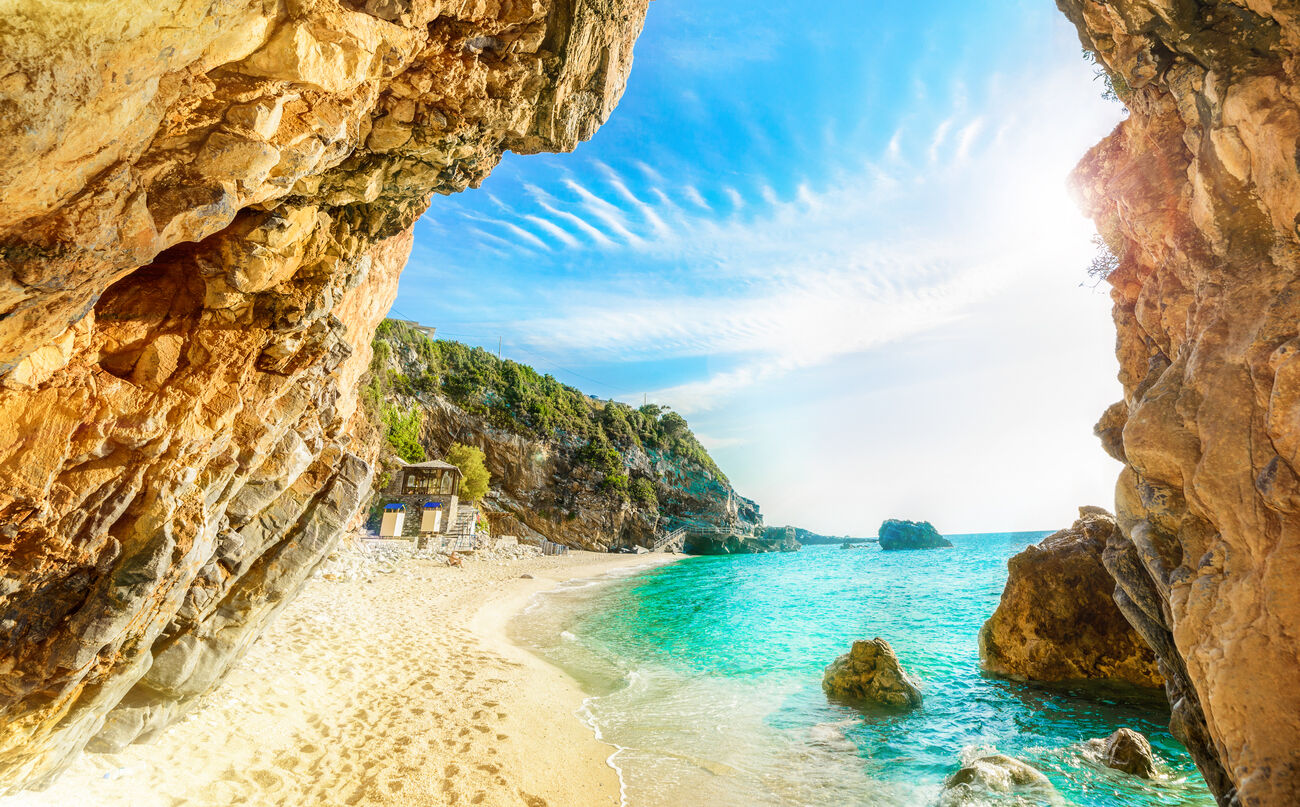
Corfu
Weather
Local Information
Plug Socket Type
Type C/F (European two-pin). Irish visitors need a travel adapter.
Currency
Euro
Time Zones
GMT+2 (2 hours ahead of Ireland year-round).
Local Emergency Contact
112 (general emergency). 166 (tourist police). Irish Embassy Athens: +30 210 723 2771.
Travel Information
Flight Time
Approximately 3.5 hours from Dublin. Seasonal flights May-October.
Distance from Beach
All resorts have beaches within walking distance.
Do I need a Visa?
No. Greece is an EU member state. Irish citizens need only a valid passport or identity card.
3 Things to do in Corfu
Corfu Old Town (UNESCO)
–Venetian old town with French arcades, British-era cricket pitch and atmospheric narrow streets (kantounia).
Paleokastritsa
–Stunning west coast bays with crystal-clear water, a hilltop monastery and boat trips to hidden grottoes.
Achilleion Palace
–Empress Sisi of Austria's neoclassical palace with beautiful gardens and views over the island.
Description
Discover Corfu, the lush 'Emerald Isle' of the Ionian Sea, offering Venetian architecture in Corfu Town (a UNESCO site), stunning beaches, olive groves, and a blend of Greek and Italian influences.
Corfu is the greenest and most lush of the Greek islands, draped in olive groves, cypress trees and wildflowers that give it a character quite unlike the arid Cyclades or Dodecanese. This Ionian island bears the unmistakable influence of over 400 years of Venetian rule — visible in the elegant architecture of Corfu Town with its Liston arcade, narrow alleyways and two imposing fortresses. The island's varied coastline offers everything from long sandy beaches on the west coast to intimate pebble coves in the northeast, with the famous Paleokastritsa bay combining dramatic cliffs with crystal-clear turquoise water. Corfu's cuisine reflects its cosmopolitan past, blending Greek, Venetian and British influences — sofrito, pastitsada and the island's unique kumquat liqueur are local specialities. The British legacy extends to cricket, still played on the Spianada in Corfu Town. For Irish visitors, Corfu is one of the closest Greek islands with flights from Dublin taking around three and a half hours. The island's combination of natural beauty, cultural depth, excellent beaches and welcoming atmosphere makes it a perennial favourite.
Culture and Experiences
What's Nearby?
Paxos & Antipaxos
– Beautiful small islands south of Corfu reached by boat trip. Turquoise water, sea caves and unspoilt charm.
Albania Day Trip
– Short ferry crossing to Saranda in Albania — a chance to visit the ancient ruins of Butrint (UNESCO site).
Mouse Island (Pontikonisi)
– Tiny island with a Byzantine chapel, just offshore from Corfu Town. Iconic photo opportunity.
History
Venetian Rule (1386-1797)
– Over 400 years of Venetian control shaped Corfu's architecture and cuisine.
British Protectorate (1815-1864)
– The British left cricket, ginger beer and the road network.
Gerald Durrell
– My Family and Other Animals brought Corfu international literary fame.
Local Markets
Corfu Town Market
– Daily market selling fresh fish, fruit, vegetables, olive oil and spices.
Village Markets
– Rotating weekly markets in different villages.
Events and Festivals
Easter Celebrations
– Corfu's Easter is the most spectacular in Greece — pot-throwing on Holy Saturday.
Cricket Season (Spring-Autumn)
– Matches on the Spianada — a unique British legacy with a Greek twist.
Varkarola Festival (August)
– Naval re-enactment with decorated boats in Paleokastritsa bay.
Local Etiquette
Church Dress
– Cover shoulders and knees for church visits.
Afternoon Siesta
– Many shops close 2-5pm, especially in villages.
Tipping
– 5-10% for good service. Not obligatory.
Dining and Night Life
Local Cuisine
Sofrito
– Corfu's signature dish — thin veal slices in garlic and white wine sauce.
Pastitsada
– Spiced meat in rich tomato sauce with tubular pasta. Sunday lunch tradition.
Kumquat Liqueur
– Corfu is the only place in Greece that grows kumquats.
Bourdeto
– Spicy fish stew with scorpion fish, paprika and tomato.
Night Life
Kavos
– Corfu's main party resort with late-night clubs.
Corfu Town (Liston)
– Elegant bars under French-style arcades on the Spianada.
Sidari Bars
– Relaxed evening entertainment with bars and live music.

Read Time: 5 mins
Kavos is Corfu's party capital, a purpose-built resort at the southern tip of the island that draws young Irish and British holidaymakers in their thousands every summer. The one-kilometre strip of bars, clubs and restaurants comes alive after dark with drink deals, themed nights, foam parties and a collective commitment to having the time of your life. By day, the long sandy beach and the surrounding countryside offer more relaxed pursuits. For younger Irish travellers looking for a classic group holiday with guaranteed craic, Kavos is the destination.
Location and Getting There
Kavos is at the very southern tip of Corfu, approximately fifty minutes from Corfu Airport (CFU). The flight from Dublin takes around three and a half hours. The resort is relatively isolated from the rest of the island, which contributes to its self-contained party atmosphere.
Beaches
Kavos beach is a long stretch of sand backed by the resort. The water is shallow and warm, ideal for swimming and beach games. It is a good beach for a resort of this type — wide enough to absorb the crowds and well maintained. Beyond the main strip, quieter beaches can be found by walking south towards the Asprokavos area and the tip of the island. The small island of Paxos, visible from the coast, can be visited on a day trip.
Greek beaches are renowned worldwide for their water clarity, and the islands consistently rank among Europe's top beach destinations. The combination of the Mediterranean climate, clean seas and varied coastline — from wide sandy stretches to intimate pebble coves — means there is a beach for every preference. Many Greek beaches are backed by tavernas where you can enjoy fresh fish and a cold beer just metres from the water. Beach etiquette in Greece is relaxed, and public access to the shoreline is protected by law, though sunbed areas on popular beaches are typically managed by nearby businesses.
Things to Do
Boat trips are the main daytime excursion — cruises to Paxos and Antipaxos islands are popular, with swimming stops in the famous blue caves and the turquoise waters around Antipaxos. These are genuinely beautiful trips that provide a contrast to the resort nightlife. Water sports on the beach include jet skiing, banana boats and parasailing. Quad biking and buggy tours explore the southern countryside. For a day out, Corfu Town offers history and culture — though most Kavos visitors are here for the strip and the beach.
Island-hopping is one of the great pleasures of a Greek holiday, and even if you are based on one island, day trips to nearby islands are often available by ferry or excursion boat. The Greek islands also offer a range of cultural experiences beyond the major archaeological sites — local festivals (panigiri), the evening volta (the traditional evening stroll), and the simple pleasure of sitting in a village square watching the world go by while sipping a cold frappe coffee. For active visitors, kayaking, hiking the coastal paths and cycling are increasingly popular ways to explore the island landscapes away from the beach.
Dining and Nightlife
The strip has dozens of restaurants serving international food — British breakfasts, burgers, Greek and Italian are all available. The focus is on value rather than gastronomy. Nightlife is Kavos's raison d'etre — the strip has over thirty bars and clubs, many open-fronted and spilling onto the street. Bar crawls, themed nights, drink promotions and events run every evening during the summer season. The crowd is predominantly eighteen to twenty-five. Major club nights feature well-known DJs. The atmosphere is exuberant and uninhibited.
One of the great joys of eating in Greece is the emphasis on fresh, seasonal ingredients prepared simply. The taverna culture — where you might choose your fish from a display, point at dishes in the kitchen, or simply ask what is good today — creates a personal, unhurried dining experience that is central to Greek island life. Raki or tsipouro (the local grape spirits) are often offered free at the end of a meal as a gesture of hospitality. Greek wine has improved enormously in recent decades, and island wineries are producing labels that increasingly challenge the old assumption that Greek wine begins and ends with retsina. Vegetarian visitors will find Greece particularly accommodating — dishes like gigantes (giant beans), briam (roasted vegetables), spanakopita and the ubiquitous Greek salad with local feta make for excellent meat-free eating.
Best Time to Visit
The party season runs from June to September, peaking in July and August. Outside these months, most venues are closed. Kavos is a strictly summer destination.
Practical Information for Irish Visitors
Greece is in the EU. Euro, no visa. Two hours ahead of Ireland. English is the default language in Kavos.
Healthcare is available through the European Health Insurance Card (EHIC), but comprehensive travel insurance is strongly advised. Greek pharmacies are well equipped and pharmacists are knowledgeable — for minor ailments, a pharmacy visit is often sufficient. Tap water quality varies by island — on the larger islands it is generally safe, but bottled water is cheap and widely preferred. Greek time is two hours ahead of Ireland year-round, which is worth noting when calling home or planning flight connections. The pace of life in Greece is famously relaxed, with late dinners (often starting at nine or ten in the evening) and a general emphasis on enjoying the moment rather than rushing through the day.
Why Book with Sunholidays.ie
Sunholidays.ie is Irish-owned and IAA licensed (Licence No. T0601). Twenty euro per person deposit, monthly payments, price match guarantee. The team regularly books Kavos holidays for Irish groups and can recommend the best-positioned hotels for easy access to the strip and beach.

Read Time: 5 mins
Paleokastritsa is Corfu's most spectacular coastal destination, a collection of emerald-green coves and crystal-clear bays backed by steep, cypress-covered hillsides on the island's north-west coast. Legend has it that this was the spot where Odysseus was washed ashore and discovered by Princess Nausicaa — and standing at any viewpoint above the bays, the mythological association feels entirely plausible. For Irish visitors seeking natural beauty that genuinely takes the breath away, Paleokastritsa is the highlight of Corfu.
Location and Getting There
Paleokastritsa is on Corfu's north-west coast, approximately thirty minutes' drive from Corfu Airport (CFU). The flight from Dublin takes around three and a half hours. The drive from the airport passes through olive groves and traditional villages before the dramatic descent to the coast.
Beaches
Paleokastritsa has six bays, each with its own beach or bathing area. The main beach, Agios Spiridon, has sand and pebble with sunbeds and a taverna. The water clarity is extraordinary — you can see the seabed in several metres of water. Some of the smaller coves are only accessible by boat, adding to their sense of seclusion. Glass-bottom boat trips and water taxis operate between the bays, allowing you to explore and find your favourite. La Grotta, a natural swimming spot accessed via steps cut into the rock, is popular for diving and jumping into deep, clear water.
Greek beaches are renowned worldwide for their water clarity, and the islands consistently rank among Europe's top beach destinations. The combination of the Mediterranean climate, clean seas and varied coastline — from wide sandy stretches to intimate pebble coves — means there is a beach for every preference. Many Greek beaches are backed by tavernas where you can enjoy fresh fish and a cold beer just metres from the water. Beach etiquette in Greece is relaxed, and public access to the shoreline is protected by law, though sunbed areas on popular beaches are typically managed by nearby businesses.
Things to Do
Boat trips are the essential Paleokastritsa activity — small boats can be hired to explore the hidden caves and coves along the coast. The Theotokos Monastery, perched on a headland above the bays, is a thirteenth-century foundation with beautiful gardens and a small museum. The Angelokastro fortress, a steep walk above the area, is one of the most important Byzantine castles in Greece and offers extraordinary views across the west coast. Diving and snorkelling are excellent in the clear waters. A visit to the nearby hill village of Lakones for a meal with panoramic views is highly recommended.
Island-hopping is one of the great pleasures of a Greek holiday, and even if you are based on one island, day trips to nearby islands are often available by ferry or excursion boat. The Greek islands also offer a range of cultural experiences beyond the major archaeological sites — local festivals (panigiri), the evening volta (the traditional evening stroll), and the simple pleasure of sitting in a village square watching the world go by while sipping a cold frappe coffee. For active visitors, kayaking, hiking the coastal paths and cycling are increasingly popular ways to explore the island landscapes away from the beach.
Dining and Nightlife
Paleokastritsa has a good selection of tavernas and restaurants along the road above the bays and at the beach level. Fresh fish is the highlight — the fishing boats still land their catch in the bay. Greek salads, grilled octopus and souvlaki are all well executed. Dining with a view is easy to arrange. Nightlife is very quiet — a drink in a taverna overlooking the moonlit bay is the evening entertainment. For a livelier scene, Corfu Town is thirty minutes' drive.
One of the great joys of eating in Greece is the emphasis on fresh, seasonal ingredients prepared simply. The taverna culture — where you might choose your fish from a display, point at dishes in the kitchen, or simply ask what is good today — creates a personal, unhurried dining experience that is central to Greek island life. Raki or tsipouro (the local grape spirits) are often offered free at the end of a meal as a gesture of hospitality. Greek wine has improved enormously in recent decades, and island wineries are producing labels that increasingly challenge the old assumption that Greek wine begins and ends with retsina. Vegetarian visitors will find Greece particularly accommodating — dishes like gigantes (giant beans), briam (roasted vegetables), spanakopita and the ubiquitous Greek salad with local feta make for excellent meat-free eating.
Best Time to Visit
May to October. The bays are most beautiful in June and September, when the light is soft and the water is warm. July and August are busy with day-trippers from the resorts. Early morning or late afternoon visits to the beaches are recommended in peak season.
Practical Information for Irish Visitors
Greece is in the EU. Euro, no visa. Two hours ahead of Ireland. English spoken in tourist businesses. A hire car is useful for exploring Corfu from a Paleokastritsa base.
Healthcare is available through the European Health Insurance Card (EHIC), but comprehensive travel insurance is strongly advised. Greek pharmacies are well equipped and pharmacists are knowledgeable — for minor ailments, a pharmacy visit is often sufficient. Tap water quality varies by island — on the larger islands it is generally safe, but bottled water is cheap and widely preferred. Greek time is two hours ahead of Ireland year-round, which is worth noting when calling home or planning flight connections. The pace of life in Greece is famously relaxed, with late dinners (often starting at nine or ten in the evening) and a general emphasis on enjoying the moment rather than rushing through the day.
Why Book with Sunholidays.ie
Sunholidays.ie is Irish-owned and IAA licensed (Licence No. T0601). Twenty euro per person deposit, monthly payments, price match guarantee. Paleokastritsa has a limited range of accommodation, so booking through Sunholidays.ie ensures the best selection.

Read Time: 5 mins
Sidari is a lively, family-oriented resort on Corfu's north coast that combines good beaches, a famous natural landmark and a well-developed tourist infrastructure with a relaxed Greek island atmosphere. The Canal d'Amour — a series of dramatic rock formations and narrow sea channels eroded from the sandstone cliffs — is Sidari's most famous feature, and legend says that couples who swim through the canal together will stay together forever. For Irish families and young couples seeking an affordable, fun Corfu base, Sidari has strong appeal.
Location and Getting There
Sidari is on the north coast of Corfu, approximately forty minutes from Corfu Airport (CFU). The flight from Dublin takes around three and a half hours. The resort is spread along the coast with a main village centre connected to the beach areas.
Beaches
Sidari has several beaches. The main beach is a long sandy stretch with sunbeds, parasols and water sports. Canal d'Amour, to the west, is the most visually striking — narrow channels carved through golden sandstone, with small sandy coves and clear swimming water. The rock formations are genuinely impressive and make for excellent photographs. Megali beach to the east of the centre is another sandy option. The beaches are family-friendly with gentle shelving.
Greek beaches are renowned worldwide for their water clarity, and the islands consistently rank among Europe's top beach destinations. The combination of the Mediterranean climate, clean seas and varied coastline — from wide sandy stretches to intimate pebble coves — means there is a beach for every preference. Many Greek beaches are backed by tavernas where you can enjoy fresh fish and a cold beer just metres from the water. Beach etiquette in Greece is relaxed, and public access to the shoreline is protected by law, though sunbed areas on popular beaches are typically managed by nearby businesses.
Things to Do
Sidari Water Park is a popular family attraction. Boat trips depart to the nearby Diapontia Islands (Erikoussa, Othoni and Mathraki) — beautiful, quiet Greek islands that feel a world away from the tourism of the main resort. Glass-bottom boat trips along the coast are also available. The village has a small selection of shops, mini markets and cafes for browsing. Day trips to Corfu Town, Paleokastritsa and the Achilleion Palace are all feasible. The north coast of Corfu has a pleasant rural hinterland of olive groves and traditional villages.
Island-hopping is one of the great pleasures of a Greek holiday, and even if you are based on one island, day trips to nearby islands are often available by ferry or excursion boat. The Greek islands also offer a range of cultural experiences beyond the major archaeological sites — local festivals (panigiri), the evening volta (the traditional evening stroll), and the simple pleasure of sitting in a village square watching the world go by while sipping a cold frappe coffee. For active visitors, kayaking, hiking the coastal paths and cycling are increasingly popular ways to explore the island landscapes away from the beach.
Dining and Nightlife
Sidari has a good range of restaurants along the main strip and near the beaches. Greek tavernas, pizza places, British-style pubs and family restaurants are well represented. Prices are among the most affordable on Corfu. Nightlife is moderately lively — there are bars, music venues and a few clubs that stay open late during summer. The atmosphere is friendly and sociable rather than intense.
One of the great joys of eating in Greece is the emphasis on fresh, seasonal ingredients prepared simply. The taverna culture — where you might choose your fish from a display, point at dishes in the kitchen, or simply ask what is good today — creates a personal, unhurried dining experience that is central to Greek island life. Raki or tsipouro (the local grape spirits) are often offered free at the end of a meal as a gesture of hospitality. Greek wine has improved enormously in recent decades, and island wineries are producing labels that increasingly challenge the old assumption that Greek wine begins and ends with retsina. Vegetarian visitors will find Greece particularly accommodating — dishes like gigantes (giant beans), briam (roasted vegetables), spanakopita and the ubiquitous Greek salad with local feta make for excellent meat-free eating.
Best Time to Visit
May to October. June and September offer warm weather and lower prices. July and August are the busiest months. The Canal d'Amour is best visited early in the day before the day-trippers arrive.
Practical Information for Irish Visitors
Greece is in the EU. Euro, no visa. Two hours ahead of Ireland. English widely spoken.
Healthcare is available through the European Health Insurance Card (EHIC), but comprehensive travel insurance is strongly advised. Greek pharmacies are well equipped and pharmacists are knowledgeable — for minor ailments, a pharmacy visit is often sufficient. Tap water quality varies by island — on the larger islands it is generally safe, but bottled water is cheap and widely preferred. Greek time is two hours ahead of Ireland year-round, which is worth noting when calling home or planning flight connections. The pace of life in Greece is famously relaxed, with late dinners (often starting at nine or ten in the evening) and a general emphasis on enjoying the moment rather than rushing through the day.
Why Book with Sunholidays.ie
Sunholidays.ie is Irish-owned and IAA licensed (Licence No. T0601). Twenty euro per person deposit, monthly payments, price match guarantee. Sidari offers excellent value — the team can find great deals for family holidays.

Read Time: 5 mins
Dassia and Ipsos are neighbouring resorts on Corfu's sheltered east coast, set against a backdrop of green wooded hillsides that slope down to the sea. These are among the closest resort areas to Corfu Town, making them ideal for visitors who want easy access to the island's cultural capital while basing themselves on a pleasant beach. The bays here are calm and warm, with good water sports facilities and a relaxed family atmosphere that has made them popular with Irish and British holidaymakers for decades.
Location and Getting There
Dassia and Ipsos are on Corfu's north-east coast, approximately fifteen to twenty minutes from Corfu Airport (CFU) and ten minutes from Corfu Town. The flight from Dublin takes around three and a half hours. The resorts sit on adjoining bays separated by a wooded headland, with the main coast road connecting them.
Beaches
Dassia Beach is a long, narrow strip of shingle and sand backed by olive trees, with calm water that is good for swimming and water sports. Ipsos Beach is a longer stretch with a mix of sand and pebble, also well organised with sunbeds and parasols. Both beaches have full facilities and lifeguards in summer. The water is generally calm on this sheltered east coast, making it safe for families. Barbati beach, just north of Ipsos, is one of the most attractive on the island — a long pebble beach with exceptionally clear water and dramatic views across to the Albanian mountains.
Greek beaches are renowned worldwide for their water clarity, and the islands consistently rank among Europe's top beach destinations. The combination of the Mediterranean climate, clean seas and varied coastline — from wide sandy stretches to intimate pebble coves — means there is a beach for every preference. Many Greek beaches are backed by tavernas where you can enjoy fresh fish and a cold beer just metres from the water. Beach etiquette in Greece is relaxed, and public access to the shoreline is protected by law, though sunbed areas on popular beaches are typically managed by nearby businesses.
Things to Do
Water sports are well catered for, with windsurfing, kayaking, pedal boats, banana boats and parasailing available on both beaches. Diving schools operate in the area. Corfu Town, with its UNESCO-listed Old Fortress, the Liston arcade, the Spianada square and the Old Town's Venetian lanes, is a short drive or bus ride and deserves at least a full day of exploration. The Achilleion Palace, built for Empress Sisi of Austria, is another popular excursion. Boat trips to Paleokastritsa and the offshore islands provide variety.
Island-hopping is one of the great pleasures of a Greek holiday, and even if you are based on one island, day trips to nearby islands are often available by ferry or excursion boat. The Greek islands also offer a range of cultural experiences beyond the major archaeological sites — local festivals (panigiri), the evening volta (the traditional evening stroll), and the simple pleasure of sitting in a village square watching the world go by while sipping a cold frappe coffee. For active visitors, kayaking, hiking the coastal paths and cycling are increasingly popular ways to explore the island landscapes away from the beach.
Dining and Nightlife
Both Dassia and Ipsos have a selection of tavernas, restaurants and bars along the main road and near the beaches. Greek home cooking, seafood, pizza and pub food are all available. Ipsos has a slightly more lively bar scene, with several venues that stay open late in summer. Dassia is quieter and more family-oriented. For the widest choice of dining and nightlife, Corfu Town is a short journey away.
One of the great joys of eating in Greece is the emphasis on fresh, seasonal ingredients prepared simply. The taverna culture — where you might choose your fish from a display, point at dishes in the kitchen, or simply ask what is good today — creates a personal, unhurried dining experience that is central to Greek island life. Raki or tsipouro (the local grape spirits) are often offered free at the end of a meal as a gesture of hospitality. Greek wine has improved enormously in recent decades, and island wineries are producing labels that increasingly challenge the old assumption that Greek wine begins and ends with retsina. Vegetarian visitors will find Greece particularly accommodating — dishes like gigantes (giant beans), briam (roasted vegetables), spanakopita and the ubiquitous Greek salad with local feta make for excellent meat-free eating.
Best Time to Visit
May to October. Corfu has more rainfall than the southern Greek islands, which accounts for its lush green landscape. The east coast is more sheltered than the west. June and September are ideal — warm, sunny and less crowded than July and August.
Practical Information for Irish Visitors
Greece is in the EU. Euro, no visa. Two hours ahead of Ireland. English widely spoken.
Healthcare is available through the European Health Insurance Card (EHIC), but comprehensive travel insurance is strongly advised. Greek pharmacies are well equipped and pharmacists are knowledgeable — for minor ailments, a pharmacy visit is often sufficient. Tap water quality varies by island — on the larger islands it is generally safe, but bottled water is cheap and widely preferred. Greek time is two hours ahead of Ireland year-round, which is worth noting when calling home or planning flight connections. The pace of life in Greece is famously relaxed, with late dinners (often starting at nine or ten in the evening) and a general emphasis on enjoying the moment rather than rushing through the day.
Why Book with Sunholidays.ie
Sunholidays.ie is Irish-owned and IAA licensed (Licence No. T0601). Twenty euro per person deposit, monthly payments, price match guarantee. The team can recommend the right accommodation in this popular, convenient part of Corfu.