
Malta
Weather
Local Information
Plug Socket Type
Type G (same as Ireland and UK). No adapter needed for Irish visitors.
Currency
Euro
Time Zones
GMT+1 (1 hour ahead of Ireland in winter, same in summer).
Local Emergency Contact
112 (general emergency). Irish Embassy (nearest): Rome +39 06 585 2381.
Travel Information
Flight Time
Approximately 3 hours from Dublin to Malta (MLA). Year-round services.
Distance from Beach
Malta is compact. Rocky swimming spots are within walking distance from most areas. Sandy beaches may require a bus ride.
Do I need a Visa?
No. Malta is an EU member state. Irish citizens need only a valid passport or identity card.
3 Things to do in Malta
Valletta Old Town
–UNESCO World Heritage capital built by the Knights of St John — baroque architecture, Grand Harbour and excellent museums.
Blue Grotto
–Stunning sea caves on the south coast, explored by traditional boat trips. Best visited in the morning for optimal light.
Mdina (The Silent City)
–Ancient walled city on a hilltop in central Malta — narrow streets, cathedral and panoramic views.
Description
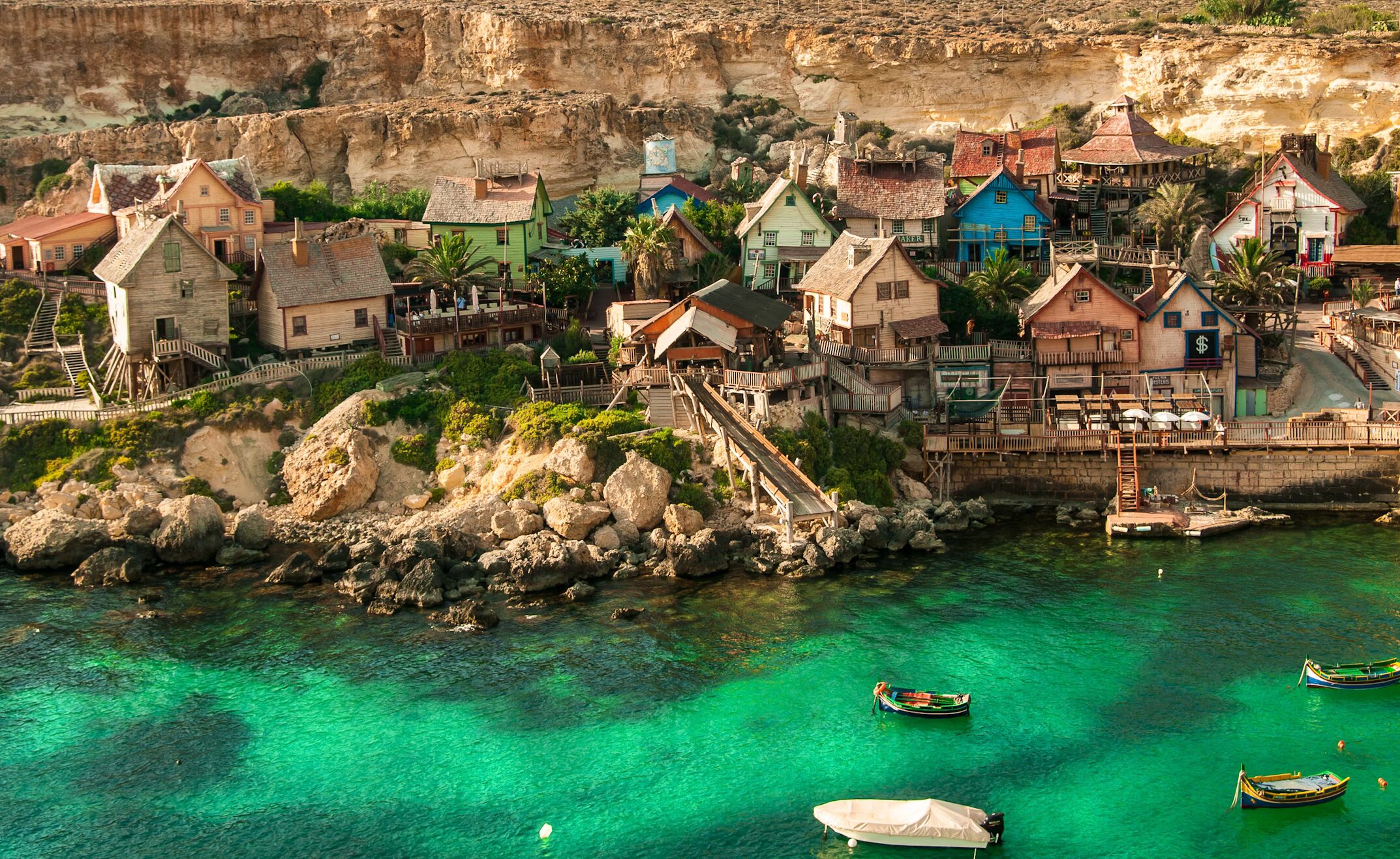
Discover Malta, a sun-kissed Mediterranean jewel where millennia of history, stunning coastal landscapes, and vibrant culture converge. Explore ancient temples, dive into crystal-clear waters, and wander through golden-hued fortified cities.
Malta is a remarkable archipelago in the heart of the Mediterranean that punches well above its weight as a holiday destination. Despite being one of Europe's smallest countries, Malta offers an extraordinary density of history, culture and things to do — from prehistoric temples older than the Egyptian pyramids to the Baroque splendour of Valletta, a UNESCO World Heritage capital city built by the Knights of St John. The island's coastline is dramatic and varied, with limestone cliffs, hidden bays, natural rock pools and some of the clearest water in the Mediterranean for swimming and diving. English is an official language alongside Maltese, which means Irish visitors will have absolutely no communication difficulties — a significant advantage over many Mediterranean destinations. Malta enjoys over 300 days of sunshine per year and offers excellent value, with affordable restaurants, cheap public transport and a wide range of accommodation. The sister island of Gozo adds a quieter, more rural dimension with its own temples, beaches and the famous Azure Window site. Direct flights from Dublin take around three and a half hours, and Malta's combination of history, sunshine, English-speaking hospitality and outstanding value makes it one of the most rewarding holiday choices for Irish travellers.
Culture and Experiences
What's Nearby?
Gozo
– Malta's sister island with Ggantija temples, Azure Window site, Ramla Bay and a quieter pace of life.
Comino Blue Lagoon
– Tiny island between Malta and Gozo famous for its crystal-clear turquoise swimming lagoon.
Three Cities
– Vittoriosa, Senglea and Cospicua — historic harbour towns across the Grand Harbour from Valletta, rich with maritime heritage.
History
Megalithic Temples
– Malta's prehistoric temples (Hagar Qim, Mnajdra, Ggantija) are among the oldest free-standing structures on Earth — older than the Egyptian pyramids.
Knights of St John (1530-1798)
– The Knights Hospitaller built Valletta, the fortifications and many of Malta's most impressive buildings during their 268-year rule.
World War II
– Malta endured intense Axis bombing in WWII. The island was collectively awarded the George Cross in 1942 for bravery.
Local Markets
Marsaxlokk Fish Market (Sunday)
– Colourful fishing village with a famous Sunday market — fresh fish, local produce and souvenirs around the harbour with traditional luzzu boats.
Valletta Market
– Covered market near the city gate with local produce, Maltese crafts and food stalls.
Events and Festivals
Village Festas (Summer)
– Every village celebrates its patron saint with fireworks, band marches, decorated streets and feasting. Most weekends June-September.
Carnival (February)
– Colourful floats, grotesque masks and dance parties, centred on Valletta and Floriana.
Notte Bianca (October)
– Valletta's 'White Night' — museums, palaces and churches open late with free cultural events, music and performances.
Local Etiquette
Language
– English and Maltese are both official languages. You will have absolutely no communication difficulties.
Church Dress
– Malta is strongly Catholic. Cover shoulders and knees when visiting churches — this is strictly enforced.
Tipping
– Rounding up the bill or leaving 5-10% is appreciated but not expected.
Dining and Night Life
Local Cuisine
Pastizzi
– Flaky pastry parcels filled with ricotta or mushy peas — the ubiquitous Maltese street snack, under €1 each.
Rabbit Stew (Stuffat tal-Fenek)
– Malta's national dish — slow-braised rabbit in red wine and tomato. Found on every traditional restaurant menu.
Ftira
– Maltese sourdough bread/pizza, often topped with tomato, capers, olives and tuna. Gozo's version is particularly famous.
Kinnie
– Malta's unique bitter orange soft drink — an acquired taste and a local icon.
Night Life
Paceville (St Julian's)
– Malta's main nightlife district with clubs, bars and late-night entertainment. The island's party hub.
Valletta Evening Scene
– Increasingly vibrant evening dining and cocktail scene along Strait Street (formerly 'The Gut') and Republic Street.
Sliema Waterfront
– Bars and restaurants along the promenade — more relaxed than Paceville.

Read Time: 5 mins
St Julian's is Malta's entertainment capital, a former fishing village that has evolved into the island's liveliest resort area. It encompasses the picturesque Spinola Bay, with its colourful traditional fishing boats, and the adjacent Paceville district, which is Malta's undisputed nightlife hub. Despite its modern development, St Julian's retains pockets of genuine charm, and its location between Sliema and the northern beaches makes it a well-connected base for exploring the island. For younger Irish visitors and those who enjoy a lively atmosphere, St Julian's offers energy and convenience.
Location and Getting There
St Julian's is on Malta's north-east coast, approximately twenty-five minutes from Malta Airport (MLA). The flight from Dublin takes around three hours. The resort is connected to Sliema to the south and the northern beaches by public bus, and the Valletta ferry at Sliema is a short walk away.
Beaches
St George's Bay is St Julian's main beach — a small but popular stretch of sand in a sheltered bay surrounded by hotels and restaurants. It is the most accessible sandy beach on the east coast and gets busy in summer. For larger beaches, Mellieha Bay (Malta's biggest sandy beach) is around thirty minutes by bus. The rocky bathing areas along the Sliema-St Julian's promenade offer alternative swimming spots with ladders into the clear sea.
Malta's coastline is predominantly rocky limestone, which creates a different bathing experience from sandy-beach destinations. The advantage is exceptional water clarity — the visibility in Malta's seas is among the best in the Mediterranean, which is why the island is a world-renowned diving destination. Where sandy beaches do exist, they tend to be in sheltered bays with calm, shallow water. The rocky swimming areas, accessed by cut stone steps or natural ledges, are a quintessentially Maltese experience — the water is deep, clean and intensely blue. Many hotels compensate for the lack of sand with excellent pool facilities, including some with spectacular views from rooftop infinity pools.
Things to Do
Spinola Bay is the aesthetic highlight — the small harbour with its colourful luzzu fishing boats is a lovely spot for a waterfront stroll or meal. The Portomaso Marina complex has shops, restaurants and a casino. Water sports are available at St George's Bay. Malta's attractions are compact and accessible — Valletta is fifteen minutes by bus, the Three Cities a short trip by ferry, and the prehistoric temples of Hagar Qim and Mnajdra are within an hour. Boat trips to the Blue Lagoon on Comino island depart from the north of Malta. Language schools in St Julian's attract an international student population that adds to the cosmopolitan atmosphere.
Malta's cultural calendar is packed with events that visitors can enjoy. The village festas (patron saint festivals) are held throughout summer and feature spectacular fireworks, brass bands, processions and communal celebrations that offer a genuine insight into Maltese community life. The Malta International Arts Festival, Notte Bianca (a free cultural night in Valletta) and the Carnival are all significant events. For diving enthusiasts, Malta is a world-class destination — wreck dives, cave dives and reef dives are available for all levels, with visibility often exceeding thirty metres.
Dining and Nightlife
St Julian's has a wide range of restaurants, from harbour-side fine dining at Spinola Bay to casual cafes and international chains. Maltese rabbit stew, fresh fish and pasta dishes feature alongside global cuisine. Paceville is the nightlife centre of Malta — a compact area packed with bars, clubs and entertainment venues that come alive after midnight. The scene is young, energetic and international. Outside Paceville, the Spinola Bay waterfront and Portomaso have more sophisticated evening options.
Maltese cuisine is a fascinating blend of Sicilian, North African, British and Middle Eastern influences. Beyond the signature dishes, look out for kapunata (the Maltese ratatouille), ross il-forn (baked rice), and timpana (baked pasta with meat). Ftira, a traditional Gozitan flatbread topped with potato, tomato and capers, is a must-try. Maltese bread (hobza) baked in traditional stone ovens is exceptional. The island produces its own wines from local grape varieties, and the Marsovin and Delicata wineries offer tastings. Cisk, the local beer, is a refreshing light lager perfect for a hot day. Dining in Malta is generally good value by European standards.
Best Time to Visit
St Julian's is lively year-round due to the language school population. Summer (June to September) is the peak season for beach and nightlife. The club scene is busiest in July and August. Spring and autumn are pleasant for sightseeing.
Practical Information for Irish Visitors
Malta is in the EU. Euro, no visa. One hour ahead of Ireland. English is spoken everywhere.
Malta is one of the easiest Mediterranean destinations for Irish visitors. English is an official language, so there is absolutely no communication barrier — menus, signs, TV and conversation are all available in English. The currency is the euro. Malta drives on the left, just like Ireland, which makes hire-car driving intuitive. Public buses serve the entire island network from the central terminus at Valletta, though services can be crowded in summer. The Tallinja card (a tap-on travel card) makes bus travel convenient and affordable. Healthcare is accessible through the EHIC. Malta's compact size means nowhere is more than an hour's drive from anywhere else, making it one of the most explorable holiday destinations available.
Why Book with Sunholidays.ie
Sunholidays.ie is Irish-owned and IAA licensed (Licence No. T0601). Twenty euro per person deposit, monthly payments, price match guarantee. The team can recommend the right St Julian's hotel — harbour-side for couples, Paceville-adjacent for nightlife seekers.
Read Time: 5 mins
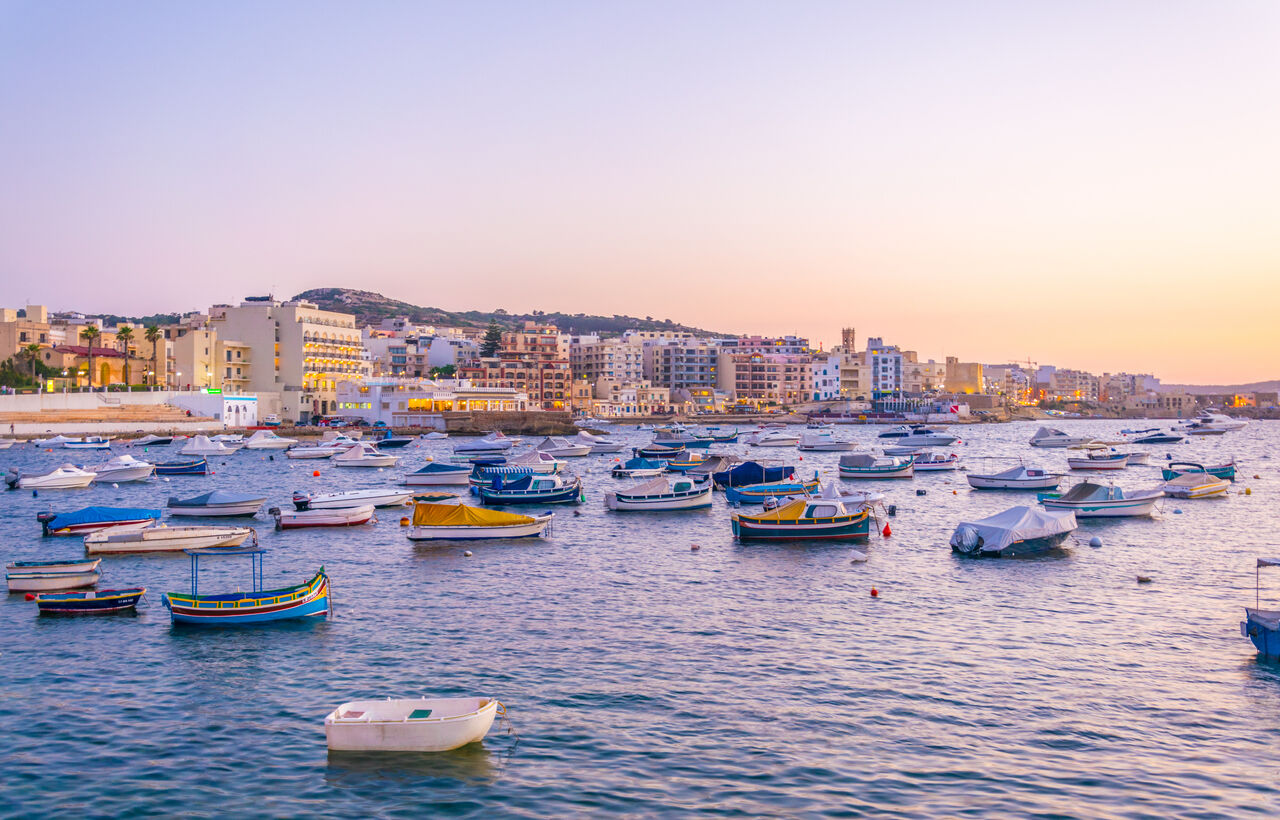
Bugibba and Qawra form a continuous resort area on Malta's north coast that has established itself as the island's most family-friendly holiday destination. The area offers a relaxed pace, a good selection of hotels and restaurants, the National Aquarium, and easy access to some of Malta's best beaches and boat trip departure points. While it lacks the historic grandeur of Valletta or the sophistication of Sliema, it compensates with affordability, convenience and a welcoming atmosphere that has made it popular with Irish families for years.
Location and Getting There
Bugibba and Qawra are on Malta's north-east coast, around St Paul's Bay. Malta Airport (MLA) is approximately thirty minutes' drive. The flight from Dublin takes around three hours. The area sits on a peninsula, with the bay to the south and open sea to the north and east.
Beaches
The immediate coastline at Bugibba and Qawra is predominantly rocky, with swimming spots accessed via steps and platforms. The water is clean and suitable for snorkelling. For sandy beaches, Mellieha Bay — Malta's largest and most family-friendly beach — is around fifteen minutes' drive north. Golden Bay and Ghajn Tuffieha, two beautiful sandy beaches on the western coast, are also within easy reach. Many visitors use Bugibba as a base and drive or take buses to the sandy beaches.
Malta's coastline is predominantly rocky limestone, which creates a different bathing experience from sandy-beach destinations. The advantage is exceptional water clarity — the visibility in Malta's seas is among the best in the Mediterranean, which is why the island is a world-renowned diving destination. Where sandy beaches do exist, they tend to be in sheltered bays with calm, shallow water. The rocky swimming areas, accessed by cut stone steps or natural ledges, are a quintessentially Maltese experience — the water is deep, clean and intensely blue. Many hotels compensate for the lack of sand with excellent pool facilities, including some with spectacular views from rooftop infinity pools.
Things to Do
The Malta National Aquarium in Qawra is a popular family attraction, with tanks recreating Mediterranean and tropical marine environments. Boat trips to the Blue Lagoon on Comino island depart from Bugibba harbour — the Blue Lagoon is one of Malta's most famous attractions, a shallow bay of intensely turquoise water between Comino and Cominotto islands. The St Paul's Islands, just offshore, are visible from the promenade and connected to the legend of St Paul's shipwreck on Malta. The area has mini golf, go-karting and other family entertainment. Valletta, the Three Cities and the prehistoric temple sites are all accessible by public bus.
Malta's cultural calendar is packed with events that visitors can enjoy. The village festas (patron saint festivals) are held throughout summer and feature spectacular fireworks, brass bands, processions and communal celebrations that offer a genuine insight into Maltese community life. The Malta International Arts Festival, Notte Bianca (a free cultural night in Valletta) and the Carnival are all significant events. For diving enthusiasts, Malta is a world-class destination — wreck dives, cave dives and reef dives are available for all levels, with visibility often exceeding thirty metres.
Dining and Nightlife
Bugibba's waterfront and main streets have a good range of restaurants at reasonable prices. Maltese cuisine, British fare, Italian, Indian and Chinese are all represented. The seafront is pleasant for evening dining. Nightlife is moderate — there are bars, pubs and occasional live music, but the atmosphere is more family-friendly than the Paceville scene to the south. Ta' Fra Ben restaurant in nearby Mellieha is one of Malta's best-known dining establishments.
Maltese cuisine is a fascinating blend of Sicilian, North African, British and Middle Eastern influences. Beyond the signature dishes, look out for kapunata (the Maltese ratatouille), ross il-forn (baked rice), and timpana (baked pasta with meat). Ftira, a traditional Gozitan flatbread topped with potato, tomato and capers, is a must-try. Maltese bread (hobza) baked in traditional stone ovens is exceptional. The island produces its own wines from local grape varieties, and the Marsovin and Delicata wineries offer tastings. Cisk, the local beer, is a refreshing light lager perfect for a hot day. Dining in Malta is generally good value by European standards.
Best Time to Visit
June to September for beach and boat trips. The Blue Lagoon trips run from around April to October. Malta's warm climate makes the area pleasant year-round, though the rocky swimming spots are most enjoyable in the warmer months.
Practical Information for Irish Visitors
Malta is in the EU. Euro, no visa. One hour ahead of Ireland. English spoken everywhere.
Malta is one of the easiest Mediterranean destinations for Irish visitors. English is an official language, so there is absolutely no communication barrier — menus, signs, TV and conversation are all available in English. The currency is the euro. Malta drives on the left, just like Ireland, which makes hire-car driving intuitive. Public buses serve the entire island network from the central terminus at Valletta, though services can be crowded in summer. The Tallinja card (a tap-on travel card) makes bus travel convenient and affordable. Healthcare is accessible through the EHIC. Malta's compact size means nowhere is more than an hour's drive from anywhere else, making it one of the most explorable holiday destinations available.
Why Book with Sunholidays.ie
Sunholidays.ie is Irish-owned and IAA licensed (Licence No. T0601). Twenty euro per person deposit, monthly payments, price match guarantee. Bugibba and Qawra offer some of Malta's best-value accommodation — the team can find deals that suit family budgets.

Read Time: 5 mins
Valletta is one of Europe's most concentrated capital cities — a UNESCO World Heritage Site packed into a narrow limestone peninsula between two natural harbours. Built by the Knights of St John after the Great Siege of 1565, Valletta is a masterwork of baroque architecture, with ornate churches, auberges, palaces and fortifications at every turn. Despite its deep history, Valletta has undergone a remarkable rejuvenation in recent years, with new restaurants, bars and cultural venues breathing contemporary life into the ancient streets. For Irish visitors, the combination of history, culture and a city-break atmosphere makes Valletta an exceptional base.
Location and Getting There
Valletta occupies a peninsula on Malta's north-east coast. Malta International Airport (MLA) is approximately twenty minutes' drive south. The flight from Dublin takes around three hours. The city is compact — around one kilometre long and half a kilometre wide — so everything is within walking distance.
Beaches
Valletta is a city, not a beach resort, but bathing opportunities exist. The rocks at the base of the fortifications provide swimming access to the harbour. For proper sandy beaches, the nearest options are at Sliema (a short ferry ride) and the northern resorts of Mellieha and Golden Bay (thirty to forty minutes by bus). Many visitors combine a Valletta stay with day trips to the beaches.
Malta's coastline is predominantly rocky limestone, which creates a different bathing experience from sandy-beach destinations. The advantage is exceptional water clarity — the visibility in Malta's seas is among the best in the Mediterranean, which is why the island is a world-renowned diving destination. Where sandy beaches do exist, they tend to be in sheltered bays with calm, shallow water. The rocky swimming areas, accessed by cut stone steps or natural ledges, are a quintessentially Maltese experience — the water is deep, clean and intensely blue. Many hotels compensate for the lack of sand with excellent pool facilities, including some with spectacular views from rooftop infinity pools.
Things to Do
St John's Co-Cathedral is the centrepiece — its plain exterior conceals one of the most lavishly decorated church interiors in Europe, including two paintings by Caravaggio. The Grand Master's Palace, the National Museum of Archaeology, the Upper and Lower Barrakka Gardens (with magnificent harbour views), Fort St Elmo and the new MUZA national art museum are all essential visits. The Grand Harbour is best appreciated from the Upper Barrakka Gardens, particularly during the noon cannon firing ceremony. The Manoel Theatre, one of Europe's oldest working theatres, hosts regular performances. A harbour cruise gives a dramatic perspective on Valletta's fortifications and the Three Cities across the water.
Malta's cultural calendar is packed with events that visitors can enjoy. The village festas (patron saint festivals) are held throughout summer and feature spectacular fireworks, brass bands, processions and communal celebrations that offer a genuine insight into Maltese community life. The Malta International Arts Festival, Notte Bianca (a free cultural night in Valletta) and the Carnival are all significant events. For diving enthusiasts, Malta is a world-class destination — wreck dives, cave dives and reef dives are available for all levels, with visibility often exceeding thirty metres.
Dining and Nightlife
Valletta's dining scene has been transformed. Republic Street and the surrounding lanes now host excellent restaurants serving contemporary Maltese and Mediterranean cuisine alongside traditional favourites like rabbit stew and pastizzi. Strait Street, formerly the city's red-light district, has been reborn as a vibrant bar and restaurant strip. Wine bars, craft cocktail lounges and live music venues add to the evening atmosphere. The Valletta Waterfront, in the restored baroque warehouses along the harbour, has a cluster of restaurants and is a particularly atmospheric dining location.
Maltese cuisine is a fascinating blend of Sicilian, North African, British and Middle Eastern influences. Beyond the signature dishes, look out for kapunata (the Maltese ratatouille), ross il-forn (baked rice), and timpana (baked pasta with meat). Ftira, a traditional Gozitan flatbread topped with potato, tomato and capers, is a must-try. Maltese bread (hobza) baked in traditional stone ovens is exceptional. The island produces its own wines from local grape varieties, and the Marsovin and Delicata wineries offer tastings. Cisk, the local beer, is a refreshing light lager perfect for a hot day. Dining in Malta is generally good value by European standards.
Best Time to Visit
Malta has over three hundred days of sunshine. Valletta works year-round as a cultural city break. For combining the city with beach days, June to September is ideal. February brings the spectacular Maltese Carnival. Spring and autumn are perfect for sightseeing without the summer heat.
Practical Information for Irish Visitors
Malta is in the EU. Euro, no visa. One hour ahead of Ireland. English is an official language — there is zero language barrier. Malta drives on the left.
Malta is one of the easiest Mediterranean destinations for Irish visitors. English is an official language, so there is absolutely no communication barrier — menus, signs, TV and conversation are all available in English. The currency is the euro. Malta drives on the left, just like Ireland, which makes hire-car driving intuitive. Public buses serve the entire island network from the central terminus at Valletta, though services can be crowded in summer. The Tallinja card (a tap-on travel card) makes bus travel convenient and affordable. Healthcare is accessible through the EHIC. Malta's compact size means nowhere is more than an hour's drive from anywhere else, making it one of the most explorable holiday destinations available.
Why Book with Sunholidays.ie
Sunholidays.ie is Irish-owned and IAA licensed (Licence No. T0601). Twenty euro per person deposit, monthly payments, price match guarantee. Valletta has a growing range of boutique hotels and converted palazzo accommodation — the team can find the right fit.

Read Time: 5 mins
Sliema is Malta's most cosmopolitan town, a sophisticated seafront settlement directly across the harbour from Valletta that combines excellent shopping, a beautiful promenade, good restaurants and the best views of the capital's dramatic skyline. It is the most popular accommodation base for visitors who want to explore Malta thoroughly, thanks to its central location, ferry connection to Valletta and easy access to beaches and attractions across the island. For Irish visitors who want convenience and a pleasant urban atmosphere, Sliema is a smart choice.
Location and Getting There
Sliema is on Malta's north-east coast, approximately twenty minutes from Malta Airport (MLA). The flight from Dublin takes around three hours. The town stretches along the waterfront from the Valletta ferry terminal to the border with St Julian's. Regular ferries cross to Valletta in about five minutes.
Beaches
Sliema's coastline is predominantly rocky, with swimming spots accessed via ladders and platforms cut into the limestone. The water is crystal-clear and the swimming is excellent once you are in. For sandy beaches, St George's Bay in St Julian's is walking distance, and the larger beaches at Mellieha and Golden Bay are accessible by bus. Sliema's rocky shore is popular with locals for its clear water and lacks the sand but compensates with cleanliness and convenience.
Malta's coastline is predominantly rocky limestone, which creates a different bathing experience from sandy-beach destinations. The advantage is exceptional water clarity — the visibility in Malta's seas is among the best in the Mediterranean, which is why the island is a world-renowned diving destination. Where sandy beaches do exist, they tend to be in sheltered bays with calm, shallow water. The rocky swimming areas, accessed by cut stone steps or natural ledges, are a quintessentially Maltese experience — the water is deep, clean and intensely blue. Many hotels compensate for the lack of sand with excellent pool facilities, including some with spectacular views from rooftop infinity pools.
Things to Do
The promenade is Sliema's centrepiece — a long waterfront walk with spectacular views across to Valletta, Manoel Island and Fort Manoel. The Sliema-Valletta ferry provides a scenic and practical connection to the capital. Tower Road and the Strand are the main shopping streets, with a mix of international brands, local shops and the large Point shopping centre. Boat trips to the Blue Lagoon on Comino depart from the Sliema waterfront. The panoramic views of Valletta from Sliema, particularly at sunset when the limestone city glows amber, are some of the finest urban vistas in the Mediterranean.
Malta's cultural calendar is packed with events that visitors can enjoy. The village festas (patron saint festivals) are held throughout summer and feature spectacular fireworks, brass bands, processions and communal celebrations that offer a genuine insight into Maltese community life. The Malta International Arts Festival, Notte Bianca (a free cultural night in Valletta) and the Carnival are all significant events. For diving enthusiasts, Malta is a world-class destination — wreck dives, cave dives and reef dives are available for all levels, with visibility often exceeding thirty metres.
Dining and Nightlife
Sliema has a strong dining scene. The waterfront has restaurants with harbour views, and the side streets have everything from traditional Maltese cuisine to sushi, Italian and contemporary Mediterranean. Tower Road has cafes and casual dining. Prices are moderate by Maltese tourism standards. Nightlife in Sliema is more refined than neighbouring Paceville — wine bars, cocktail lounges and restaurant terraces dominate. For clubbing, Paceville is a short walk or taxi ride.
Maltese cuisine is a fascinating blend of Sicilian, North African, British and Middle Eastern influences. Beyond the signature dishes, look out for kapunata (the Maltese ratatouille), ross il-forn (baked rice), and timpana (baked pasta with meat). Ftira, a traditional Gozitan flatbread topped with potato, tomato and capers, is a must-try. Maltese bread (hobza) baked in traditional stone ovens is exceptional. The island produces its own wines from local grape varieties, and the Marsovin and Delicata wineries offer tastings. Cisk, the local beer, is a refreshing light lager perfect for a hot day. Dining in Malta is generally good value by European standards.
Best Time to Visit
Sliema works year-round as a base for exploring Malta. The waterfront swimming is best from June to October. Shopping and sightseeing are pleasant in any season. Summer evenings on the promenade, with Valletta illuminated across the water, are particularly memorable.
Practical Information for Irish Visitors
Malta is in the EU. Euro, no visa. One hour ahead of Ireland. English everywhere. Public buses connect Sliema to all parts of Malta.
Malta is one of the easiest Mediterranean destinations for Irish visitors. English is an official language, so there is absolutely no communication barrier — menus, signs, TV and conversation are all available in English. The currency is the euro. Malta drives on the left, just like Ireland, which makes hire-car driving intuitive. Public buses serve the entire island network from the central terminus at Valletta, though services can be crowded in summer. The Tallinja card (a tap-on travel card) makes bus travel convenient and affordable. Healthcare is accessible through the EHIC. Malta's compact size means nowhere is more than an hour's drive from anywhere else, making it one of the most explorable holiday destinations available.
Why Book with Sunholidays.ie
Sunholidays.ie is Irish-owned and IAA licensed (Licence No. T0601). Twenty euro per person deposit, monthly payments, price match guarantee. Sliema has Malta's widest range of accommodation — the team can find the right option for your Malta base.

Read Time: 4 mins
Gozo is Malta's quieter, greener sister island — a place of rolling hills, ancient temples, dramatic coastline and a pace of life that feels genuinely different from the main island. Just a twenty-five-minute ferry ride from Malta, Gozo offers some of the best diving in the Mediterranean, the oldest freestanding structures on Earth (the Ggantija Temples, predating the Egyptian pyramids by over a thousand years), and a rural charm that rewards exploration. For Irish visitors looking for a Mediterranean island escape with depth and tranquillity, Gozo is a hidden gem.
Location and Getting There
Gozo is Malta's second island, located north of the main island. The Gozo Channel ferry operates from Cirkewwa on Malta's northern tip to Mgarr harbour on Gozo, taking about twenty-five minutes. Malta Airport (MLA) is approximately one hour from the ferry terminal including waiting time. The flight from Dublin to Malta takes around three hours. Some visitors base themselves entirely on Gozo; others visit as a day trip from Malta.
Beaches
Ramla Bay is Gozo's most famous beach — a wide stretch of distinctive orange-red sand set in a fertile valley. The beach has basic facilities and is overlooked by a Calypso's Cave (linked to Homer's Odyssey). San Blas Bay, nearby, is a smaller, more secluded version requiring a steep walk down. Marsalforn has a salt-pan shoreline that is visually striking, and there are swimming spots along the rocky coast. Xlendi Bay, a small inlet on the south coast, has a pretty waterfront and swimming off the rocks. Hondoq ir-Rummien on the south-east coast is a small cove with red sand.
Malta's coastline is predominantly rocky limestone, which creates a different bathing experience from sandy-beach destinations. The advantage is exceptional water clarity — the visibility in Malta's seas is among the best in the Mediterranean, which is why the island is a world-renowned diving destination. Where sandy beaches do exist, they tend to be in sheltered bays with calm, shallow water. The rocky swimming areas, accessed by cut stone steps or natural ledges, are a quintessentially Maltese experience — the water is deep, clean and intensely blue. Many hotels compensate for the lack of sand with excellent pool facilities, including some with spectacular views from rooftop infinity pools.
Things to Do
The Ggantija Temples, a UNESCO World Heritage Site dating to approximately 3600 BC, are Gozo's most important cultural attraction — they predate Stonehenge and the pyramids. The Citadella (Victoria Citadel) in the island's capital of Rabat (Victoria) is a fortified city on a hill with panoramic views, a cathedral, museums and atmospheric streets. Diving on Gozo is world-class — the Inland Sea at Dwejra (an inland lagoon connected to the open sea by a tunnel through the cliff) and the Blue Hole are iconic dive sites. The Ta' Pinu Basilica, a pilgrimage church set in open countryside, is architecturally impressive. Gozo's countryside is ideal for walking and cycling, with quiet lanes winding between stone-walled fields, villages and vineyards.
Dining and Nightlife
Gozo's food scene is excellent. The island's restaurants emphasise local, seasonal produce — Gozitan cheese (gbejniet), rabbit stew, fresh fish, capers and local wine. Marsalforn and Xlendi have waterfront restaurants. Victoria's Republic Street has cafes and eateries. Il-Kartell and Ta' Frenc are among the island's most acclaimed restaurants. Nightlife is very quiet — an evening drink at a waterfront bar, a village festa (patron saint festival) in summer, or a leisurely dinner are the standard options.
Best Time to Visit
Gozo is pleasant year-round. Summer (June to September) is best for beaches and diving. Spring (March to May) is ideal for walking and wildflowers. The village festas, held on weekends throughout summer, are colourful community celebrations with fireworks, bands and processions.
Practical Information for Irish Visitors
Malta is in the EU. Euro, no visa. One hour ahead of Ireland. English spoken everywhere. A hire car is recommended on Gozo for exploring the island. The Gozo ferry accepts vehicles.
Malta is one of the easiest Mediterranean destinations for Irish visitors. English is an official language, so there is absolutely no communication barrier — menus, signs, TV and conversation are all available in English. The currency is the euro. Malta drives on the left, just like Ireland, which makes hire-car driving intuitive. Public buses serve the entire island network from the central terminus at Valletta, though services can be crowded in summer. The Tallinja card (a tap-on travel card) makes bus travel convenient and affordable. Healthcare is accessible through the EHIC. Malta's compact size means nowhere is more than an hour's drive from anywhere else, making it one of the most explorable holiday destinations available.
Why Book with Sunholidays.ie
Sunholidays.ie is Irish-owned and IAA licensed (Licence No. T0601). Twenty euro per person deposit, monthly payments, price match guarantee. The team can arrange accommodation on Gozo, including farmhouse conversions that are a uniquely Gozitan experience.