
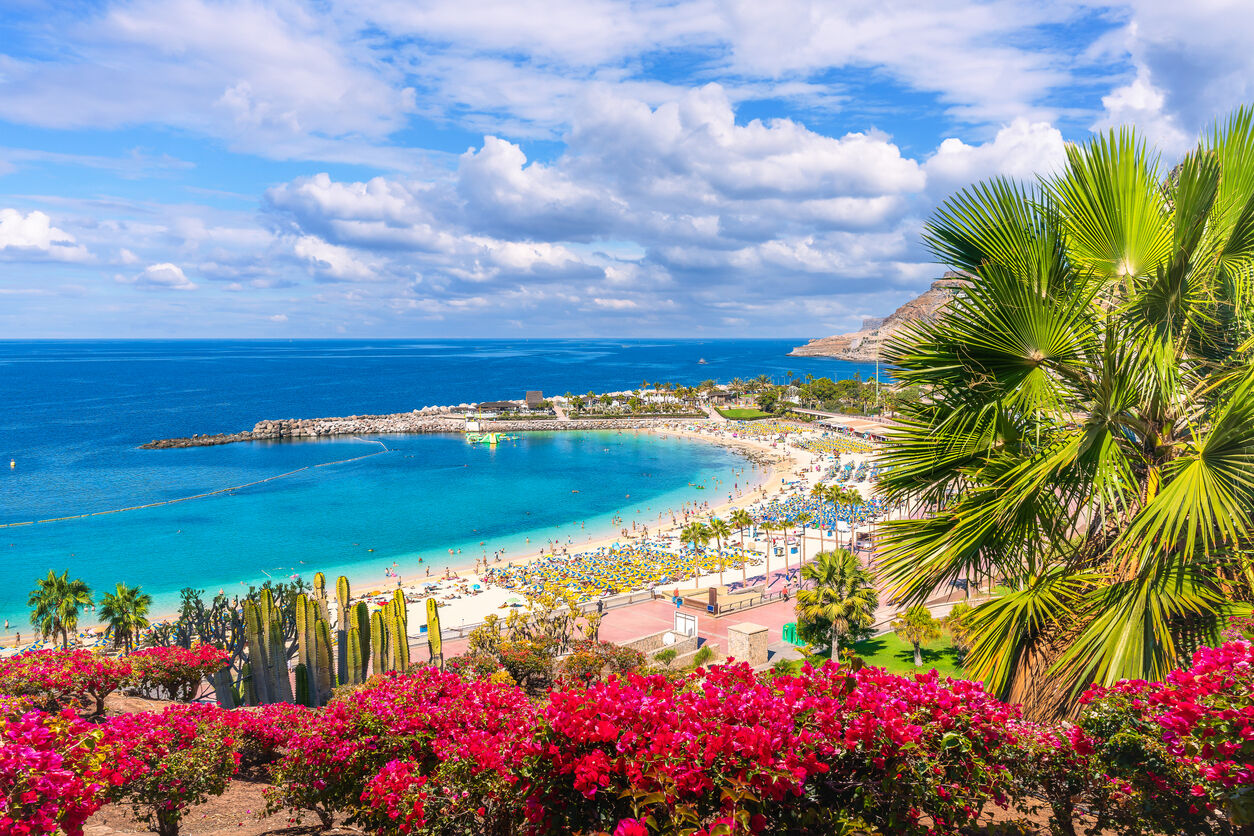
Gran Canaria Holidays — Dunes, Diverse Landscapes & Year-Round Sun
Weather
Local Information
Plug Socket Type
Type C/F (European two-pin). Irish visitors need a travel adapter.
Currency
Euro
Language
Spanish (Castilian). English widely spoken in tourist areas.
Time Zones
GMT+0 (same as Ireland in winter, 1 hour behind in summer — Canary Islands are 1 hour behind mainland Spain)
Local Emergency Contact
112 (general emergency). 061 (medical). Irish Embassy Madrid: +34 914 364 093
Travel Information
Flight Time
4 hours 30 minutes from Dublin
Distance from Beach
South coast resorts are beachfront. Maspalomas dunes accessible from all southern resorts.
Do I need a Visa?
No. EU citizens travel freely. Bring EHIC/GHIC card for medical cover.
5 Things to do in Gran Canaria Holidays — Dunes, Diverse Landscapes & Year-Round Sun
Maspalomas Sand Dunes
–400-hectare Sahara-like dune system. Protected nature reserve. Free to walk. Camel rides €12. Stunning sunrise/sunset photography.
Roque Nublo Hike
–Iconic volcanic rock formation at 1,813m. Moderate 30-min hike from car park. Panoramic views of Tenerife and Mount Teide on clear days.
Las Palmas de Gran Canaria
–Capital city with Vegueta Old Town (UNESCO candidate), Las Canteras beach (3km), museums, shopping. 40 mins from south resorts.
Aqualand Maspalomas
–Water park with slides, wave pool, dolphin encounters. €30 adults, €22 children. Full day. South coast location.
Puerto de Mogán (Little Venice)
–Picturesque harbour village with canals, colourful bougainvillea, Friday market. Free to explore. Fresh fish restaurants. Boat trips available.
Description
Gran Canaria is the Canary Islands' most diverse island—from the Sahara-like Maspalomas sand dunes to lush mountain forests and dramatic volcanic ravines. South coast resorts offer guaranteed sunshine and beach life, while the interior has villages, markets, and hiking trails. Popular with Irish families and couples for winter sun and summer beach holidays.
Gran Canaria is one of the most diverse islands in the Canary archipelago, earning its nickname as a "miniature continent" thanks to its extraordinary range of landscapes. From the towering sand dunes of Maspalomas to the lush pine forests of the interior highlands, the island offers Irish holidaymakers a remarkable variety of experiences within a compact setting. The southern coast is home to the main resort areas — Maspalomas, Playa del Inglés and Puerto Rico — where reliable year-round sunshine, golden beaches and excellent tourist infrastructure make it an ideal choice for families and couples alike. The island's capital, Las Palmas de Gran Canaria, is a vibrant city with historic quarters, world-class shopping and the stunning Playa de Las Canteras city beach. With direct flights from Dublin taking around four and a half hours and no time difference from Ireland, Gran Canaria is one of the most accessible winter sun destinations available to Irish travellers.
Culture and Experiences
What's Nearby?
Maspalomas Dunes & Lighthouse
– Historic lighthouse (1890) at tip of dune system. Sunset walks along beach from Playa del Inglés to lighthouse (45 mins). Free.
Tejeda & Central Mountains
– Dramatic volcanic interior. Roque Nublo, Roque Bentayga. Mountain villages with almond blossom (Jan-Feb). 1-hour drive from coast.
Bandama Crater
– Volcanic crater with vineyard inside. Viewpoint free. Wine tasting at bodega. 30 mins from Las Palmas.
History
Aboriginal Canarii People
– Pre-Hispanic inhabitants related to North African Berbers. Cave settlements at Cueva Pintada (Painted Cave) museum in Gáldar. Conquered by Spain 1478-1483.
Columbus Connection
– Columbus stopped in Las Palmas before his 1492 voyage. Casa de Colón museum in Vegueta tells the story. Strategic Atlantic port for centuries.
Tourism Development
– Tourism began 1960s in south coast. Maspalomas, Playa del Inglés built from scratch as resort towns. Today 4+ million visitors annually.
Local Markets
Puerto de Mogán Friday Market
– Popular weekly market. Crafts, local produce, souvenirs. Arrive early, busy by 11am. Combine with harbour village visit.
Mercado de Vegueta (Las Palmas)
– Historic covered market in Old Town. Fresh produce, cheeses, meats. Authentic local shopping. Sunday morning best.
Events and Festivals
Las Palmas Carnival (Feb/Mar)
– One of Spain's biggest carnivals. Drag Queen Gala world-famous. Parades, music, costumes. Free street events. 2-3 weeks.
Fiesta del Charco (Sep)
– Traditional fish-catching festival in Puerto de la Aldea. Participants wade into lagoon to catch fish by hand. Unique cultural event.
Maspalomas Gay Pride (May)
– One of Europe's largest Pride events. 100,000+ visitors. Parades, concerts, beach parties. Maspalomas and Playa del Inglés. Free events.
Local Etiquette
Siesta Hours
– Shops may close 2-5pm. Restaurants serve lunch 1-3pm, dinner from 8pm. Plan accordingly.
Tipping
– 5-10% appreciated in restaurants. Round up taxi fares. Not obligatory but welcomed.
Beach Conduct
– Topless accepted. Nudist areas clearly marked (especially Maspalomas dunes). Cover up when leaving beach areas.
Dining and Night Life
Local Cuisine
Papas Arrugadas con Mojo
– Wrinkled potatoes with red and green mojo sauces. €4-7. Served everywhere. Canarian signature dish.
Fresh Seafood
– Vieja, cherne, pulpo (octopus). Harbour restaurants in Mogán and Arguineguín best. €12-22pp.
Queso de Flor
– Gran Canaria's famous flower cheese from Guía. Made with cardoon thistle rennet. €4-8 per portion. Unique to island.
Night Life
Playa del Inglés (Main Hub)
– Yumbo Centre and Kasbah Centre: bars, clubs, cabaret. Mixed crowd. Open until 4-6am. €10-20 club entry.
Puerto Rico (Family)
– Bars, restaurants, live music. More relaxed. Families and couples. Harbour-front dining.
Maspalomas (Relaxed)
– Hotel bars, cocktail lounges. Quieter, upscale. €8-12 cocktails. Evening dining focus.

Read Time: 5 mins
Playa del Ingles is Gran Canaria's largest and most popular resort, a sprawling holiday town in the south of the island that combines a vast golden beach, extensive shopping centres, a vibrant nightlife scene and proximity to the magnificent Maspalomas sand dunes. It is one of the biggest purpose-built resorts in Europe, and its scale means it caters to virtually every taste and budget. For Irish holidaymakers who want a lively, well-serviced resort with guaranteed sunshine, Playa del Ingles is a proven choice.
Location and Getting There
Playa del Ingles occupies the south coast of Gran Canaria, approximately thirty minutes from Las Palmas de Gran Canaria Airport (LPA). The flight from Dublin takes around four and a half hours. The resort merges with Maspalomas to the west and San Agustin to the east, forming a continuous coastal development. Airport transfers are included in Sunholidays.ie packages.
Beaches
The beach at Playa del Ingles is immense — a wide, golden sand expanse that stretches for nearly three kilometres and blends into the Maspalomas dunes at its western end. It is one of the largest beaches in Europe and never feels crowded despite the resort's popularity. Sunbeds and parasols are available, and lifeguards patrol during the day. The sand dunes of Maspalomas, a protected natural reserve, form a unique landscape of shifting golden hills between the resort and the lighthouse — walking through them to reach the sea is an unforgettable experience.
The Canary Islands are volcanic in origin, which gives the coastline a distinctive character. Many beaches feature dark volcanic sand alongside imported golden sand, and the underwater landscape is rich with marine life, making snorkelling and diving rewarding activities. The Atlantic waters around the Canaries are home to sea turtles, rays, angel sharks and colourful tropical fish that have drifted north on warm currents from West Africa. Beach conditions vary throughout the day — mornings tend to be calmer, while afternoon trade winds can pick up, particularly on north and east-facing coasts.
Things to Do
The Maspalomas dunes are an attraction in themselves — a landscape that feels more Saharan than European. Camel rides are available for those who want to enhance the desert atmosphere. Aqualand Maspalomas is a large water park popular with families. Holiday World is an amusement park with rides, bowling and entertainment. The Palmitos Park botanical garden and zoo is a pleasant half-day outing. For golf, the Maspalomas Golf Course is nearby. Day trips to Las Palmas, the island capital, offer culture, shopping and the excellent Playa de las Canteras city beach. The mountainous interior of Gran Canaria is spectacular and well worth exploring by hire car.
Beyond the resort attractions, the Canary Islands reward exploration. Each island has its own character and hidden corners — volcanic trails with views that stretch to neighbouring islands, traditional villages where local artisans produce pottery, cheese and wine using techniques passed down through generations, and nature reserves that protect unique flora and fauna found nowhere else on Earth. The islands are a designated UNESCO Biosphere Reserve, and walking trails crisscross the volcanic landscapes, from coastal paths to mountain summit routes. Many visitors find that hiring a car for a day or two opens up a completely different side of the island from the one visible at the resort.
Dining and Nightlife
Playa del Ingles has hundreds of restaurants spread across its numerous commercial centres. You will find everything from traditional Canarian cuisine to Italian, Indian, Chinese, Mexican and British fare. The Centro Comercial Yumbo is the social hub, particularly in the evening when its many restaurants, bars and entertainment venues come alive. The Cita shopping centre is another popular spot. Nightlife in Playa del Ingles is energetic and varied, with clubs, karaoke bars, live music venues and cabaret shows keeping things going late into the night.
The Canarian food tradition has its own identity, distinct from mainland Spain. Local wines, produced from volcanic soil in dramatic terraced vineyards, are increasingly gaining international recognition. Canarian cheeses — particularly the smoked goat cheeses of Fuerteventura and Gran Canaria — have won international awards. The mojo sauces, both red (spicy, made with peppers and paprika) and green (made with coriander or parsley), are the essential condiment and vary slightly from island to island. Gofio, a roasted grain flour of pre-Hispanic origin, is still used in traditional dishes. Dining out on the Canary Islands is generally excellent value — a full meal with wine at a local restaurant typically costs significantly less than the equivalent in Ireland.
Best Time to Visit
Gran Canaria's south coast enjoys year-round sunshine with summer temperatures in the high twenties and winter in the low twenties. Playa del Ingles is a genuine twelve-month destination. The busiest periods are November to March (winter sun) and July to August (school holidays). Shoulder months offer warmth and value.
Practical Information for Irish Visitors
Gran Canaria is part of Spain and the EU. The euro is the currency and no visa is needed. The Canary Islands are on GMT in winter, one hour behind Ireland in summer. English is very widely spoken throughout the resort.
Healthcare in the Canary Islands is covered by the European Health Insurance Card (EHIC) for Irish citizens, though travel insurance is always recommended. Tap water is safe but most visitors prefer bottled water, which is inexpensive and widely available. The islands have excellent road networks, and hire cars are affordable — driving is on the right-hand side. Pharmacies (farmacias) are well stocked and pharmacists can advise on minor ailments without a doctor's visit. The Canary Islands have no time difference with Ireland in winter, which is a real bonus — no jet lag on arrival and no adjustment needed for return.
Why Book with Sunholidays.ie
Sunholidays.ie is Irish-owned and IAA licensed (Licence No. T0601), providing full financial protection. Book with twenty euro per person and pay monthly. The price match guarantee ensures the best deal, and the team can help you navigate the vast choice of hotels in Playa del Ingles to find the right one for you.

Read Time: 5 mins
Maspalomas is the jewel of Gran Canaria's southern coast, centred around the iconic sand dunes and historic lighthouse that have become symbols of the island itself. More upmarket and spacious than neighbouring Playa del Ingles, Maspalomas offers a more refined holiday experience while still providing easy access to the wider resort area's shops, restaurants and attractions. The combination of natural beauty, warm climate and quality accommodation makes it a perennial favourite with Irish visitors.
Location and Getting There
Maspalomas is on Gran Canaria's south coast, around thirty-five minutes from Las Palmas Airport (LPA). The flight from Dublin takes approximately four and a half hours. The resort area centres on the famous lighthouse (Faro de Maspalomas) and extends along the coast towards Playa del Ingles to the east and Meloneras to the west.
Beaches
The Maspalomas beach is a stunning stretch of golden sand backed by the protected dune system. The dunes themselves are a Special Nature Reserve — an extraordinary mini-desert of shifting sand hills that creates an almost surreal landscape between the resort and the sea. The beach at the base of the dunes is wide, natural and uncrowded compared to the built-up sections further east. Playa de Meloneras, to the west of the lighthouse, is a more sheltered beach with a pleasant promenade. The entire coastline from Meloneras through Maspalomas to Playa del Ingles offers kilometres of continuous sandy beach.
The Canary Islands are volcanic in origin, which gives the coastline a distinctive character. Many beaches feature dark volcanic sand alongside imported golden sand, and the underwater landscape is rich with marine life, making snorkelling and diving rewarding activities. The Atlantic waters around the Canaries are home to sea turtles, rays, angel sharks and colourful tropical fish that have drifted north on warm currents from West Africa. Beach conditions vary throughout the day — mornings tend to be calmer, while afternoon trade winds can pick up, particularly on north and east-facing coasts.
Things to Do
Walking through the Maspalomas dunes is the essential experience — the landscape shifts constantly with the wind, and the transition from resort to desert to beach is remarkable. Sunset at the Maspalomas lighthouse is a daily ritual worth observing. Aqualand water park is nearby, as is Palmitos Park with its botanical gardens and animal exhibits. The Meloneras boulevard offers upmarket shopping and dining. For golfers, the Maspalomas Golf course is set amidst the palm-dotted landscape south of the dunes. Day trips into Gran Canaria's mountainous interior reveal a completely different island — deep ravines, pine forests and the spectacular views from Roque Nublo.
Beyond the resort attractions, the Canary Islands reward exploration. Each island has its own character and hidden corners — volcanic trails with views that stretch to neighbouring islands, traditional villages where local artisans produce pottery, cheese and wine using techniques passed down through generations, and nature reserves that protect unique flora and fauna found nowhere else on Earth. The islands are a designated UNESCO Biosphere Reserve, and walking trails crisscross the volcanic landscapes, from coastal paths to mountain summit routes. Many visitors find that hiring a car for a day or two opens up a completely different side of the island from the one visible at the resort.
Dining and Nightlife
Maspalomas and the adjacent Meloneras area have a strong dining scene. The Meloneras promenade has a selection of quality restaurants with sea views, and the area around the lighthouse has both casual and upmarket options. For a wider choice, the commercial centres of Playa del Ingles are within easy reach. Nightlife in Maspalomas itself is relaxed — this is a destination for sunset cocktails and leisurely dinners. The livelier scene of Playa del Ingles and the Yumbo centre is a short taxi ride away.
The Canarian food tradition has its own identity, distinct from mainland Spain. Local wines, produced from volcanic soil in dramatic terraced vineyards, are increasingly gaining international recognition. Canarian cheeses — particularly the smoked goat cheeses of Fuerteventura and Gran Canaria — have won international awards. The mojo sauces, both red (spicy, made with peppers and paprika) and green (made with coriander or parsley), are the essential condiment and vary slightly from island to island. Gofio, a roasted grain flour of pre-Hispanic origin, is still used in traditional dishes. Dining out on the Canary Islands is generally excellent value — a full meal with wine at a local restaurant typically costs significantly less than the equivalent in Ireland.
Best Time to Visit
Maspalomas enjoys year-round sunshine with temperatures rarely dropping below twenty degrees even in midwinter. Summer is warm but tempered by ocean breezes. The dunes and beach are magnificent in any season. Shoulder months offer excellent value.
Practical Information for Irish Visitors
Gran Canaria is part of Spain and the EU. Euro currency, no visa required. The Canary Islands are on GMT in winter. English is widely spoken.
Healthcare in the Canary Islands is covered by the European Health Insurance Card (EHIC) for Irish citizens, though travel insurance is always recommended. Tap water is safe but most visitors prefer bottled water, which is inexpensive and widely available. The islands have excellent road networks, and hire cars are affordable — driving is on the right-hand side. Pharmacies (farmacias) are well stocked and pharmacists can advise on minor ailments without a doctor's visit. The Canary Islands have no time difference with Ireland in winter, which is a real bonus — no jet lag on arrival and no adjustment needed for return.
Why Book with Sunholidays.ie
Sunholidays.ie is Irish-owned and IAA licensed (Licence No. T0601), providing full financial protection. Twenty euro per person deposit, monthly payments, and a price match guarantee. The team can guide you to the right Maspalomas hotel for a quality Gran Canaria experience.

Read Time: 5 mins
Puerto Rico is Gran Canaria's sunniest resort, nestled in a sheltered horseshoe bay on the south-west coast that traps the heat and blocks the wind. Originally built as a holiday village cascading down the hillside to the beach, it has evolved into one of the Canary Islands' most popular family destinations. The calm, warm waters, the abundance of water sports, and the reliable year-round sunshine make Puerto Rico a consistently excellent choice for Irish families and couples.
Location and Getting There
Puerto Rico is on Gran Canaria's south-west coast, approximately forty minutes from Las Palmas Airport (LPA). The flight from Dublin takes around four and a half hours. The resort sits in a natural valley that opens onto the bay, with apartment complexes and hotels rising up the hillsides on either side. The sheltered aspect is key to Puerto Rico's microclimate — it is measurably warmer and less windy than resorts on the more exposed south coast.
Beaches
Playa de Puerto Rico is an artificial golden sand beach in the centre of the bay, with calm, shallow water that is ideal for families with young children. The breakwaters ensure the bay is well protected from waves. Sunbeds, parasols and full beach facilities are available. The adjacent Playa de Amadores, a short walk or water taxi ride west, is a beautiful crescent of imported white sand with crystal-clear turquoise water — it is one of the most attractive beaches on the island and is well worth a visit.
The Canary Islands are volcanic in origin, which gives the coastline a distinctive character. Many beaches feature dark volcanic sand alongside imported golden sand, and the underwater landscape is rich with marine life, making snorkelling and diving rewarding activities. The Atlantic waters around the Canaries are home to sea turtles, rays, angel sharks and colourful tropical fish that have drifted north on warm currents from West Africa. Beach conditions vary throughout the day — mornings tend to be calmer, while afternoon trade winds can pick up, particularly on north and east-facing coasts.
Things to Do
Water sports are Puerto Rico's forte. The sheltered bay is ideal for banana boats, pedalos, jet skis, parasailing and kayaking. The fishing centre offers deep-sea fishing trips that are among the best in the Canary Islands — Puerto Rico has hosted international big game fishing competitions. Diving and snorkelling trips operate from the harbour. Spirit of the Sea catamarans offer dolphin-watching cruises. Beyond the beach, the Angry Birds Activity Park is popular with younger children, and there are go-karts and mini golf nearby. The neighbouring resort of Puerto de Mogan is a pleasant boat trip or drive away.
Beyond the resort attractions, the Canary Islands reward exploration. Each island has its own character and hidden corners — volcanic trails with views that stretch to neighbouring islands, traditional villages where local artisans produce pottery, cheese and wine using techniques passed down through generations, and nature reserves that protect unique flora and fauna found nowhere else on Earth. The islands are a designated UNESCO Biosphere Reserve, and walking trails crisscross the volcanic landscapes, from coastal paths to mountain summit routes. Many visitors find that hiring a car for a day or two opens up a completely different side of the island from the one visible at the resort.
Dining and Nightlife
Puerto Rico's commercial centres, arranged on different levels of the hillside, contain a good variety of restaurants. Seafood is a highlight, with several fish restaurants in the harbour area. You will also find Italian, Indian, Chinese and traditional British options. The main commercial centre has cafes, bars and takeaways. Nightlife is family-oriented — there are pubs with live music and entertainment, but nothing approaching the intensity of Playa del Ingles. The atmosphere is friendly and relaxed.
The Canarian food tradition has its own identity, distinct from mainland Spain. Local wines, produced from volcanic soil in dramatic terraced vineyards, are increasingly gaining international recognition. Canarian cheeses — particularly the smoked goat cheeses of Fuerteventura and Gran Canaria — have won international awards. The mojo sauces, both red (spicy, made with peppers and paprika) and green (made with coriander or parsley), are the essential condiment and vary slightly from island to island. Gofio, a roasted grain flour of pre-Hispanic origin, is still used in traditional dishes. Dining out on the Canary Islands is generally excellent value — a full meal with wine at a local restaurant typically costs significantly less than the equivalent in Ireland.
Best Time to Visit
Puerto Rico's sheltered position makes it one of the warmest and most consistently sunny spots in the Canary Islands. It is a genuine year-round destination with temperatures rarely falling below twenty degrees. The bay's protection from wind means it feels warmer than the thermometer suggests. Any time of year works well.
Practical Information for Irish Visitors
Gran Canaria is part of Spain and the EU. Euro currency, no visa needed. Canary Islands are on GMT in winter. English is widely spoken.
Healthcare in the Canary Islands is covered by the European Health Insurance Card (EHIC) for Irish citizens, though travel insurance is always recommended. Tap water is safe but most visitors prefer bottled water, which is inexpensive and widely available. The islands have excellent road networks, and hire cars are affordable — driving is on the right-hand side. Pharmacies (farmacias) are well stocked and pharmacists can advise on minor ailments without a doctor's visit. The Canary Islands have no time difference with Ireland in winter, which is a real bonus — no jet lag on arrival and no adjustment needed for return.
Why Book with Sunholidays.ie
Sunholidays.ie is Irish-owned and IAA licensed (Licence No. T0601). Twenty euro per person deposit, monthly payments, price match guarantee. The team can recommend the best-positioned Puerto Rico accommodation for your family or couple's holiday.

Read Time: 5 mins
Puerto de Mogan is widely regarded as the prettiest resort in Gran Canaria and one of the most charming in all of the Canary Islands. Known as Little Venice for its network of canals, bougainvillea-draped bridges and pastel-coloured buildings, this small resort at the western end of the south coast offers a tranquil, picturesque alternative to the larger developments further east. For Irish couples and families who value character over scale, Puerto de Mogan is a genuine gem.
Location and Getting There
Puerto de Mogan sits at the western end of Gran Canaria's south coast, approximately forty-five minutes from Las Palmas Airport (LPA). The flight from Dublin takes around four and a half hours. The resort occupies a small natural harbour with a fishing port and a modern marina. It is the last significant settlement on the south coast, and the surrounding landscape of rocky cliffs and dry ravines adds to its sense of seclusion.
Beaches
Playa de Mogan is a small, sheltered golden sand beach at the mouth of the harbour. The water is exceptionally calm and clear — the harbour walls ensure virtually no waves reach the beach, making it one of the safest bathing spots in the Canary Islands for young children. Sunbeds and parasols are available, and lifeguards are on duty. The beach is compact, and it can get busy in peak season, but the atmosphere remains pleasant and family-friendly. The submarine excursion that operates from the beach allows you to view the underwater world without getting wet.
The Canary Islands are volcanic in origin, which gives the coastline a distinctive character. Many beaches feature dark volcanic sand alongside imported golden sand, and the underwater landscape is rich with marine life, making snorkelling and diving rewarding activities. The Atlantic waters around the Canaries are home to sea turtles, rays, angel sharks and colourful tropical fish that have drifted north on warm currents from West Africa. Beach conditions vary throughout the day — mornings tend to be calmer, while afternoon trade winds can pick up, particularly on north and east-facing coasts.
Things to Do
The Friday market in Puerto de Mogan is one of the most popular markets in Gran Canaria, with stalls selling local produce, crafts, clothing and souvenirs — arrive early for the best experience. Boat trips from the marina include fishing excursions, dolphin watching and ferry services to Puerto Rico and other south coast resorts. Diving and snorkelling are excellent in the clear waters around the harbour. The Cordial Mogan Playa botanical garden hotel is a local landmark. For day trips, the mountain road north from Mogan into the interior passes through spectacular scenery and traditional villages.
Beyond the resort attractions, the Canary Islands reward exploration. Each island has its own character and hidden corners — volcanic trails with views that stretch to neighbouring islands, traditional villages where local artisans produce pottery, cheese and wine using techniques passed down through generations, and nature reserves that protect unique flora and fauna found nowhere else on Earth. The islands are a designated UNESCO Biosphere Reserve, and walking trails crisscross the volcanic landscapes, from coastal paths to mountain summit routes. Many visitors find that hiring a car for a day or two opens up a completely different side of the island from the one visible at the resort.
Dining and Nightlife
Puerto de Mogan has a delightful dining scene centred on the harbour and marina. Fresh fish restaurants line the waterfront, and dining overlooking the boats with the sunset behind the cliffs is a memorable experience. The quality of seafood is consistently high. Small tapas bars and cafes are scattered through the village streets. Nightlife is very low-key — an after-dinner stroll along the harbour, a cocktail with a view, perhaps some live music at a waterfront bar. This is a resort for relaxation, not revelry.
The Canarian food tradition has its own identity, distinct from mainland Spain. Local wines, produced from volcanic soil in dramatic terraced vineyards, are increasingly gaining international recognition. Canarian cheeses — particularly the smoked goat cheeses of Fuerteventura and Gran Canaria — have won international awards. The mojo sauces, both red (spicy, made with peppers and paprika) and green (made with coriander or parsley), are the essential condiment and vary slightly from island to island. Gofio, a roasted grain flour of pre-Hispanic origin, is still used in traditional dishes. Dining out on the Canary Islands is generally excellent value — a full meal with wine at a local restaurant typically costs significantly less than the equivalent in Ireland.
Best Time to Visit
Puerto de Mogan benefits from the same year-round warmth as the rest of Gran Canaria's south coast. Its sheltered valley position makes it particularly warm and calm. Summer temperatures reach the high twenties, winter stays in the low twenties. The Friday market operates year-round. Any season is a good time to visit.
Practical Information for Irish Visitors
Gran Canaria is part of Spain and the EU. Euro currency, no visa. Canary Islands on GMT in winter. English is spoken in tourist businesses.
Healthcare in the Canary Islands is covered by the European Health Insurance Card (EHIC) for Irish citizens, though travel insurance is always recommended. Tap water is safe but most visitors prefer bottled water, which is inexpensive and widely available. The islands have excellent road networks, and hire cars are affordable — driving is on the right-hand side. Pharmacies (farmacias) are well stocked and pharmacists can advise on minor ailments without a doctor's visit. The Canary Islands have no time difference with Ireland in winter, which is a real bonus — no jet lag on arrival and no adjustment needed for return.
Why Book with Sunholidays.ie
Sunholidays.ie is Irish-owned and IAA licensed (Licence No. T0601). Twenty euro deposit per person, monthly payments, price match guarantee. The team can help you find accommodation in this popular but compact resort.