
Algarve
Weather
Local Information
Plug Socket Type
Type C/F (European two-pin). Irish visitors need a travel adapter.
Currency
Euro
Time Zones
GMT+0 (same as Ireland year-round — Portugal uses the same timezone as Ireland).
Local Emergency Contact
112 (general emergency). Irish Embassy Lisbon: +351 213 308 200.
Travel Information
Flight Time
Approximately 3 hours from Dublin to Faro (FAO). Year-round Ryanair and Aer Lingus services.
Distance from Beach
All Algarve resorts are within walking distance of beaches.
Do I need a Visa?
No. Portugal is an EU member state. Irish citizens need only a valid passport or identity card.
3 Things to do in Algarve
Benagil Sea Cave
–One of the world's most photographed sea caves, accessible by kayak or boat from Benagil beach.
Ponta da Piedade
–Dramatic golden sea stacks and grottoes near Lagos, explored by boat or from cliff-top paths.
Ria Formosa Natural Park
–Protected lagoon system stretching 60km along the eastern Algarve, home to flamingos and seahorses.
Description
Discover the Algarve, Portugal's stunning southern coastline, famed for its golden beaches, dramatic cliffs, picturesque fishing towns, world-class golf courses, and delicious seafood.
The Algarve is Portugal's premier holiday region and one of the most popular sun destinations for Irish travellers. Stretching along the entire southern coast of Portugal, the Algarve is famous for its dramatic golden cliffs, sheltered sandy coves, and over 300 days of sunshine per year. The main resort towns — Albufeira, Vilamoura, Lagos, Praia da Rocha and Alvor — each offer a distinct character, from Albufeira's buzzing nightlife and old town charm to Vilamoura's elegant marina and championship golf courses. The region is exceptionally accessible from Ireland, with direct flights from Dublin, Cork and Shannon taking under three hours. Irish visitors will find the Algarve offers outstanding value for money, with excellent local restaurants serving fresh grilled fish, cataplana and pastéis de nata at very reasonable prices. The combination of reliable sunshine, stunning coastal scenery, world-class golf and genuine Portuguese hospitality makes the Algarve a destination that Irish families and couples return to year after year.
Culture and Experiences
What's Nearby?
Silves
– Former Moorish capital with a stunning red sandstone castle and annual Medieval Festival in August.
Sagres & Cape St Vincent
– The south-western tip of Europe with dramatic cliffs, a fortress and world-class surfing.
Seville Day Trip
– The Andalusian capital is approximately 2.5 hours by car from the eastern Algarve.
History
Moorish Heritage
– The Moors ruled the Algarve for over 500 years (8th-13th century), leaving lasting influences on architecture, agriculture and place names — 'Algarve' comes from the Arabic 'Al-Gharb' meaning 'the west'.
Age of Discovery
– Lagos was the launching point for Portugal's Age of Discovery. Henry the Navigator established his school of navigation at nearby Sagres in the 15th century.
1755 Earthquake
– The devastating earthquake and tsunami of 1755 destroyed much of the Algarve's historic architecture. Many towns were rebuilt in the simpler style still visible today.
Local Markets
Loulé Market (Daily)
– The Algarve's finest covered market in a Moorish-style building. Fresh fish, fruit, vegetables, local cheeses and crafts.
Quarteira Fish Market (Morning)
– Working fish market where the catch comes straight off the boats. Open mornings, best before 10am.
Events and Festivals
Silves Medieval Festival (August)
– Week-long festival transforming Silves into a medieval town with jousting, markets, music and feasting inside the castle walls.
Portimão Sardine Festival (August)
– Celebration of the sardine with open-air grilling along the Portimão riverside, live music and fireworks.
Carnival (February)
– Loulé hosts the Algarve's biggest Carnival parade with colourful floats, samba and street parties.
Local Etiquette
Greeting
– A friendly 'Bom dia' (good morning) or 'Boa tarde' (good afternoon) is appreciated when entering shops and restaurants.
Tipping
– Service charge is not usually included. Leaving 5-10% for good service is customary but not obligatory.
Beach Culture
– Topless sunbathing is generally accepted on most Algarve beaches. Nude beaches are designated and signed.
Dining and Night Life
Local Cuisine
Cataplana
– The Algarve's signature dish — seafood, pork or mixed ingredients cooked in a copper clam-shaped pot.
Grilled Sardines
– The Algarve staple, best eaten on the Portimão riverside. Peak sardine season is June to October.
Pastéis de Nata
– Portugal's famous custard tarts, available everywhere and always freshly baked.
Vinho Verde
– Light, slightly sparkling Portuguese white wine, perfect for warm evenings.
Night Life
Albufeira Strip
– The Algarve's main nightlife hub with dozens of bars and clubs along the Avenida Sá Carneiro.
Marina Bars
– Vilamoura and Albufeira marinas have upscale cocktail bars and waterfront dining with evening atmosphere.
Fado Nights
– Traditional Portuguese fado music performed in restaurants across the Algarve — an emotional, authentic experience.

Read Time: 5 mins
Lagos is one of the most beautiful towns in the Algarve and arguably in all of Portugal. Its historic walled old town, dramatic cliff coastline and collection of stunning hidden cove beaches make it a destination with genuine depth and character. Lagos was the launching point for Portugal's Age of Discovery — Henry the Navigator planned his expeditions here in the fifteenth century — and the town retains an adventurous spirit. For Irish visitors who want their beach holiday enriched by history, natural beauty and a vibrant social scene, Lagos is a compelling choice.
Location and Getting There
Lagos is in the western Algarve, approximately one hour from Faro Airport (FAO). The flight from Dublin takes around two and a half hours. The drive from Faro crosses the full width of the Algarve, with the landscape becoming more dramatic as you head west. Lagos can also be reached by train on the Algarve coastal line.
Beaches
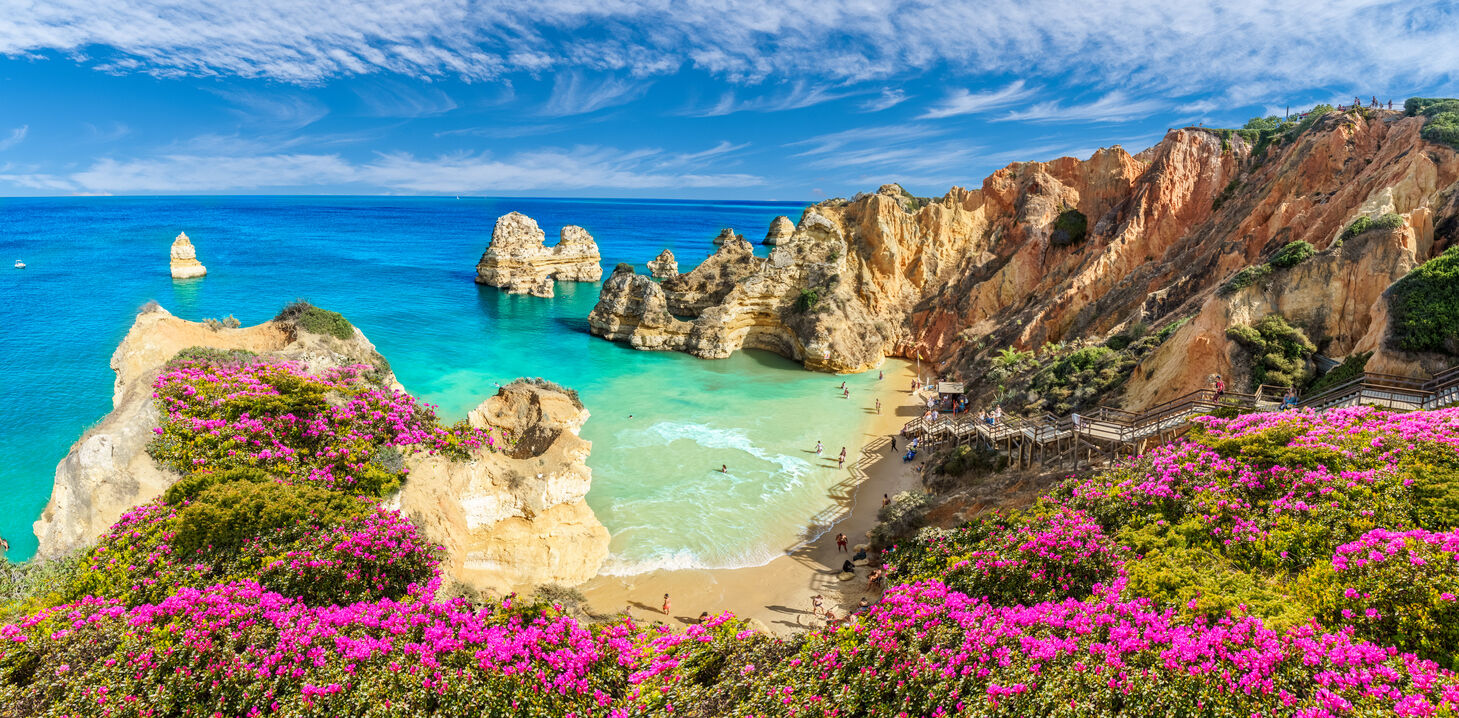
The beaches around Lagos are some of the most spectacular in Europe. Praia Dona Ana, with its golden sand framed by sculpted ochre cliffs and sea stacks, regularly features in lists of the world's most beautiful beaches. Praia do Camilo, accessed by a steep wooden staircase, is an intimate cliff-backed cove of extraordinary beauty. Ponta da Piedade, a headland of towering rock formations, sea caves and natural arches, is one of the Algarve's most photographed landmarks — boat trips from Lagos explore the grottos and caverns at water level. Meia Praia, on the eastern side of Lagos, is a vast stretch of open sandy beach ideal for those who prefer space and water sports.
The Algarve's beaches are among the most visually dramatic in Europe. The coastline's distinctive golden-orange sandstone cliffs have been sculpted by wind and waves into arches, pillars, caves and grottos that create a constantly changing landscape of extraordinary beauty. The Atlantic water is typically a few degrees cooler than the Mediterranean, which makes it refreshing on hot summer days. Beach facilities across the Algarve are generally excellent, with sunbed hire, parasol rental, lifeguard cover during peak season and well-maintained access paths. Many beaches have Blue Flag certification, reflecting the high standards of water quality and environmental management.
Things to Do
The old town, enclosed within medieval walls, is a delight to explore — cobbled lanes, shaded squares, churches and museums tell the story of Lagos's rich maritime history. The Municipal Museum and the Slave Market Museum (a reminder of a darker chapter) are both worth visiting. Boat trips from the marina explore the Ponta da Piedade grottoes and offer dolphin watching. Kayaking along the cliff coast is a popular activity. The hiking trails along the coast to the west — towards Sagres and the dramatic Cape St Vincent, the south-western tip of Europe — offer some of the finest coastal walking in Portugal. Lagos also has a lively surf culture, with good waves at several nearby beaches.
The Algarve is increasingly popular for active holidays as well as beach relaxation. The Via Algarviana, a long-distance walking trail through the interior, passes through cork forests, traditional villages and stunning countryside. The Rota Vicentina, along the wild west coast, is one of Europe's finest coastal walking routes. Golf is another major draw — the Algarve has over thirty courses, many designed by world-famous architects, and green fees are generally lower than equivalent courses in Ireland or the UK. Wine tourism is growing, with the Algarve producing increasingly respected labels alongside the famous ports and Alentejo reds from other regions of Portugal.
Dining and Nightlife
Lagos has one of the best dining scenes in the Algarve. The old town is packed with restaurants — Portuguese seafood, tapas-style petiscos, grill houses and international cuisine are all well represented. The quality is high and prices are reasonable. The harbour and marina areas have waterfront dining options. Nightlife in Lagos is lively and varied — the old town has a concentration of bars that attract a young, international crowd, and the atmosphere is sociable and fun without being aggressive. Several late-night venues keep going until the early hours.
Portuguese food culture revolves around fresh, seasonal produce and traditional recipes perfected over centuries. The concept of petiscos — Portuguese tapas-style small plates — has become increasingly popular and is a wonderful way to sample multiple dishes. The famous pasteis de nata (custard tarts) are found everywhere but are best enjoyed warm from a traditional bakery, dusted with cinnamon. Portuguese coffee is strong and excellent. Wine is a genuine highlight, with excellent options available at very modest prices. A bottle of vinho verde (fresh, slightly sparkling white wine from the north) is the perfect accompaniment to grilled fish on a warm evening.
Best Time to Visit
May to October for beach holidays. June and September are optimal — warm, sunny and less crowded. The western Algarve can be slightly windier and cooler than the central and eastern sections. Spring is beautiful for hiking and sightseeing.
Practical Information for Irish Visitors
Portugal is in the EU. Euro, no visa. Same time zone as Ireland. English widely spoken.
Portugal shares Ireland's time zone — Greenwich Mean Time in winter, GMT+1 in summer — which is a unique advantage among southern European destinations. There is literally no jet lag, no clock adjustment and no confusion about when your flight departs. The EHIC card provides healthcare access, and Portuguese pharmacies are well equipped. Portugal uses the euro, and card payments are widely accepted, though it is useful to carry some cash for beach vendors and smaller establishments. The Portuguese are famously warm and welcoming, and the country consistently ranks among Europe's safest destinations. Driving is on the right, roads are generally good, and the Algarve motorway (A22) connects the region from east to west efficiently.
Why Book with Sunholidays.ie
Sunholidays.ie is Irish-owned and IAA licensed (Licence No. T0601). Twenty euro per person deposit, monthly payments, price match guarantee. Lagos offers a more characterful Algarve experience — the team can find accommodation to match your style.

Read Time: 5 mins
Praia da Rocha is one of the Algarve's most dramatic beach destinations — a vast stretch of golden sand framed by towering sandstone cliffs that turn gold and amber in the afternoon sun. This resort area, at the mouth of the Arade River near the historic town of Portimao, combines a spectacular beach setting with a lively restaurant and bar scene, making it popular with Irish couples and younger travellers. The cliff-top promenade offers one of the finest coastal walks in the Algarve, and the views from the seventeenth-century Fortaleza de Santa Catarina are unforgettable.
Location and Getting There
Praia da Rocha is in the western-central Algarve, approximately forty-five minutes from Faro Airport (FAO). The flight from Dublin takes around two and a half hours. The resort sits on the coast just south of Portimao, one of the Algarve's larger towns.
Beaches
The main beach is enormous — a wide, golden expanse backed by dramatic ochre-coloured cliffs. It is one of the largest beaches in the Algarve and has full facilities including sunbeds, parasols, water sports and beach bars. The cliff formations along the beach create natural sheltered areas and photogenic rock arches. Praia dos Tres Irmaos (Three Brothers Beach) to the west has dramatic sea stacks and is equally beautiful. The water is clean, warm in summer, and generally safe for swimming.
The Algarve's beaches are among the most visually dramatic in Europe. The coastline's distinctive golden-orange sandstone cliffs have been sculpted by wind and waves into arches, pillars, caves and grottos that create a constantly changing landscape of extraordinary beauty. The Atlantic water is typically a few degrees cooler than the Mediterranean, which makes it refreshing on hot summer days. Beach facilities across the Algarve are generally excellent, with sunbed hire, parasol rental, lifeguard cover during peak season and well-maintained access paths. Many beaches have Blue Flag certification, reflecting the high standards of water quality and environmental management.
Things to Do
The clifftop promenade offers spectacular views along the coast and is a highlight of the resort. The Fortaleza de Santa Catarina, a small fortress on the headland, provides panoramic views over the beach, the river mouth and out to sea. Boat trips from the Portimao marina explore the coastline's caves and grottoes, with the Benagil sea cave being the most famous destination — a vast cavern with a sandy beach and a natural skylight. Dolphin watching is available. Portimao itself has a characterful old town, the Museu de Portimao (an excellent museum in a converted fish cannery) and the famous sardine restaurants along the riverfront. Slide and Splash water park is nearby.
The Algarve is increasingly popular for active holidays as well as beach relaxation. The Via Algarviana, a long-distance walking trail through the interior, passes through cork forests, traditional villages and stunning countryside. The Rota Vicentina, along the wild west coast, is one of Europe's finest coastal walking routes. Golf is another major draw — the Algarve has over thirty courses, many designed by world-famous architects, and green fees are generally lower than equivalent courses in Ireland or the UK. Wine tourism is growing, with the Algarve producing increasingly respected labels alongside the famous ports and Alentejo reds from other regions of Portugal.
Dining and Nightlife
The clifftop road and the streets behind it have a wide selection of restaurants. Fresh fish, cataplana, grilled sardines and Portuguese steaks are the highlights. The Marina de Portimao has waterfront dining. The Portimao riverfront sardine restaurants are a must-visit — simple, smoky, delicious and incredibly good value. Nightlife on Praia da Rocha is the liveliest in the western Algarve, with a strip of bars and clubs along the Avenida Tomas Cabreira. The scene is energetic and popular with Irish and British visitors.
Portuguese food culture revolves around fresh, seasonal produce and traditional recipes perfected over centuries. The concept of petiscos — Portuguese tapas-style small plates — has become increasingly popular and is a wonderful way to sample multiple dishes. The famous pasteis de nata (custard tarts) are found everywhere but are best enjoyed warm from a traditional bakery, dusted with cinnamon. Portuguese coffee is strong and excellent. Wine is a genuine highlight, with excellent options available at very modest prices. A bottle of vinho verde (fresh, slightly sparkling white wine from the north) is the perfect accompaniment to grilled fish on a warm evening.
Best Time to Visit
May to October for beach holidays. The cliff-backed position shelters the beach from north winds, making it comfortable even on breezy days. June and September offer excellent conditions and value.
Practical Information for Irish Visitors
Portugal is in the EU. Euro, no visa. Same time zone as Ireland. English widely spoken.
Portugal shares Ireland's time zone — Greenwich Mean Time in winter, GMT+1 in summer — which is a unique advantage among southern European destinations. There is literally no jet lag, no clock adjustment and no confusion about when your flight departs. The EHIC card provides healthcare access, and Portuguese pharmacies are well equipped. Portugal uses the euro, and card payments are widely accepted, though it is useful to carry some cash for beach vendors and smaller establishments. The Portuguese are famously warm and welcoming, and the country consistently ranks among Europe's safest destinations. Driving is on the right, roads are generally good, and the Algarve motorway (A22) connects the region from east to west efficiently.
Why Book with Sunholidays.ie
Sunholidays.ie is Irish-owned and IAA licensed (Licence No. T0601). Twenty euro per person deposit, monthly payments, price match guarantee. Praia da Rocha offers outstanding beach scenery and good value — the team can find the right clifftop or beachside hotel for your Algarve holiday.

Read Time: 3 mins
Alvor is one of the Algarve's most charming resort villages, a former fishing settlement on the western Algarve coast where a picturesque estuary meets the Atlantic. It retains a genuine Portuguese character that larger resorts have lost — narrow cobbled streets, traditional restaurants, a working harbour and a beautiful boardwalk through the estuary wetlands. The long sandy beach is excellent, and the proximity to Portimao and the dramatic coastline around Praia da Rocha adds variety. For Irish visitors who want an Algarve holiday with authentic Portuguese flavour, Alvor is hard to beat.
Location and Getting There
Alvor is on the western Algarve coast, approximately one hour from Faro Airport (FAO). Flights from Dublin take around three hours, with year-round services from Ryanair and Aer Lingus. The village sits between Portimao and Lagos, two of the Algarve's main towns, and is well placed for exploring the western Algarve coastline.
Beaches
Praia de Alvor is a long, wide stretch of golden sand backed by dunes, stretching from the village towards the Alvor estuary. It is spacious, clean and well maintained, with sections that feel genuinely uncrowded. The water is Atlantic, so a degree cooler than the Mediterranean, but warm enough for comfortable swimming from June through September. The nearby beaches of Praia da Rocha and Praia dos Tres Irmaos offer dramatic cliff-backed alternatives. The estuary boardwalk is a distinctive feature — a wooden walkway through the salt marshes that is perfect for an evening stroll.
Things to Do
The estuary and boardwalk are Alvor's unique attractions — the wetlands are rich with birdlife including flamingos, spoonbills and egrets. Boat trips on the estuary and along the coast are popular. The old village centre is a pleasure to explore, with traditional ceramics shops, a castle ruin and the sixteenth-century Igreja Matriz church. Portimao is five minutes away for shopping and the excellent Portimao Museum. Lagos, twenty minutes west, has a stunning old town, dramatic coastal grottoes accessible by boat, and the famous Ponta da Piedade sea stacks. Golf courses are abundant in the area.
Dining and Nightlife
Alvor has an excellent restaurant scene for a village of its size, particularly for fresh fish and seafood. The harbourfront restaurants serve grilled fish caught that day, and several traditional restaurants in the old village streets offer genuine Portuguese cuisine at reasonable prices. Cataplana (a seafood and vegetable stew cooked in a copper pot) is a local speciality. Nightlife is relaxed — village bars, a few cocktail spots and the waterfront atmosphere provide sociable evenings without excess.
Best Time to Visit
The Algarve has one of the best climates in Europe, with over three hundred days of sunshine per year. Summer temperatures reach the low thirties, while winter remains mild in the mid-teens. The beach season runs from May to October. Spring is glorious for walking and the estuary birdlife. Year-round flights from Dublin mean Alvor is accessible in any month.
Practical Information for Irish Visitors
Portugal is an EU member state. The currency is the euro and no visa is needed for Irish citizens. Portugal is on the same time zone as Ireland. Portuguese is the main language, but English is very widely spoken in the Algarve. Driving is on the right. EHIC healthcare cover applies, travel insurance recommended.
Why Book with Sunholidays.ie
Sunholidays.ie is Irish-owned and IAA licensed (Licence No. T0601). Twenty euro per person deposit, monthly payments, price match guarantee. The team can recommend the best accommodation in Alvor and the wider western Algarve.

Read Time: 5 mins
Albufeira is the Algarve's largest and most popular resort, and it has been a favourite with Irish holidaymakers for decades. What sets Albufeira apart from many Mediterranean resorts is that it has a genuine heart — the old town, with its whitewashed houses tumbling down to a beautiful beach, retains real Portuguese character despite the tourism that surrounds it. The famous Strip, a kilometre-long stretch of bars, clubs and restaurants, provides the nightlife, while the coastline offers over twenty beaches ranging from wide golden stretches to intimate cliff-backed coves.
Location and Getting There
Albufeira is in the central Algarve, approximately thirty-five minutes from Faro Airport (FAO). The flight from Dublin takes around two and a half hours. The resort is well positioned for exploring the wider Algarve, with Lagos to the west and Vilamoura to the east both within easy reach.
Beaches
Praia dos Pescadores (Fisherman's Beach) is the main old town beach — a wide stretch of golden sand directly below the old town, accessed by a tunnel through the cliff. Praia da Oura, near the Strip, is another popular sandy beach. Praia de Sao Rafael and Praia da Coelha to the west are among the most beautiful cove beaches in the Algarve — golden sand framed by sculpted sandstone cliffs. The coastline around Albufeira is extraordinary, with sea caves, rock arches and formations that rival anything in the Mediterranean.
The Algarve's beaches are among the most visually dramatic in Europe. The coastline's distinctive golden-orange sandstone cliffs have been sculpted by wind and waves into arches, pillars, caves and grottos that create a constantly changing landscape of extraordinary beauty. The Atlantic water is typically a few degrees cooler than the Mediterranean, which makes it refreshing on hot summer days. Beach facilities across the Algarve are generally excellent, with sunbed hire, parasol rental, lifeguard cover during peak season and well-maintained access paths. Many beaches have Blue Flag certification, reflecting the high standards of water quality and environmental management.
Things to Do
Boat trips to the sea caves and rock formations are an essential Albufeira experience — the Benagil cave (a short distance along the coast) is one of Portugal's most famous natural landmarks. Dolphin watching trips operate from the marina. Zoomarine, a marine park with dolphin shows, water rides and a beach, is a popular family day out. The old town is a pleasure to explore, with its steep lanes, small squares and panoramic viewpoints. The Algarve's championship golf courses — including Balaia, Salgados and Pine Cliffs — are all nearby.
The Algarve is increasingly popular for active holidays as well as beach relaxation. The Via Algarviana, a long-distance walking trail through the interior, passes through cork forests, traditional villages and stunning countryside. The Rota Vicentina, along the wild west coast, is one of Europe's finest coastal walking routes. Golf is another major draw — the Algarve has over thirty courses, many designed by world-famous architects, and green fees are generally lower than equivalent courses in Ireland or the UK. Wine tourism is growing, with the Algarve producing increasingly respected labels alongside the famous ports and Alentejo reds from other regions of Portugal.
Dining and Nightlife
The old town has excellent Portuguese restaurants — cataplana (seafood stew), grilled sardines, fresh fish and pasteis de nata are the highlights. The Montechoro area and the streets near the Strip have a broader international selection. Dining is generally good value compared to equivalent destinations in Spain. The Strip (Rua de Oura) is the nightlife centre — a long road of bars, clubs and restaurants that comes alive after ten in the evening and keeps going until dawn. The scene is popular with Irish and British visitors, and themed bars, karaoke and dance clubs are plentiful. The old town has a more refined evening scene with cocktail bars and terraced restaurants.
Portuguese food culture revolves around fresh, seasonal produce and traditional recipes perfected over centuries. The concept of petiscos — Portuguese tapas-style small plates — has become increasingly popular and is a wonderful way to sample multiple dishes. The famous pasteis de nata (custard tarts) are found everywhere but are best enjoyed warm from a traditional bakery, dusted with cinnamon. Portuguese coffee is strong and excellent. Wine is a genuine highlight, with excellent options available at very modest prices. A bottle of vinho verde (fresh, slightly sparkling white wine from the north) is the perfect accompaniment to grilled fish on a warm evening.
Best Time to Visit
The Algarve has over three hundred days of sunshine. Beach season runs from May to October. July and August are the hottest and busiest months. June and September are ideal — warm, sunny and less crowded. The mild winter climate (fifteen to eighteen degrees) attracts long-stay and golf visitors year-round.
Practical Information for Irish Visitors
Portugal is in the EU. Euro, no visa. Same time zone as Ireland (GMT in winter, GMT+1 in summer) — no jet lag whatsoever. English widely spoken.
Portugal shares Ireland's time zone — Greenwich Mean Time in winter, GMT+1 in summer — which is a unique advantage among southern European destinations. There is literally no jet lag, no clock adjustment and no confusion about when your flight departs. The EHIC card provides healthcare access, and Portuguese pharmacies are well equipped. Portugal uses the euro, and card payments are widely accepted, though it is useful to carry some cash for beach vendors and smaller establishments. The Portuguese are famously warm and welcoming, and the country consistently ranks among Europe's safest destinations. Driving is on the right, roads are generally good, and the Algarve motorway (A22) connects the region from east to west efficiently.
Why Book with Sunholidays.ie
Sunholidays.ie is Irish-owned and IAA licensed (Licence No. T0601). Twenty euro per person deposit, monthly payments, price match guarantee. The team's extensive Algarve knowledge means they can place you in the right part of Albufeira — old town for character, Strip area for nightlife, western beaches for tranquillity.

Read Time: 5 mins
Vilamoura is the Algarve's most prestigious resort, a masterplanned development centred around a beautiful marina that has become the social hub of the central Algarve. With championship golf courses, golden sandy beaches, a casino and a sophisticated restaurant and bar scene, Vilamoura caters to visitors who appreciate quality and style. It is also one of the most popular golfing destinations in Europe, with several world-class courses within minutes of the marina. For Irish golfers, couples and families seeking an upmarket Algarve experience, Vilamoura is the top choice.
Location and Getting There
Vilamoura is in the central Algarve, approximately twenty-five minutes from Faro Airport (FAO). The flight from Dublin takes around two and a half hours. The resort sits between Albufeira to the west and Faro to the east.
Beaches
Praia de Vilamoura (also known as Praia da Marina) is a wide, golden beach directly south of the marina. It is well-equipped with sunbeds, parasols, water sports and beach bars, and the water is clean and warm from June to October. Praia de Falésia, stretching east from Vilamoura, is one of the longest and most dramatic beaches in the Algarve — a six-kilometre ribbon of golden sand backed by stunning red-orange cliffs. It regularly features in lists of the best beaches in Portugal and Europe.
The Algarve's beaches are among the most visually dramatic in Europe. The coastline's distinctive golden-orange sandstone cliffs have been sculpted by wind and waves into arches, pillars, caves and grottos that create a constantly changing landscape of extraordinary beauty. The Atlantic water is typically a few degrees cooler than the Mediterranean, which makes it refreshing on hot summer days. Beach facilities across the Algarve are generally excellent, with sunbed hire, parasol rental, lifeguard cover during peak season and well-maintained access paths. Many beaches have Blue Flag certification, reflecting the high standards of water quality and environmental management.
Things to Do
Golf is the primary activity for many Vilamoura visitors. The resort has five championship courses, including the Old Course (one of the oldest in the Algarve), the Victoria Course (host of the Portugal Masters on the European Tour), the Pinhal Course and Millennium Course. Green fees and the quality of the facilities are excellent. Beyond golf, the marina is the centre of social life — luxury yachts, waterfront restaurants, boutique shops and a casino create a stylish atmosphere. Boat trips for dolphin watching, deep-sea fishing and coastal cruises depart from the marina. The Cerro da Vila archaeological site, with Roman ruins adjacent to the marina, is a surprising cultural bonus. Horseback riding and go-karting are available nearby.
The Algarve is increasingly popular for active holidays as well as beach relaxation. The Via Algarviana, a long-distance walking trail through the interior, passes through cork forests, traditional villages and stunning countryside. The Rota Vicentina, along the wild west coast, is one of Europe's finest coastal walking routes. Golf is another major draw — the Algarve has over thirty courses, many designed by world-famous architects, and green fees are generally lower than equivalent courses in Ireland or the UK. Wine tourism is growing, with the Algarve producing increasingly respected labels alongside the famous ports and Alentejo reds from other regions of Portugal.
Dining and Nightlife
The marina has a wide selection of restaurants with waterfront terrace dining — Portuguese seafood, international cuisine and upscale dining are all represented. The quality is generally high, reflecting Vilamoura's upmarket positioning. Prices are a step above the Algarve average, particularly at the marina, though there are also more casual options. Nightlife centres on the marina's bars and the casino. The atmosphere is sophisticated rather than rowdy. For a livelier night, Albufeira's Strip is twenty minutes away.
Portuguese food culture revolves around fresh, seasonal produce and traditional recipes perfected over centuries. The concept of petiscos — Portuguese tapas-style small plates — has become increasingly popular and is a wonderful way to sample multiple dishes. The famous pasteis de nata (custard tarts) are found everywhere but are best enjoyed warm from a traditional bakery, dusted with cinnamon. Portuguese coffee is strong and excellent. Wine is a genuine highlight, with excellent options available at very modest prices. A bottle of vinho verde (fresh, slightly sparkling white wine from the north) is the perfect accompaniment to grilled fish on a warm evening.
Best Time to Visit
Year-round for golf. Beach season May to October. June and September offer the best combination of warm weather and reasonable prices. The climate is pleasant even in winter, making Vilamoura a popular year-round destination for golfers.
Practical Information for Irish Visitors
Portugal is in the EU. Euro, no visa. Same time zone as Ireland. English widely spoken.
Portugal shares Ireland's time zone — Greenwich Mean Time in winter, GMT+1 in summer — which is a unique advantage among southern European destinations. There is literally no jet lag, no clock adjustment and no confusion about when your flight departs. The EHIC card provides healthcare access, and Portuguese pharmacies are well equipped. Portugal uses the euro, and card payments are widely accepted, though it is useful to carry some cash for beach vendors and smaller establishments. The Portuguese are famously warm and welcoming, and the country consistently ranks among Europe's safest destinations. Driving is on the right, roads are generally good, and the Algarve motorway (A22) connects the region from east to west efficiently.
Why Book with Sunholidays.ie
Sunholidays.ie is Irish-owned and IAA licensed (Licence No. T0601). Twenty euro per person deposit, monthly payments, price match guarantee. The team can arrange golf-inclusive packages and secure deals at Vilamoura's premium hotels.