
Rhodes
Weather
Local Information
Plug Socket Type
Type C/F (European two-pin). Irish visitors need a travel adapter.
Currency
Euro
Time Zones
GMT+2 (2 hours ahead of Ireland year-round).
Local Emergency Contact
112 (general emergency). 166 (tourist police). Irish Embassy Athens: +30 210 723 2771.
Travel Information
Flight Time
Approximately 4 hours from Dublin. Seasonal flights May-October.
Distance from Beach
All resort areas have beaches within walking distance.
Do I need a Visa?
No. Greece is an EU member state. Irish citizens need only a valid passport or identity card.
3 Things to do in Rhodes
Rhodes Old Town
–A UNESCO World Heritage medieval walled city — the largest inhabited medieval town in Europe.
Lindos Acropolis
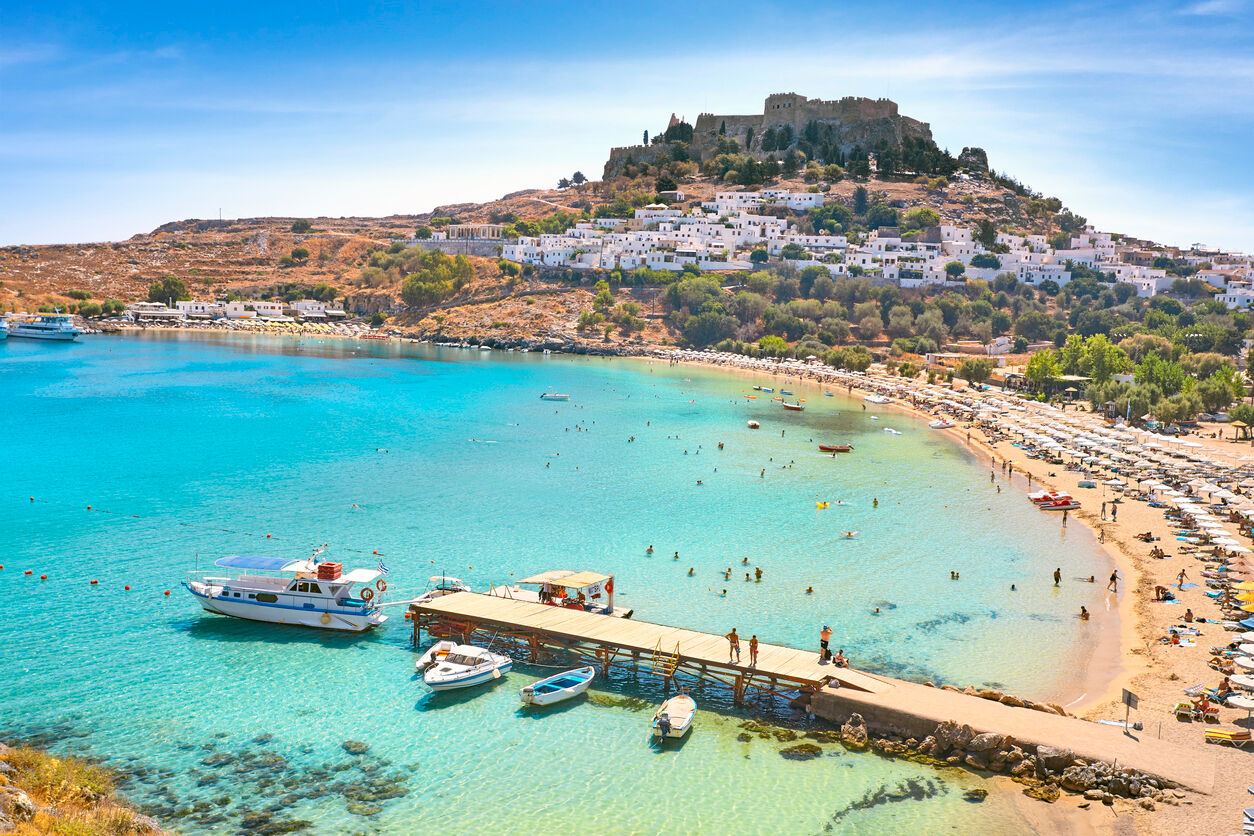
–Ancient Greek acropolis perched above a whitewashed village with stunning views over St Paul's Bay.
Valley of the Butterflies
–Nature reserve where thousands of Jersey tiger moths gather in a shaded valley during summer.
Description
Explore Rhodes, the 'Island of the Knights' in the Dodecanese, boasting a magnificent medieval Old Town (a UNESCO site), ancient acropolises (Lindos), beautiful beaches, and a rich history appealing to Irish travellers.
Rhodes is the largest of Greece's Dodecanese islands and one of the most historically rich holiday destinations in the Mediterranean. The island's crowning glory is Rhodes Town, whose medieval Old Town is a UNESCO World Heritage Site — a remarkably preserved walled city built by the Knights of St John in the 14th century, where you can walk through cobblestone streets lined with medieval inns, Ottoman mosques and Byzantine churches. Beyond the history, Rhodes offers excellent beach resorts along its east coast. Faliraki is the main family and party resort with a long sandy beach and water park, while Lindos is a stunning whitewashed village topped by an ancient acropolis with panoramic views. The island's interior is dotted with traditional villages, olive groves and pine forests, offering rewarding day trips away from the coast. Rhodes enjoys one of the longest sunny seasons in Greece, with reliable warmth from April through October. Direct flights from Dublin take around four hours, making Rhodes an accessible and rewarding choice for Irish families, couples and history enthusiasts.
Culture and Experiences
What's Nearby?
Symi Day Trip
– Colourful harbour island reached by catamaran from Rhodes Town. Pastel neoclassical houses and excellent seafood.
Marmaris (Turkey)
– Day-trip ferries cross to Marmaris in Turkey — passport required. A chance to visit a Turkish bazaar.
Prasonisi
– Southern tip of Rhodes where the Aegean meets the Mediterranean. Famous windsurfing and kitesurfing spot.
History
Colossus of Rhodes
– One of the Seven Wonders of the Ancient World stood at the harbour around 280 BC.
Knights of St John
– The Knights ruled Rhodes from 1309-1522, building the Palace of the Grand Master.
Ottoman & Italian Rule
– Rhodes was Ottoman then Italian before joining Greece in 1948.
Local Markets
Rhodes Old Town Market
– Sokratous Street inside the medieval walls — leather, jewellery, ceramics and spices.
Afandou Sunday Market
– Weekly village market with fresh produce, honey, olive oil and handmade goods.
Events and Festivals
Medieval Rose Festival (May-June)
– Medieval-themed cultural events within the castle walls.
Wine Festival (August)
– Local wines with tastings and music in Embonas village.
Assumption of Mary (15 August)
– Major celebration with church services and village festivities.
Local Etiquette
Church Dress Code
– Cover shoulders and knees when entering churches.
Greeting
– A friendly Kalimera or Kalispera is always appreciated.
Tipping
– Rounding up or 5-10% for good service. Not obligatory.
Dining and Night Life
Local Cuisine
Pitaroudia
– Rhodes's traditional chickpea fritters with onion, mint and cumin.
Fresh Grilled Octopus
– Hung to dry then chargrilled with lemon and olive oil.
Melekouni
– Traditional Rhodian sesame and honey bar.
Local Wine
– Athiri white and Mandilaria red are the local grape varieties.
Night Life
Faliraki Bar Street
– The island's main party strip with bars, clubs and late-night entertainment.
Rhodes Old Town
– Atmospheric cocktail bars tucked into medieval streets around Hippocrates Square.
Lindos Village
– Rooftop bars with spectacular views over the bay.

Read Time: 5 mins
Rhodes Town is one of the most historically significant and visually stunning towns in the Mediterranean. Its medieval Old Town, enclosed within four kilometres of fortified walls built by the Knights of St John, is a UNESCO World Heritage Site and the largest inhabited medieval town in Europe. Beyond the walls, the modern town wraps around a lively harbour, good beaches and a thriving restaurant and nightlife scene. For Irish visitors who want history, beach and nightlife in one destination, Rhodes Town offers all three in abundance.
Location and Getting There
Rhodes Town occupies the northern tip of the island of Rhodes. Rhodes Airport (RHO) is approximately fifteen minutes' drive south of the town centre. The flight from Dublin takes around four hours. The town is the island's transport hub, with buses connecting to resorts and attractions across Rhodes.
Beaches
Elli Beach, on the eastern side of the northern tip, is the main town beach — a well-organised stretch of sand and pebble with sunbeds, diving boards and a lively cafe scene. The western beach is windier and popular with windsurfers. For longer, sandier beaches, the resorts of Faliraki and Ixia are short bus rides to the south and west respectively.
Greek beaches are renowned worldwide for their water clarity, and the islands consistently rank among Europe's top beach destinations. The combination of the Mediterranean climate, clean seas and varied coastline — from wide sandy stretches to intimate pebble coves — means there is a beach for every preference. Many Greek beaches are backed by tavernas where you can enjoy fresh fish and a cold beer just metres from the water. Beach etiquette in Greece is relaxed, and public access to the shoreline is protected by law, though sunbed areas on popular beaches are typically managed by nearby businesses.
Things to Do
The Old Town is the star attraction. The Street of the Knights, remarkably preserved and atmospheric, leads to the Palace of the Grand Master — a medieval fortress-palace that now houses two excellent museums. The old town's maze of lanes is packed with shops, tavernas and small squares where you can sit and absorb the atmosphere. The harbour, where the legendary Colossus of Rhodes once stood, is lined with restaurants and overlooked by the impressive St Nicholas Fortress. The Acropolis of Rhodes, on Monte Smith above the town, has ancient ruins and panoramic views. Day trips to Lindos, the Valley of the Butterflies and the island of Symi are all popular excursions.
Island-hopping is one of the great pleasures of a Greek holiday, and even if you are based on one island, day trips to nearby islands are often available by ferry or excursion boat. The Greek islands also offer a range of cultural experiences beyond the major archaeological sites — local festivals (panigiri), the evening volta (the traditional evening stroll), and the simple pleasure of sitting in a village square watching the world go by while sipping a cold frappe coffee. For active visitors, kayaking, hiking the coastal paths and cycling are increasingly popular ways to explore the island landscapes away from the beach.
Dining and Nightlife
Rhodes Town has an excellent dining scene both inside and outside the walls. The Old Town has atmospheric tavernas in medieval courtyards and on rooftop terraces. The new town and harbour area have seafood restaurants, modern Greek cuisine and international options. Nightlife is the liveliest on the island — the new town's bar street has a concentration of clubs and bars, while the Old Town offers a more atmospheric evening experience with wine bars and cocktail lounges in ancient buildings.
One of the great joys of eating in Greece is the emphasis on fresh, seasonal ingredients prepared simply. The taverna culture — where you might choose your fish from a display, point at dishes in the kitchen, or simply ask what is good today — creates a personal, unhurried dining experience that is central to Greek island life. Raki or tsipouro (the local grape spirits) are often offered free at the end of a meal as a gesture of hospitality. Greek wine has improved enormously in recent decades, and island wineries are producing labels that increasingly challenge the old assumption that Greek wine begins and ends with retsina. Vegetarian visitors will find Greece particularly accommodating — dishes like gigantes (giant beans), briam (roasted vegetables), spanakopita and the ubiquitous Greek salad with local feta make for excellent meat-free eating.
Best Time to Visit
May to October. Rhodes has one of the longest summers in Greece. June and September are ideal — warm, sunny and less crowded than July and August. The Old Town is best explored in the cooler morning or evening hours during high summer.
Practical Information for Irish Visitors
Greece is in the EU. Euro, no visa. Two hours ahead of Ireland. English widely spoken.
Healthcare is available through the European Health Insurance Card (EHIC), but comprehensive travel insurance is strongly advised. Greek pharmacies are well equipped and pharmacists are knowledgeable — for minor ailments, a pharmacy visit is often sufficient. Tap water quality varies by island — on the larger islands it is generally safe, but bottled water is cheap and widely preferred. Greek time is two hours ahead of Ireland year-round, which is worth noting when calling home or planning flight connections. The pace of life in Greece is famously relaxed, with late dinners (often starting at nine or ten in the evening) and a general emphasis on enjoying the moment rather than rushing through the day.
Why Book with Sunholidays.ie
Sunholidays.ie is Irish-owned and IAA licensed (Licence No. T0601). Twenty euro per person deposit, monthly payments, price match guarantee. Rhodes Town hotels range from medieval boutique options to modern beachfront properties — the team can match you to the right one.

Read Time: 5 mins
Faliraki is Rhodes's premier beach resort, offering one of the finest sandy beaches in the Dodecanese islands alongside a well-developed resort infrastructure of hotels, restaurants, water sports and nightlife. Once known primarily as a party destination, Faliraki has broadened its appeal in recent years and now caters effectively to families and couples as well as younger visitors. The long, golden beach and the Faliraki Water Park are the twin pillars of the resort's family appeal, while the bar strip continues to draw those who want lively evenings.
Location and Getting There
Faliraki is on the east coast of Rhodes, approximately fifteen minutes south of Rhodes Airport (RHO). The flight from Dublin takes around four hours. Rhodes Town is around ten minutes to the north by bus or taxi. The resort stretches along the coast, with the main beach at its centre.
Beaches
Faliraki Beach is a long, wide stretch of golden sand with gently shelving water — one of the best beaches on Rhodes. It has full facilities including sunbeds, parasols, water sports and lifeguards. The water is clean and warm from June to October. Anthony Quinn Bay, a short drive or walk south, is a beautiful rocky cove with crystal-clear water that is excellent for snorkelling — it was named after the actor who filmed The Guns of Navarone on Rhodes and fell in love with the area. Ladiko Bay nearby is another attractive cove.
Greek beaches are renowned worldwide for their water clarity, and the islands consistently rank among Europe's top beach destinations. The combination of the Mediterranean climate, clean seas and varied coastline — from wide sandy stretches to intimate pebble coves — means there is a beach for every preference. Many Greek beaches are backed by tavernas where you can enjoy fresh fish and a cold beer just metres from the water. Beach etiquette in Greece is relaxed, and public access to the shoreline is protected by law, though sunbed areas on popular beaches are typically managed by nearby businesses.
Things to Do
Faliraki Water Park is one of the largest in Europe and is a guaranteed hit with families — slides, wave pools, lazy rivers and children's areas keep all ages entertained. Water sports on the main beach include jet skiing, banana boats, parasailing and pedal boats. Glass-bottom boat trips operate from the beach. Rhodes Town's Old Town is a short trip for a cultural day out. Lindos, the picture-postcard village with its ancient Acropolis, is around forty minutes' drive south. The Valley of the Butterflies, a shaded nature reserve, is a popular excursion.
Island-hopping is one of the great pleasures of a Greek holiday, and even if you are based on one island, day trips to nearby islands are often available by ferry or excursion boat. The Greek islands also offer a range of cultural experiences beyond the major archaeological sites — local festivals (panigiri), the evening volta (the traditional evening stroll), and the simple pleasure of sitting in a village square watching the world go by while sipping a cold frappe coffee. For active visitors, kayaking, hiking the coastal paths and cycling are increasingly popular ways to explore the island landscapes away from the beach.
Dining and Nightlife
Faliraki has a wide range of restaurants, from beachfront tavernas to the main strip's mix of Greek, Italian, Indian and British options. Prices are reasonable by Greek island standards. The bar street is the nightlife hub — a pedestrianised strip of bars, clubs and late-night venues that comes alive after dark during the summer season. The scene is predominantly young and energetic, though the resort's broader transformation means there are also quieter dining and entertainment options for families and couples.
One of the great joys of eating in Greece is the emphasis on fresh, seasonal ingredients prepared simply. The taverna culture — where you might choose your fish from a display, point at dishes in the kitchen, or simply ask what is good today — creates a personal, unhurried dining experience that is central to Greek island life. Raki or tsipouro (the local grape spirits) are often offered free at the end of a meal as a gesture of hospitality. Greek wine has improved enormously in recent decades, and island wineries are producing labels that increasingly challenge the old assumption that Greek wine begins and ends with retsina. Vegetarian visitors will find Greece particularly accommodating — dishes like gigantes (giant beans), briam (roasted vegetables), spanakopita and the ubiquitous Greek salad with local feta make for excellent meat-free eating.
Best Time to Visit
May to October. Faliraki is at its busiest in July and August. June and September offer warm weather and a slightly more relaxed atmosphere. The water park operates from May to October.
Practical Information for Irish Visitors
Greece is in the EU. Euro, no visa. Two hours ahead of Ireland. English very widely spoken in Faliraki.
Healthcare is available through the European Health Insurance Card (EHIC), but comprehensive travel insurance is strongly advised. Greek pharmacies are well equipped and pharmacists are knowledgeable — for minor ailments, a pharmacy visit is often sufficient. Tap water quality varies by island — on the larger islands it is generally safe, but bottled water is cheap and widely preferred. Greek time is two hours ahead of Ireland year-round, which is worth noting when calling home or planning flight connections. The pace of life in Greece is famously relaxed, with late dinners (often starting at nine or ten in the evening) and a general emphasis on enjoying the moment rather than rushing through the day.
Why Book with Sunholidays.ie
Sunholidays.ie is Irish-owned and IAA licensed (Licence No. T0601). Twenty euro per person deposit, monthly payments, price match guarantee. The team can recommend the right Faliraki hotel — beachside for families, centre for nightlife.

Read Time: 5 mins
Lindos is one of the most beautiful villages in Greece — a cascade of whitewashed houses tumbling down a hillside beneath an ancient Acropolis, with the turquoise waters of St Paul's Bay curving below. This picture-perfect settlement on Rhodes's eastern coast has been a place of importance for over three thousand years, and today it draws visitors who want to combine Greek island beauty with genuine historical substance. For Irish couples and families who appreciate somewhere with character, Lindos delivers an experience that stays in the memory.
Location and Getting There
Lindos is on the east coast of Rhodes, approximately fifty minutes' drive south of Rhodes Airport (RHO). The flight from Dublin takes around four hours. The village is a no-car zone — parking areas are located at the edge, and you walk (or ride a donkey) through the narrow lanes. Regular buses connect Lindos to Rhodes Town and Faliraki.
Beaches
Lindos has two beaches. The main Lindos Beach, a long sandy stretch in the bay below the village, has sunbeds, parasols and tavernas. The water is calm and warm. St Paul's Bay, on the south side of the Acropolis headland, is one of the most beautiful swimming spots in the Dodecanese — a near-enclosed bay with crystal-clear water, a chapel and views up to the Acropolis above. It is said that St Paul landed here on his way to preach to the Rhodians. Both beaches are within easy walking distance of the village.
Greek beaches are renowned worldwide for their water clarity, and the islands consistently rank among Europe's top beach destinations. The combination of the Mediterranean climate, clean seas and varied coastline — from wide sandy stretches to intimate pebble coves — means there is a beach for every preference. Many Greek beaches are backed by tavernas where you can enjoy fresh fish and a cold beer just metres from the water. Beach etiquette in Greece is relaxed, and public access to the shoreline is protected by law, though sunbed areas on popular beaches are typically managed by nearby businesses.
Things to Do
The Lindos Acropolis, crowning the hill above the village, is one of the most important archaeological sites in the Dodecanese. The climb to the top passes through the village's narrow lanes and rewards with ancient ruins and panoramic views that stretch along the coast and out to sea. The village itself is a joy to explore — whitewashed lanes, ornate sea captains' houses with pebble mosaic courtyards (lindian plaka floors), tiny churches and hidden squares. Boat trips depart from the beach to nearby bays and beaches. For excursions, Rhodes Town and the Valley of the Butterflies are within easy reach.
Island-hopping is one of the great pleasures of a Greek holiday, and even if you are based on one island, day trips to nearby islands are often available by ferry or excursion boat. The Greek islands also offer a range of cultural experiences beyond the major archaeological sites — local festivals (panigiri), the evening volta (the traditional evening stroll), and the simple pleasure of sitting in a village square watching the world go by while sipping a cold frappe coffee. For active visitors, kayaking, hiking the coastal paths and cycling are increasingly popular ways to explore the island landscapes away from the beach.
Dining and Nightlife
Lindos has an excellent selection of restaurants for its size. Rooftop tavernas with Acropolis views are the speciality, and dining beneath the illuminated ruins on a warm summer evening is genuinely magical. Fresh fish, grilled octopus and traditional Greek mezes feature prominently. Prices are slightly higher than in the larger resorts, reflecting the premium setting. Nightlife in Lindos is lively but contained — there are cocktail bars and music bars in the village centre that have a fun, sociable atmosphere without the intensity of Faliraki.
One of the great joys of eating in Greece is the emphasis on fresh, seasonal ingredients prepared simply. The taverna culture — where you might choose your fish from a display, point at dishes in the kitchen, or simply ask what is good today — creates a personal, unhurried dining experience that is central to Greek island life. Raki or tsipouro (the local grape spirits) are often offered free at the end of a meal as a gesture of hospitality. Greek wine has improved enormously in recent decades, and island wineries are producing labels that increasingly challenge the old assumption that Greek wine begins and ends with retsina. Vegetarian visitors will find Greece particularly accommodating — dishes like gigantes (giant beans), briam (roasted vegetables), spanakopita and the ubiquitous Greek salad with local feta make for excellent meat-free eating.
Best Time to Visit
May to October. The Acropolis climb is best done in the cooler morning hours, especially in July and August. June and September offer excellent conditions. The village is most atmospheric in the evening when the day-trippers have departed.
Practical Information for Irish Visitors
Greece is in the EU. Euro, no visa. Two hours ahead of Ireland. English widely spoken. Note that Lindos involves walking on steep, uneven lanes — comfortable shoes are essential.
Healthcare is available through the European Health Insurance Card (EHIC), but comprehensive travel insurance is strongly advised. Greek pharmacies are well equipped and pharmacists are knowledgeable — for minor ailments, a pharmacy visit is often sufficient. Tap water quality varies by island — on the larger islands it is generally safe, but bottled water is cheap and widely preferred. Greek time is two hours ahead of Ireland year-round, which is worth noting when calling home or planning flight connections. The pace of life in Greece is famously relaxed, with late dinners (often starting at nine or ten in the evening) and a general emphasis on enjoying the moment rather than rushing through the day.
Why Book with Sunholidays.ie
Sunholidays.ie is Irish-owned and IAA licensed (Licence No. T0601). Twenty euro per person deposit, monthly payments, price match guarantee. Accommodation in Lindos ranges from simple studios to luxury boutique properties — book early as the best options fill up quickly.

Read Time: 5 mins
Ixia and Ialyssos form a continuous strip of modern resort development along Rhodes's north-west coast, stretching south from Rhodes Town towards the airport. This stretch of coastline faces the open Aegean and catches the afternoon sun and the prevailing winds, which has made it one of the best windsurfing locations in the Dodecanese. The area is also popular with families and couples drawn by the large, well-equipped resort hotels, the proximity to Rhodes Town and the beautiful sunsets over the sea.
Location and Getting There
Ixia and Ialyssos are on the north-west coast of Rhodes, with Ixia just five minutes from Rhodes Town and Ialyssos around ten minutes further south. Rhodes Airport (RHO) is approximately fifteen minutes' drive. The flight from Dublin takes around four hours. The coastal road connects the resorts to Rhodes Town's shops, restaurants and historic sites.
Beaches
The beach along this stretch of coast is a long, narrow strip of sand and pebble backed by the hotel zone. The water is generally clean and inviting, though the open western exposure means there can be waves and wind — which is exactly what makes it excellent for windsurfing and kitesurfing. Several hotels have invested in beach improvements, creating more sheltered sections with imported sand. For calmer swimming, the beaches on the eastern coast (Faliraki, Tsambika) are a short drive across the island.
Greek beaches are renowned worldwide for their water clarity, and the islands consistently rank among Europe's top beach destinations. The combination of the Mediterranean climate, clean seas and varied coastline — from wide sandy stretches to intimate pebble coves — means there is a beach for every preference. Many Greek beaches are backed by tavernas where you can enjoy fresh fish and a cold beer just metres from the water. Beach etiquette in Greece is relaxed, and public access to the shoreline is protected by law, though sunbed areas on popular beaches are typically managed by nearby businesses.
Things to Do
Windsurfing and kitesurfing schools operate along the beach, taking advantage of the reliable afternoon winds. Several of the large resort hotels have extensive facilities including pools, spas, tennis courts and kids' clubs. The Ancient Ialyssos site on Filerimos Hill above the resort has interesting ruins and panoramic views. Rhodes Town, with its magnificent medieval Old Town, is just minutes away and provides a complete cultural experience. Day trips to Lindos, the Valley of the Butterflies and the island of Symi are all popular.
Island-hopping is one of the great pleasures of a Greek holiday, and even if you are based on one island, day trips to nearby islands are often available by ferry or excursion boat. The Greek islands also offer a range of cultural experiences beyond the major archaeological sites — local festivals (panigiri), the evening volta (the traditional evening stroll), and the simple pleasure of sitting in a village square watching the world go by while sipping a cold frappe coffee. For active visitors, kayaking, hiking the coastal paths and cycling are increasingly popular ways to explore the island landscapes away from the beach.
Dining and Nightlife
Most dining in Ixia and Ialyssos revolves around the large resort hotels, many of which offer all-inclusive packages. There are also independent restaurants along the main road and in the small village centres. For a wider choice and more atmospheric dining, Rhodes Town is a short taxi ride away. Nightlife is concentrated in the hotels and a small number of bars. For a bigger night out, Rhodes Town's new town has a lively bar and club scene.
One of the great joys of eating in Greece is the emphasis on fresh, seasonal ingredients prepared simply. The taverna culture — where you might choose your fish from a display, point at dishes in the kitchen, or simply ask what is good today — creates a personal, unhurried dining experience that is central to Greek island life. Raki or tsipouro (the local grape spirits) are often offered free at the end of a meal as a gesture of hospitality. Greek wine has improved enormously in recent decades, and island wineries are producing labels that increasingly challenge the old assumption that Greek wine begins and ends with retsina. Vegetarian visitors will find Greece particularly accommodating — dishes like gigantes (giant beans), briam (roasted vegetables), spanakopita and the ubiquitous Greek salad with local feta make for excellent meat-free eating.
Best Time to Visit
May to October. The windsurfing season peaks from June to September when the meltemi winds are strongest. For beach relaxation, the calmer months of May and October are pleasant. Sunsets over the Aegean from this west-facing coast are spectacular year-round.
Practical Information for Irish Visitors
Greece is in the EU. Euro, no visa. Two hours ahead of Ireland. English spoken in hotels and tourist businesses.
Healthcare is available through the European Health Insurance Card (EHIC), but comprehensive travel insurance is strongly advised. Greek pharmacies are well equipped and pharmacists are knowledgeable — for minor ailments, a pharmacy visit is often sufficient. Tap water quality varies by island — on the larger islands it is generally safe, but bottled water is cheap and widely preferred. Greek time is two hours ahead of Ireland year-round, which is worth noting when calling home or planning flight connections. The pace of life in Greece is famously relaxed, with late dinners (often starting at nine or ten in the evening) and a general emphasis on enjoying the moment rather than rushing through the day.
Why Book with Sunholidays.ie
Sunholidays.ie is Irish-owned and IAA licensed (Licence No. T0601). Twenty euro per person deposit, monthly payments, price match guarantee. The team can help you choose between the many large resort hotels along this stretch of coast.