
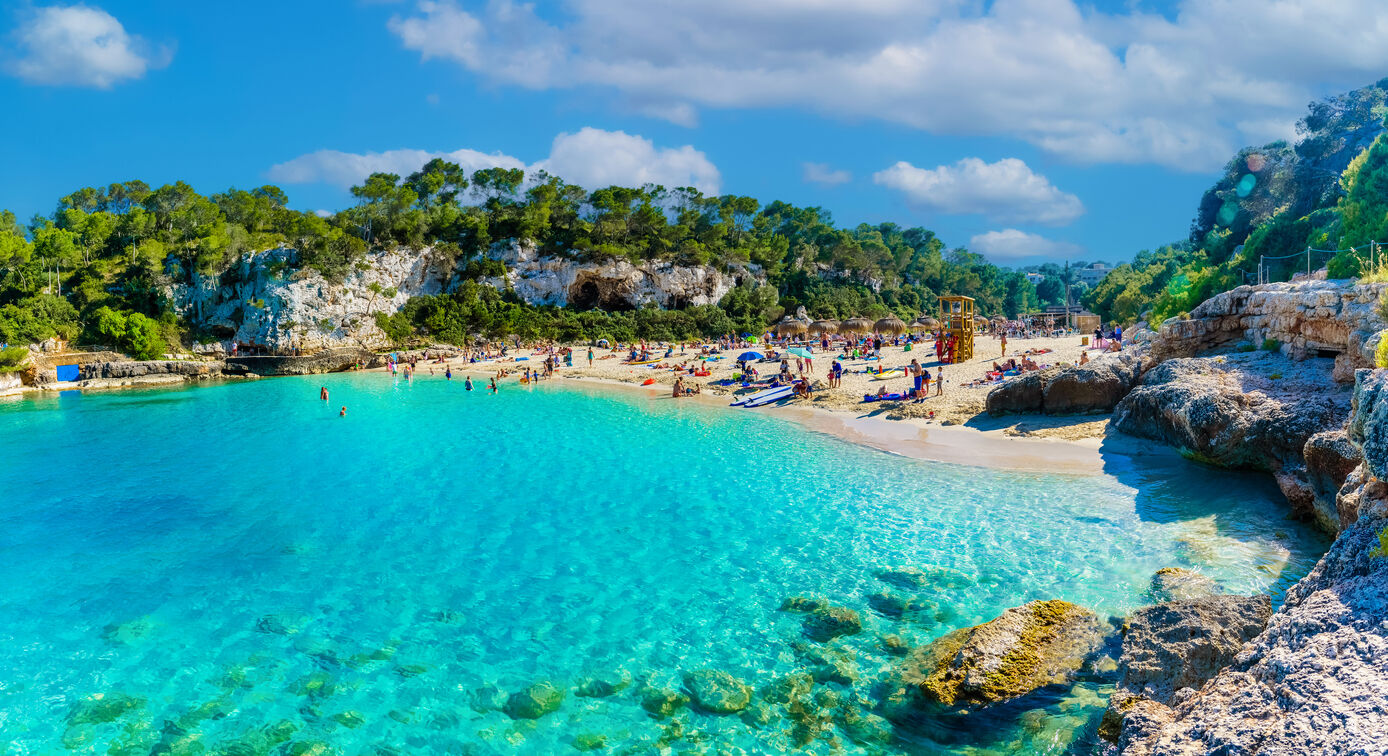
Majorca
Weather
Local Information
Plug Socket Type
Type C/F (European two-pin). Irish visitors need a travel adapter.
Currency
Euro
Time Zones
GMT+1 (1 hour ahead of Ireland in winter, same in summer).
Local Emergency Contact
112 (general emergency). Irish Embassy Madrid: +34 914 364 093.
Travel Information
Flight Time
Approximately 2.5 hours from Dublin to Palma (PMI). Year-round flights.
Distance from Beach
All resort areas are beachfront or within short walking distance.
Do I need a Visa?
No. Spain is an EU member state. Irish citizens need only a valid passport or identity card.
3 Things to do in Majorca
Palma Cathedral (La Seu)
–Stunning Gothic cathedral on the Palma waterfront with Gaudi interior elements.
Serra de Tramuntana
–UNESCO World Heritage mountain range along the north-west coast — spectacular driving and hiking.
Caves of Drach
–Vast underground cave system with one of the world's largest subterranean lakes and classical music concerts.
Description
Discover Majorca, the Balearic's largest island, offering stunning beaches, the majestic Serra de Tramuntana mountains, vibrant Palma, and family-friendly resorts, a favourite for Irish sun-seekers.
Majorca is the largest of Spain's Balearic Islands and has been a favourite holiday destination for Irish travellers for decades, offering a remarkable diversity of experiences within a single island. The capital Palma is one of the Mediterranean's most attractive cities, with its soaring Gothic cathedral overlooking the harbour, atmospheric old quarter, trendy Santa Catalina neighbourhood and excellent shopping along the Paseo del Borne. The island's coastline varies dramatically — from the long sandy beaches of Alcúdia and Playa de Muro in the north to the sheltered resort coves of the southwest coast and the dramatic cliff-backed bays of the Serra de Tramuntana, a UNESCO World Heritage mountain range that runs along the entire northwest coast. Majorca's resort areas cater to every taste: Magaluf for lively nightlife, Santa Ponsa and Cala d'Or for families, and Puerto Pollensa and Deià for a more refined atmosphere. The island's food scene has flourished, with traditional Mallorcan cuisine — ensaimadas, sobrasada, tumbet and pa amb oli — complemented by a growing number of excellent contemporary restaurants. Direct flights from Dublin reach Palma in around two and a half hours, and Majorca's combination of beautiful beaches, cultural richness, mountain scenery and well-established tourist infrastructure makes it a consistently excellent choice for Irish holidaymakers.
Culture and Experiences
What's Nearby?
Palma City
– Vibrant capital with cathedral, Arab baths, tapas bars, excellent shopping and a beautiful old town.
Soller & Fornalutx
– Picturesque mountain valley towns reached by vintage train and tram.
Valldemossa
– Charming hilltop village where Chopin spent a winter. Monastery, cobbled streets and traditional pastries.
History
Talaiotic Culture
– Mallorca's Bronze Age civilisation left stone towers across the island.
Moorish Period
– The Moors ruled Mallorca from 903-1229, creating the Almudaina Palace and Arab baths.
Tourism Pioneer
– Mallorca was one of the first Mediterranean package holiday destinations.
Local Markets
Inca Market (Thursday)
– Mallorca's largest weekly market with leather goods, clothing and produce.
Sineu Market (Wednesday)
– Authentic agricultural market in the island's centre — the oldest on Mallorca.
Events and Festivals
Sant Sebastia (January)
– Palma's patron saint festival with bonfires, barbecues, concerts and street parties.
Moors & Christians (Various)
– Re-enactment battles in several towns, notably Soller (May) and Pollenca (August).
Carnival (February)
– Colourful celebrations with parades and fancy dress.
Local Etiquette
Catalan & Spanish
– Mallorca speaks Mallorquin (Catalan dialect) and Spanish. English widely spoken.
Dress in Palma
– Beachwear in the city centre is frowned upon and may result in fines.
Tipping
– 5-10% for good service. Not obligatory but appreciated.
Dining and Night Life
Local Cuisine
Ensaimada
– Spiral-shaped sweet pastry dusted with icing sugar — Mallorca's iconic bakery item.
Sobrasada
– Spreadable cured sausage with paprika — a Mallorcan specialty.
Pa amb Oli
– Bread rubbed with tomato and drizzled with olive oil, topped with ham and cheese.
Tumbet
– Layers of potato, aubergine, peppers and tomato sauce — Mallorca's answer to ratatouille.
Night Life
Magaluf
– Mallorca's main party resort with clubs, bar streets and international DJs.
Palma (Santa Catalina & La Lonja)
– Trendy cocktail bars and night spots in Palma's hippest neighbourhoods.
Port Adriano
– Philippe Starck-designed marina with upscale bars near Santa Ponsa.

Read Time: 3 mins
Palma Nova is one of Mallorca's most popular family resorts, occupying a prime stretch of the island's south-west coast with three wide, sandy beaches and a long seafront promenade. Originally developed in the 1960s, it has matured into a well-maintained, comfortable resort that appeals particularly to families and couples who want good beaches, reliable restaurants and easy access to the lively neighbouring resort of Magaluf and the historic capital Palma. For Irish holidaymakers, Palma Nova offers a reassuring combination of quality and convenience.
Location and Getting There
Palma Nova is on Mallorca's south-west coast, approximately twenty-five minutes from Palma de Mallorca Airport (PMI). Flights from Dublin to Palma take around two and a half hours, with year-round services available. The resort sits between Magaluf to the west and Portals Nous to the east, and the island capital Palma is a short bus or taxi ride away. This central location makes Palma Nova an excellent base for exploring the island.
Beaches
Palma Nova has three excellent sandy beaches — Playa de Palma Nova, Playa de Son Maties and Playa de Carregador — connected by a seafront promenade. The sand is fine and golden, the water is clean and calm, and all three hold Blue Flag status. Facilities are excellent, with sunbed and parasol hire, lifeguards in season, and beach bars close at hand. The gentle shelving makes these beaches particularly suitable for families with young children.
Things to Do
The seafront promenade is perfect for evening strolls and connects Palma Nova to Magaluf, where you will find Western Water Park and the Pirates Adventure dinner show. The resort itself has mini-golf, go-karting and boat trips. Palma, the island capital, is well worth a day trip for its magnificent Gothic cathedral, the atmospheric old town and excellent shopping. For nature lovers, the Serra de Tramuntana mountains offer spectacular hiking, and the Caves of Drach on the east coast are a popular excursion. Boat trips along the coast are available from the beach.
Dining and Nightlife
Palma Nova has a strong restaurant scene with a wide range of cuisines along the main strip and seafront. Spanish tapas, Italian, Chinese, Indian and traditional British fare are all well represented, alongside several quality seafood restaurants. The resort has a comfortable evening atmosphere with bars and live entertainment, though the vibe is more relaxed than neighbouring Magaluf. Those seeking livelier nightlife can walk along the promenade to Magaluf's bar strip in around fifteen minutes.
Best Time to Visit
Mallorca enjoys a Mediterranean climate with hot, dry summers and mild winters. Peak season runs from June to September, with temperatures regularly exceeding thirty degrees. May and October are excellent shoulder months offering warm weather, lower prices and fewer crowds. The sea is warm enough for comfortable swimming from May through October.
Practical Information for Irish Visitors
Mallorca is part of Spain and the EU, so the currency is the euro and Irish citizens need only a valid passport or identity card. Spain is one hour ahead of Ireland. Spanish is the main language alongside Catalan, but English is very widely spoken in resort areas. Driving is on the right. Healthcare is covered by the EHIC for Irish citizens, though travel insurance is always recommended.
Why Book with Sunholidays.ie
Sunholidays.ie is Irish-owned and fully licensed by the Irish Aviation Authority (IAA Licence No. T0601), so your holiday is fully protected. Secure your Palma Nova break with a deposit of just twenty euro per person and spread the cost with monthly payments. The price match guarantee ensures the best available deal.

Read Time: 3 mins
Magaluf is Mallorca's most famous resort, known internationally for its nightlife but offering far more than its party reputation suggests. A major redevelopment programme has transformed the beachfront, and today Magaluf attracts a broad mix of visitors including families, couples and groups. The wide, sandy beach is genuinely impressive, the water sports options are extensive, and the resort's proximity to Palma means you can combine beach days with city culture easily.
Location and Getting There
Magaluf is on Mallorca's south-west coast, approximately twenty minutes from Palma de Mallorca Airport (PMI). Flights from Dublin take around two and a half hours. The resort neighbours Palma Nova and is a short drive from the island capital Palma. Year-round flight services from Dublin make Magaluf accessible throughout the seasons.
Beaches
Magaluf's main beach is a wide, long crescent of fine sand with clean, clear water. It has been significantly upgraded in recent years with improved facilities, a new promenade and better maintenance. The beach holds Blue Flag status and has lifeguards, sunbeds, parasols and water sports operators. To the south, smaller coves offer quieter alternatives for those who want to escape the main beach buzz.
Things to Do
Western Water Park is one of the largest water parks in Mallorca and a major draw for families. The Pirates Adventure dinner show is a hugely popular evening entertainment. Katmandu Park offers interactive experiences and mini-golf. Water sports on the beach include jet skiing, parasailing, banana boats and paddleboarding. The BCM nightclub is legendary for those interested in the clubbing scene. Palma is just twenty minutes away for cathedral visits, old town exploration and serious shopping. Boat trips along the coast and to nearby islands are available from the beach.
Dining and Nightlife
Magaluf has restaurants to suit every taste and budget, from fast food and British-style pubs to quality Mediterranean restaurants along the regenerated beachfront. The nightlife is the resort's calling card — the famous Magaluf strip has bars, clubs and entertainment venues that keep going until the early hours. However, the resort is large enough that families and quieter visitors can easily find their own space away from the party zone.
Best Time to Visit
Mallorca's Mediterranean climate makes Magaluf a great choice from May through October. Peak summer months of July and August are hottest and busiest. For a more relaxed experience, June, September and early October offer warm weather and less intensity. Winter months are mild but many resort facilities operate on reduced hours.
Practical Information for Irish Visitors
Mallorca is part of Spain and the EU. The currency is the euro and no visa is needed for Irish citizens. Spain is one hour ahead of Ireland. English is very widely spoken in Magaluf. Driving is on the right. Healthcare is covered by the EHIC, though travel insurance is recommended.
Why Book with Sunholidays.ie
Sunholidays.ie is Irish-owned and fully licensed by the Irish Aviation Authority (IAA Licence No. T0601). Book with a twenty euro per person deposit, pay monthly, and benefit from the price match guarantee. The team can advise on which part of the resort suits your group best.

Read Time: 3 mins
Alcudia is one of Mallorca's finest family destinations, combining a magnificent long sandy beach with a beautifully preserved medieval old town. Located in the north of the island, Alcudia offers a genuine sense of place that many purpose-built resorts lack. The beach stretches for several kilometres around the Bay of Alcudia, the old town rewards exploration, and the surrounding countryside provides excellent cycling and walking opportunities. For Irish families seeking a resort with substance, Alcudia is hard to beat.
Location and Getting There
Alcudia is in northern Mallorca, approximately fifty minutes from Palma de Mallorca Airport (PMI). The flight from Dublin takes around two and a half hours. The longer transfer is offset by the quality of the destination — many families consider the drive through Mallorca's interior to be part of the holiday experience. The resort has good road connections, and car hire is popular for exploring the north of the island.
Beaches
Playa de Alcudia is one of the longest beaches in Mallorca — a wide, gently shelving stretch of fine white sand that extends for several kilometres around the bay. The shallow water makes it exceptionally safe for young children, and the beach has full facilities including lifeguards, sunbeds and beach bars. Playa de Muro, which extends from the southern end of Alcudia beach towards Can Picafort, is backed by a natural wetland area and offers a quieter atmosphere.
Things to Do
Alcudia's medieval old town is enclosed within well-preserved fourteenth-century walls and is a delight to explore, with narrow streets, small squares and good restaurants. The Tuesday and Sunday markets are among the best on the island. Hidropark water park provides family fun. The S'Albufera nature reserve, just south of the resort, is an important wetland for birdwatching. Boat trips to the beaches of the Formentor peninsula are a popular excursion. Cycling is excellent in this part of Mallorca, with routes ranging from gentle coastal rides to serious mountain climbs in the Serra de Tramuntana.
Dining and Nightlife
The old town has the best restaurant selection, with Spanish, Mallorcan and international options in atmospheric settings within the medieval walls. The port area has waterfront restaurants specialising in fresh fish. Along the main resort strip, you will find a broad mix of cuisines. Nightlife is family-friendly with bars, live music and evening entertainment, rather than late-night clubbing.
Best Time to Visit
Alcudia is at its best from May to October. The northern location means it can be slightly breezier than the south-west coast, but the bay is well sheltered. Peak season is July and August. For pleasant temperatures and quieter beaches, June and September are ideal.
Practical Information for Irish Visitors
Mallorca is part of Spain and the EU. Euro currency, no visa required. One hour ahead of Ireland. English widely spoken in tourist areas. Driving is on the right. EHIC covers healthcare, though travel insurance is recommended.
Why Book with Sunholidays.ie
Sunholidays.ie is Irish-owned and licensed by the Irish Aviation Authority (IAA Licence No. T0601). Twenty euro per person deposit, monthly payments available, price match guarantee. The team can help you choose between the old town, port area and beachfront for your accommodation.

Read Time: 3 mins
Cala d'Or is one of Mallorca's most attractive resorts, a low-rise development on the east coast built around a series of beautiful pine-fringed coves with crystal-clear water. The resort has an upmarket, village-like atmosphere with whitewashed buildings, a pleasant marina and a pedestrianised centre. For Irish visitors who prefer intimate coves to large beach strips, Cala d'Or offers a more refined Mallorcan experience.
Location and Getting There
Cala d'Or is on Mallorca's south-east coast, approximately fifty-five minutes from Palma de Mallorca Airport (PMI). The flight from Dublin takes around two and a half hours. The resort is well placed for exploring the east coast's spectacular caves at Drach and Hams, and the charming town of Santanyi is nearby.
Beaches
Rather than one large beach, Cala d'Or has five small coves, each with its own character. Cala Gran is the largest and most popular, with golden sand and good facilities. Cala Esmeralda is smaller and especially picturesque. Cala Serena and Cala Ferrera offer calmer options. The coves are sheltered by pine trees and rocky headlands, and the water is remarkably clear — ideal for snorkelling. A coastal path connects several of the coves, making for a pleasant walk between them.
Things to Do
The marina at Cala d'Or is the social hub, with boat hire, excursion bookings and waterfront restaurants. Snorkelling is rewarding in the clear cove waters. The Mondrago Natural Park, a short drive south, offers walking trails through woodland to hidden beaches. The Caves of Drach, with their underground lake and classical music concerts, are one of Mallorca's top attractions and lie within easy reach. The weekly market in nearby Santanyi is worth visiting for local produce and crafts.
Dining and Nightlife
Cala d'Or has a good selection of restaurants in the pedestrianised centre and around the marina. The standard is generally higher than in larger resorts, with several quality Mediterranean restaurants alongside the usual international options. The marina terrace restaurants are particularly pleasant for evening dining. Nightlife is relaxed — cocktail bars, live music and a few late-opening venues, but this is not a party resort.
Best Time to Visit
The east coast enjoys a warm Mediterranean climate similar to the rest of Mallorca. May to October is the main season, with peak temperatures in July and August. The sheltered coves make swimming comfortable from late May. September and early October offer warm seas and quieter beaches.
Practical Information for Irish Visitors
Mallorca is part of Spain and the EU. Euro currency, no visa. One hour ahead of Ireland. English spoken in resort areas. Driving on the right. EHIC healthcare cover applies, with travel insurance recommended.
Why Book with Sunholidays.ie
Sunholidays.ie is Irish-owned and licensed by the Irish Aviation Authority (IAA Licence No. T0601). Book with a twenty euro per person deposit, pay in monthly instalments, and benefit from the price match guarantee.

Read Time: 2 mins
Santa Ponsa is a well-established resort on Mallorca's south-west coast that has earned a loyal following among Irish and British families. It has a large, attractive sandy beach, a good selection of restaurants, and a relaxed atmosphere that is livelier than a quiet village but calmer than the neighbouring party resorts. The surrounding area offers excellent golf courses and easy access to Palma, making it a versatile base for a Mallorca holiday.
Location and Getting There
Santa Ponsa is on Mallorca's south-west coast, approximately twenty-five minutes from Palma de Mallorca Airport (PMI). Flights from Dublin take around two and a half hours. The resort is close to the golf courses of Poniente and Santa Ponsa and within easy reach of both Palma and the coastal resorts of Peguera and Magaluf.
Beaches
Santa Ponsa's main beach is a wide, gently curving bay of fine sand backed by a promenade. The water is calm and clean, making it suitable for families. The beach has Blue Flag status and good facilities including lifeguards, sunbeds and water sports. A secondary beach, Playa de Santa Ponsa II, lies around the headland and tends to be quieter.
Things to Do
Golf is a major draw — Golf Santa Ponsa and Golf de Poniente are both championship-standard courses within a few minutes' drive. The resort has a good range of water sports on the beach, and boat trips operate along the coast. The weekly Wednesday market is popular with visitors. Palma is easily accessible for cultural day trips, and the mountainous Serra de Tramuntana is within a forty-minute drive for those who enjoy hiking or scenic drives.
Dining and Nightlife
Santa Ponsa has a varied restaurant scene along the main boulevard and side streets, covering Spanish, Italian, Indian and international cuisine. Several restaurants offer quality dining at reasonable prices. Nightlife is moderate — bars, pubs and live entertainment keep things sociable without being rowdy. The resort is popular with families, and the evening atmosphere reflects that.
Best Time to Visit
Mallorca's south-west coast is warm and sunny from May to October. Summer temperatures are in the low thirties. Golf is playable year-round. For beach holidays, June and September offer the best balance of weather, value and space.
Practical Information for Irish Visitors
Mallorca is part of Spain and the EU. Euro currency, no visa. One hour ahead of Ireland. English widely spoken. Driving on the right. EHIC healthcare applies, travel insurance recommended.
Why Book with Sunholidays.ie
Sunholidays.ie is Irish-owned and IAA licensed (Licence No. T0601). Twenty euro per person deposit, monthly payments, price match guarantee. The team can help match you with the right hotel in Santa Ponsa for your group.